






Buying guides
Best Food for Dobermans: What to Look For
The best food for a Doberman is a complete and balanced diet for its life stage, and for a puppy one labeled for the growth of large dogs, fed in measured meals that keep this athletic breed lean. Because Dobermans can be affected by bloat and by a genetic heart condition, split food into two or more meals, avoid exercise around mealtimes and talk to your vet before choosing an unusual or grain-free diet.
By Matt GarnettUpdated November 14, 20264 min read3 sources
What matters most for a Doberman
The AKC lists Doberman Pinschers at 26 to 28 inches and 75 to 100 pounds for males, and 24 to 26 inches and 60 to 90 pounds for females, with a life expectancy of 10 to 12 years. Its health notes mention hip dysplasia, eye disease and von Willebrand's disease, and that Dobermans may be affected by bloat, a potentially fatal stomach disorder owners should learn to recognize.
That shapes the priorities. A Doberman food should be complete and balanced for its life stage, appropriate for large-breed growth while young, and fed in a way that reduces bloat risk. The FDA also notes that dilated cardiomyopathy, a heart muscle disease, is recognized as a genetic condition in large breeds such as the Doberman, which is one reason diet choice deserves a conversation with your vet.
Puppies: choose a large-breed growth food
Large-breed puppies grow fast, and too much energy or calcium during growth can contribute to bone and joint problems. Look for a puppy food whose adequacy statement says it is complete and balanced for growth, including growth of large-size dogs, under AAFCO nutrient profiles. Feed measured meals, three or four a day for young puppies, as your vet advises, and keep your puppy lean rather than chunky.
Avoid adding calcium or other supplements to a complete puppy food unless your vet tells you to, because extra calcium is a known problem in large-breed puppies. Your vet will also guide when to move to an adult food, often between 12 and 18 months for a breed this size.
Feeding to reduce bloat risk
Bloat, or gastric dilatation-volvulus, is an emergency in which the stomach fills with gas and can twist. The AKC's bloat guidance notes that deep-chested breeds are at higher risk and that fast eaters have about five times the risk of slow eaters. Feeding two or more smaller meals a day, rather than one large one, is a common recommendation.
Use a ceramic slow-feeder bowl if your Doberman gulps food, keep exercise calm for an hour or so before and after meals, and avoid large amounts of water in one go right after eating. Learn the signs: a swollen belly, retching without bringing anything up, restlessness and drooling. Any of these means calling your vet or an emergency vet immediately.
Reading the label and the grain-free question
For adults, choose a food labeled complete and balanced for adult maintenance, and check the calories per cup so you can portion accurately. The WSAVA guidelines on selecting pet foods suggest asking whether the maker employs a qualified nutritionist, who formulates its diets and what quality control it runs, and warn that words such as premium and holistic are not regulated.
The FDA has investigated reports of dilated cardiomyopathy in dogs eating certain diets, many labeled grain-free, that were high in peas, lentils, other legumes or potatoes. The cause is not settled, but because Dobermans already carry a genetic risk of DCM, discuss any grain-free, boutique or exotic-protein diet with your vet before choosing it.
What to avoid
Avoid one large daily meal, vigorous exercise around mealtimes and free-feeding. Avoid supplements in growing puppies unless prescribed. Avoid homemade diets that have not been formulated by a board-certified veterinary nutritionist. Avoid sudden food changes; switch over about a week.
Watch for signs that need a vet: weight loss, coughing, fainting, tiring easily on walks or a fast resting breathing rate, which can relate to heart disease, and any sign of bloat. Many owners of this breed ask their vet about regular heart screening, which is a better protection than any food choice.
Keeping a Doberman lean
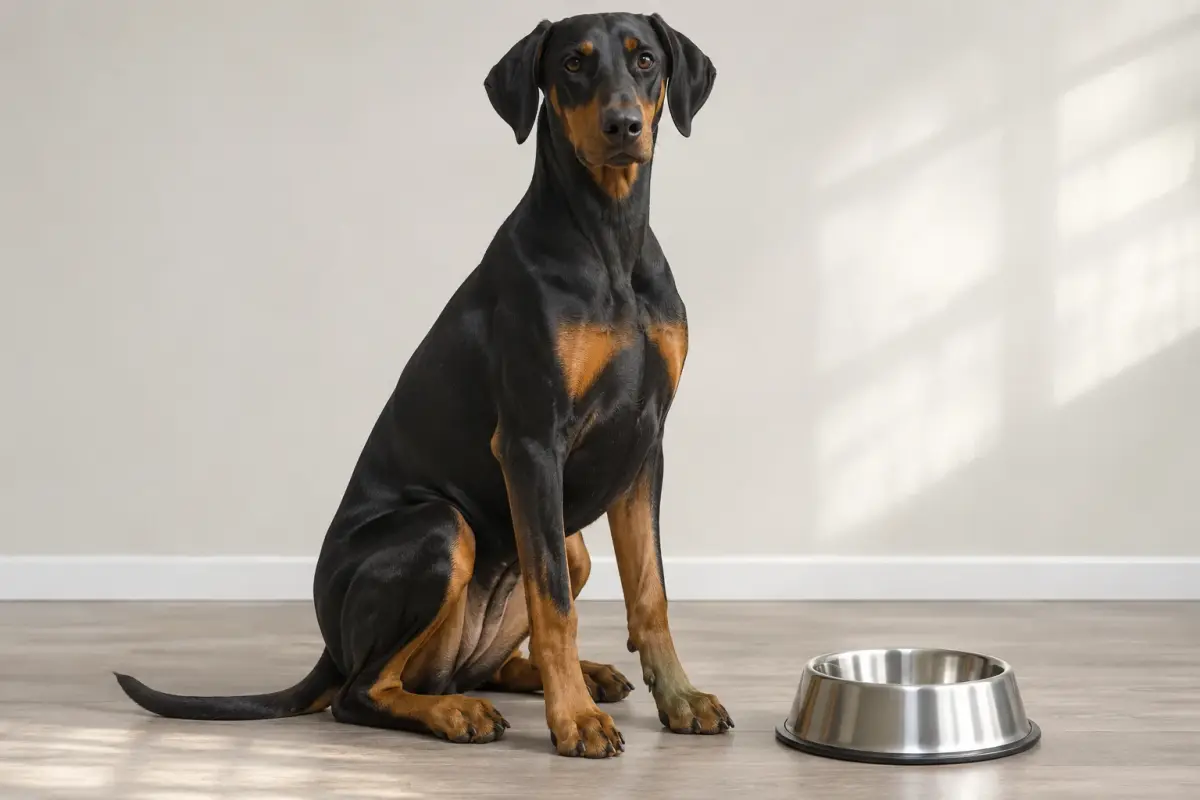
A Doberman in good condition looks athletic: you can feel the ribs easily and see a clear waist and tuck. Short coats make this easy to check. Weigh your dog monthly and adjust portions in small steps. If your Doberman trains and walks a lot, browse Doberman harnesses, and consider a slow feeder bowl for large dogs if meals vanish in seconds. Working and sport Dobermans need more calories; quieter pets need less than the bag suggests.
Count training treats in the daily total, especially for a dog that trains often. Your vet can give a target weight and calorie figure, and adjust them as your dog ages or its activity changes, which is the most reliable guide to how much to feed.
This page is general information, not veterinary advice, and it cannot replace an examination by the vet who knows your pet.
Common questions
Should a Doberman puppy eat large-breed puppy food?
Yes. Choose a food labeled complete and balanced for growth including large-size dogs, feed measured meals and keep your puppy lean. Do not add calcium unless your vet advises it.
Is grain-free food safe for Dobermans?
The FDA has investigated a possible link between some grain-free diets and dilated cardiomyopathy. Because Dobermans already have a genetic risk of DCM, talk to your vet before choosing one.
How many times a day should a Doberman eat?
Adults usually do well on two or more measured meals a day, which is often advised to lower bloat risk. Puppies need three or four meals, as your vet recommends.
Can food prevent bloat in Dobermans?
No food prevents it, but feeding smaller meals, slowing fast eaters and keeping exercise calm around meals lowers risk. Learn the signs and call a vet immediately if they appear.
Sources we checked
This guide is general information, not veterinary advice. If your pet is unwell or injured, contact your veterinarian.


