






Buying guides
Best Food for Boxers: What to Look For
The best food for a Boxer is a complete and balanced diet for its life stage, made by a company with qualified nutritionists, and fed in measured meals that keep this athletic dog lean. Boxer puppies do best on a large-breed puppy formula with controlled calcium. Splitting food into two meals is a sensible habit for a deep-chested breed.
By Matt GarnettUpdated November 9, 20264 min read3 sources
What a Boxer's diet has to support
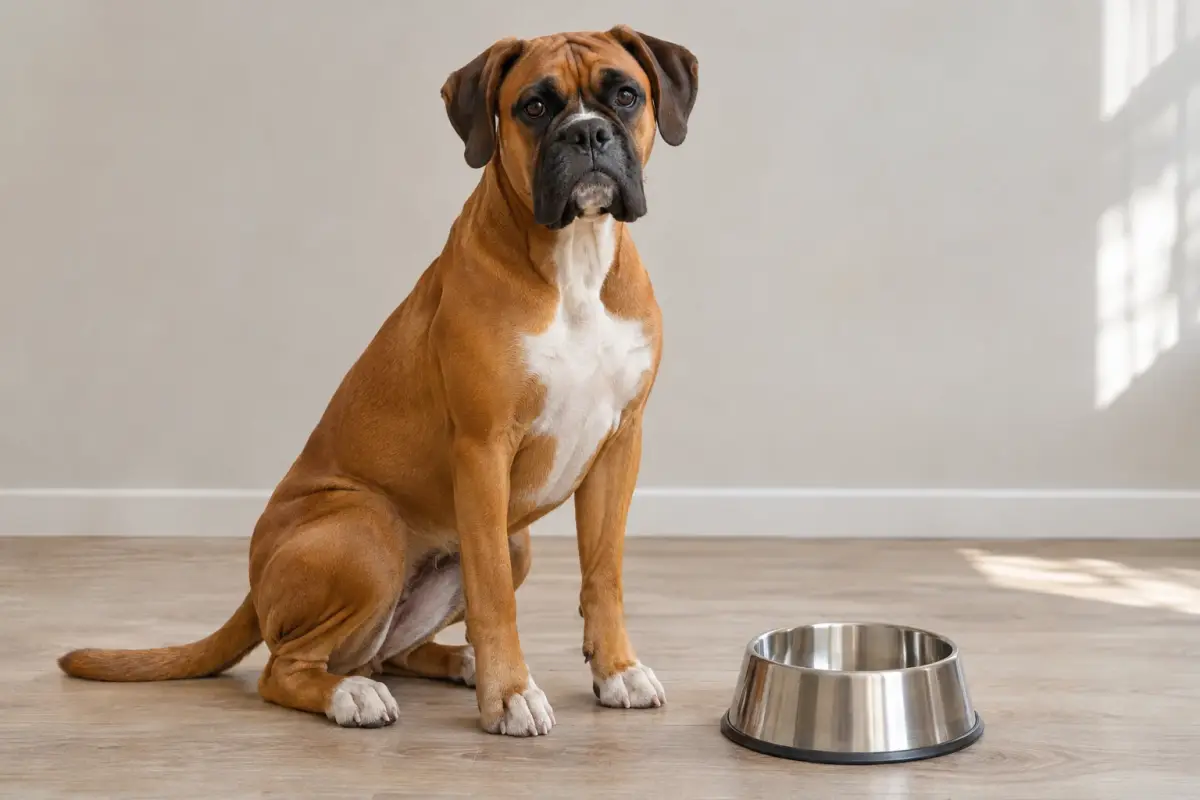
The AKC lists male Boxers at 65 to 80 lb and 23 to 25 inches tall, with females about 15 lb lighter, and a life expectancy of 10 to 12 years. Boxers are muscular, energetic dogs that stay playful well into adulthood, so a well-fed Boxer should look athletic, with a tucked waist and ribs easy to feel under the skin.
Because Boxers are on the edge of the large-breed group, they share large-breed concerns about growth, joints and bloat. Their short muzzles also mean some eat with a lot of air and mess. None of this calls for a special food; it calls for a complete diet, chosen by the label, and fed with some thought about portion size and pace, which is where a slow-feeder bowl can help a Boxer that gulps.
Feeding a Boxer puppy
Boxer puppies grow quickly, and the AKC explains that large-breed puppy formulas are lower in fat, calcium, phosphorus and vitamin D than regular puppy food, because excess calories and calcium are linked to developmental orthopedic disease such as hip and elbow dysplasia. A food labeled complete and balanced for growth, including growth of large-size dogs, is a good choice for most Boxer puppies.
Feed several measured meals a day while young, avoid supplements unless your vet prescribes them, and keep the puppy slim rather than round. Ask your vet at checkups whether its growth and weight are on track, and when to move to adult food, which for a Boxer is usually somewhere between 12 and 18 months.
How to judge any dog food label
The WSAVA Global Nutrition Committee advises looking past unregulated words such as holistic or premium and checking the nutritional adequacy statement. It should say the food is complete and balanced for a named life stage, based on AAFCO feeding trials or AAFCO nutrient profiles. Foods marked for intermittent or supplemental feeding should be only a small part of the diet.
WSAVA also suggests asking whether the maker employs a qualified nutritionist, who formulates its recipes and what quality control it runs. Those answers are more useful than an ingredient list. Also check calories per cup, because foods vary widely and that number decides how much your Boxer should get each day.
Portions, pace and bloat
Boxers are deep-chested, and deep-chested breeds are among those at higher risk of gastric dilatation-volvulus, or bloat, a life-threatening twisting of the stomach. Owners commonly split the day's food into two or more meals, avoid hard exercise right around mealtimes and use a slow-feeder bowl for dogs that gulp. Ask your vet about your dog's risk and the signs that mean an emergency.
Use the bag's guide for your dog's ideal weight as a starting point, measure every meal and count treats, which a dog treat pouch makes easier to do on walks. Weigh your Boxer every month or two and adjust portions gradually. Active dogs that run, swim or do sports may need more food on busy weeks, and less when exercise drops in bad weather. For a Boxer that bolts its meals, a ceramic slow-feeder bowl spreads the food out so each portion takes longer to eat.
Sensitive stomachs and food types
Some Boxers have sensitive digestion, gas or loose stools, and owners often wonder whether a different food would help. Dry, wet and fresh commercial foods can all be complete and balanced, and a single well-tolerated food is usually better than frequent switching. When you do change, mix the new food in over about a week. Grain-free diets are not necessary for most dogs; ask your vet first.
Ongoing diarrhea, vomiting, weight loss, itching or ear problems are reasons to see your vet rather than try yet another bag. A vet-guided elimination trial is the reliable way to identify a food intolerance, and some symptoms that look dietary have different causes.
This page is general information, not veterinary advice, and it cannot replace an examination by the vet who knows your pet.
Common questions
What is the best food for a Boxer puppy?
A complete and balanced puppy food labeled for growth of large-size dogs, fed in several measured meals a day. Avoid supplements unless prescribed, and keep your puppy lean while it grows.
How much should a Boxer eat a day?
It depends on the food's calories and your dog's age, ideal weight and activity. Start with the bag's guide for your Boxer's ideal weight, split into two meals, and adjust after weigh-ins.
What food is good for a Boxer with a sensitive stomach?
A single complete and balanced food your dog tolerates well, introduced slowly. Persistent loose stool or vomiting needs a vet visit, and your vet may suggest a guided food trial.
Are Boxers a large breed for feeding purposes?
Many Boxers reach the weight where a large-breed puppy formula makes sense, so it is a sensible choice during growth. For adults, any complete food fed in the right amount works.
Sources we checked
This guide is general information, not veterinary advice. If your pet is unwell or injured, contact your veterinarian.


