






Buying guides
Best Food for Boston Terriers: What to Look For
The best food for a Boston Terrier is a complete and balanced diet for its life stage, in a kibble shape a short-muzzled dog can pick up easily, fed in measured portions. Bostons gain weight readily and often gulp air as they eat, so portion control and a slower eating pace matter more than the brand on the bag.
By Matt GarnettUpdated November 9, 20264 min read3 sources
What a Boston Terrier's diet has to support
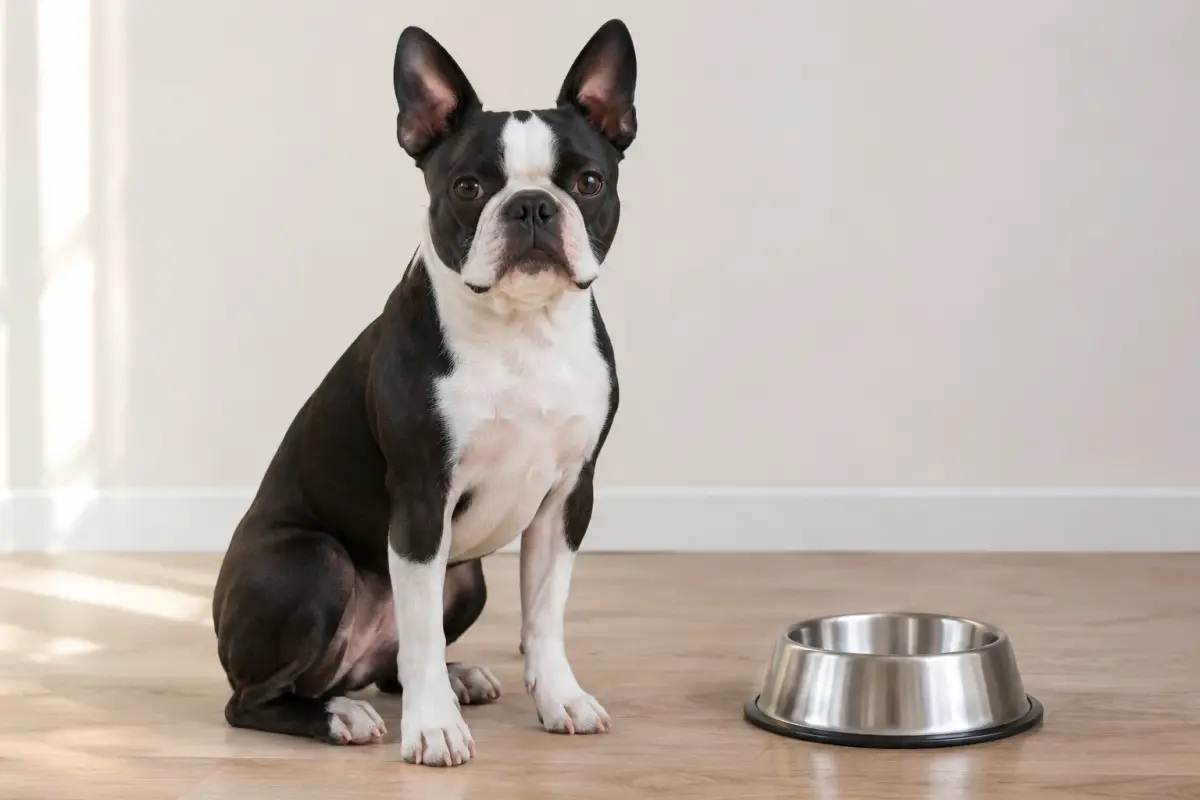
The AKC lists Boston Terriers at 12 to 25 lb, with a life expectancy of 11 to 13 years. They are compact, lively small dogs, and their short, flat muzzle shapes the practical side of eating: picking up food, chewing and breathing at the same time is harder than for a long-nosed breed, and many Bostons swallow a fair amount of air with each meal.
That is why owners often notice gas or the odd regurgitated meal. Diet cannot change a dog's anatomy, but a sensible portion, a kibble the dog can grip, and a slower pace of eating (a slow feeder bowl for flat-faced dogs helps) can make mealtimes easier. Because the breed range is wide, feed for your own dog's ideal weight, not the breed average.
How to judge any dog food label
The WSAVA Global Nutrition Committee advises ignoring unregulated marketing words such as premium or holistic and reading the nutritional adequacy statement. It should say the food is complete and balanced for a life stage, growth or adult maintenance, based on AAFCO feeding trials or AAFCO nutrient profiles. Foods labeled for intermittent or supplemental feeding should be a small part of the diet.
WSAVA also suggests asking the maker whether it employs a qualified nutritionist, who formulates the recipes and what quality control it uses. Those answers are more informative than an ingredient list. Check calories per cup as well, because on a small dog the difference between two foods can be the difference between lean and overweight.
Feeding a Boston Terrier puppy
Choose a food labeled complete and balanced for growth, and feed several small, measured meals a day. The AKC notes that small-breed puppies do better on small kibble and should be fed more often than larger breeds, because they have smaller energy reserves. Avoid sugary treats and human food, and skip supplements unless your vet prescribes them.
Keep the puppy lean rather than chubby; extra weight early on is hard to lose later and puts strain on a small frame. Ask your vet at each visit whether growth and weight are on track, and when to switch to adult food, which for a small breed is usually around its first birthday.
Kibble shape, pace and meal size
For a flat-faced dog, kibble shape matters. Many Bostons manage small, flatter or rounded pieces better than large ones, and some eat more comfortably from a shallow, wide bowl than a deep one (browse dog bowls and feeders). If your dog gulps, a slow-feeder bowl or scattering part of the meal on a snuffle mat slows it down and may reduce swallowed air.
Split the daily amount into two meals rather than one large one. Measure each meal with a proper cup or kitchen scale, count treats as part of the day, and weigh your dog every month or two. Small training treats, or pieces of the dog's own kibble, keep rewards from adding up. For treats and mealtime enrichment, see our snuffle mats and lick mats.
Sensitive stomachs and when to ask your vet
Bostons are often described as having sensitive digestion. Change foods slowly, over about a week, and stick with one that suits your dog rather than rotating often. Dry, wet and fresh commercial foods can all be complete and balanced. Grain-free diets are not needed by most dogs; ask your vet before choosing one.
Frequent vomiting, regurgitation, ongoing diarrhea, itching or weight loss are reasons to see your vet rather than switch food again. Noisy breathing that worsens during or after eating also deserves a check, because short-muzzled breeds can have airway problems that affect how they eat and exercise.
This page is general information, not veterinary advice, and it cannot replace an examination by the vet who knows your pet.
Common questions
What is the best dog food for a Boston Terrier?
A complete and balanced food for your dog's life stage, in a kibble it can pick up easily, fed in measured meals. The label's adequacy statement and the maker's nutrition expertise matter more than the brand.
How much should a Boston Terrier eat a day?
Only what keeps it lean, which depends on the food's calories and your dog's activity. Use the bag's guide for your dog's ideal weight, split into two meals, and adjust after regular weigh-ins.
Why does my Boston Terrier have so much gas?
Short-muzzled dogs often swallow air while eating, and some have sensitive stomachs. Slowing meals down can help. Ongoing gas with loose stool or vomiting is worth discussing with your vet.
Should Boston Terriers eat small-breed food?
Small-breed formulas often have smaller kibble and suit many Bostons, but they are not essential. The key checks are that the food is complete and balanced and fed in the right amount.
Sources we checked
This guide is general information, not veterinary advice. If your pet is unwell or injured, contact your veterinarian.


