Buying guides
Best Dog Grooming Vacuum: How to Choose One for Shedding
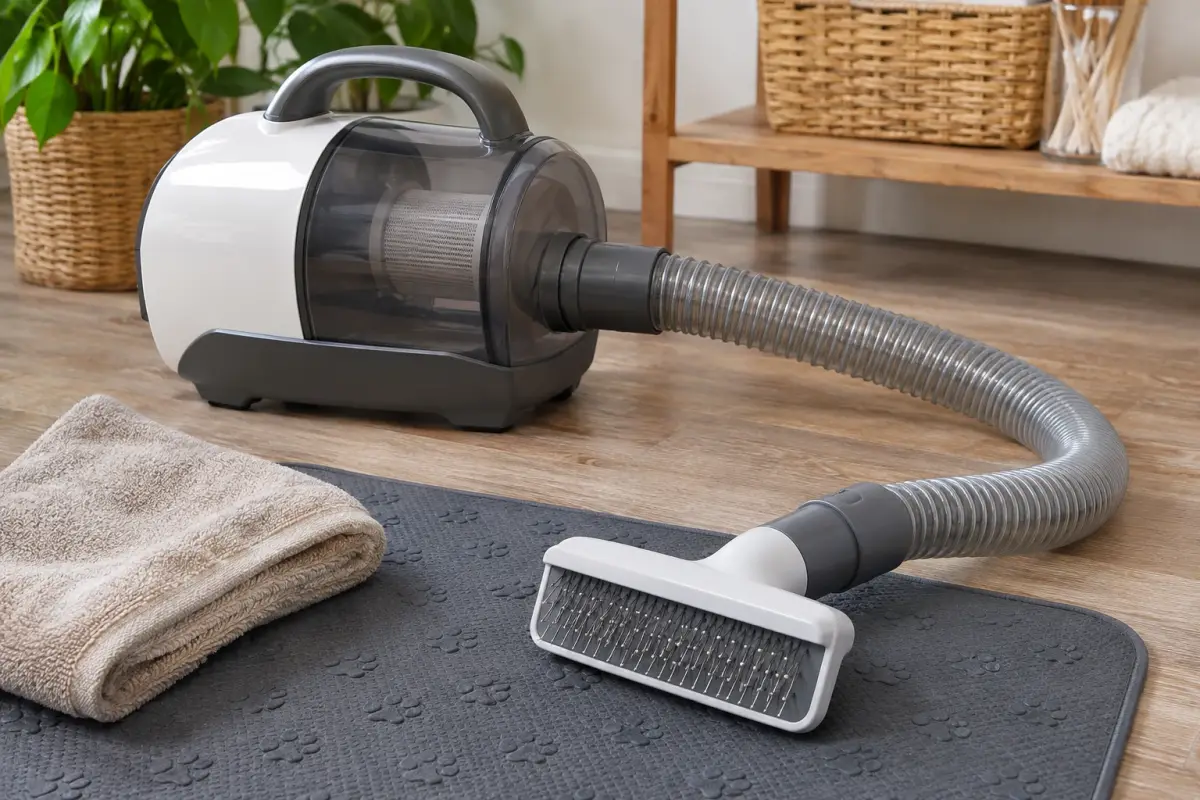
A grooming vacuum pairs a brush or deshedding head with suction, so loose hair goes straight into the canister instead of onto the floor. The ones worth buying have adjustable suction, a quiet motor, and attachments that match your dog's coat: a slicker-style head for long coats, a deshedding head for double coats, and a rubber head for short coats. Noise tolerance decides whether your dog will accept it.
By Matt GarnettUpdated November 14, 20264 min read2 sources
What matters most: suction, noise and heads
Adjustable suction on a grooming vacuum lets you start gently and keeps the head from pulling at skin or the coat. Noise matters even more: many dogs fear vacuums, so a quieter motor and a long hose that keeps the motor away from the dog make a big difference.
Attachments do the actual grooming. A grooming vacuum is really a set of familiar tools, slicker brush, deshedding blade, comb and clipper guide, with suction added. The AKC describes slickers as reaching dense undercoat and deshedding tools as removing large amounts of loose undercoat; the vacuum versions work the same way, just more tidily.
The main types compared
All-in-one grooming kits have a canister, hose and several heads, sometimes including clippers with a suction guide that pulls cut hair away. They suit owners who groom at home regularly. Brush attachments for an ordinary vacuum are cheaper but your household vacuum is usually louder and has stronger, less adjustable suction.
Handheld cordless grooming vacuums are light and quieter but have smaller bins and shorter run times, suiting small dogs and quick touch-ups. Pet blow dryers are a different tool: they blow loose undercoat out after a bath and many groomers use them for heavy shedders.
Best type for each coat
For double-coated breeds that blow coat (see how to reduce dog shedding), a kit with a deshedding head and a large canister. The AKC notes double coats shed heaviest in spring and fall and recommends a strong vacuum for the house; a grooming vacuum catches the hair before it gets there. For long or silky coats, a slicker head on low suction.
For short single coats, a rubber or bristle head is enough, as our best deshedding tools guide explains. For doodles and poodles, a grooming vacuum with a clipper attachment can help with trims, but brush and comb out tangles first. For dogs with sensitive skin, lowest suction and rounded tips.
Introducing a nervous dog
Start with the vacuum switched off and let your dog sniff it with treats. Then switch it on across the room for a few seconds, reward, and switch off. Over several days, bring it closer, then touch the head to the dog's back briefly on low suction, rewarding each step.
If your dog trembles, hides or tries to escape, stop and go back a step. Some dogs never accept a vacuum, and a regular brush works just as well. A dog that suddenly becomes sensitive to grooming in one area may be sore there, which is worth a vet check.
What to avoid
Avoid using full household-vacuum suction or a hard floor nozzle on a dog. Avoid the face, ears, paws and belly with strong suction. Avoid long sessions; ten minutes is plenty for most dogs.
Avoid deshedding heads on curly coats, which can damage the coat, and avoid vacuuming over mats, which pulls. Avoid shaving double coats to reduce shedding; the AKC warns it damages the coat and its insulation.
Avoid grooming a dog that is already overexcited or tired; a calm dog after a walk accepts the noise far better.
Care and lifespan
Empty the canister after every session and wash or replace the filter as directed, since packed hair kills suction. Clean hair from the heads and wash them in warm soapy water. Store the hose without kinks.
A well-kept grooming vacuum lasts several years. Replace filters regularly and heads when the pins or blades wear. A dog whose shedding seems excessive or patchy should be seen by your vet, as that can signal a skin or hormonal problem.
This page is general information, not veterinary advice, and it cannot replace an examination by the vet who knows your pet.
Hair collection and airflow tools compared
| Tool group | Main mechanism | What to confirm |
|---|---|---|
| All-in-one grooming kit | A canister and hose connect to several heads | Exact attachments and electrical model |
| Household-vacuum attachment | A brush connects to a separate vacuum | Connector compatibility and adjustment |
| Cordless handheld | A compact battery-powered body | Bin size,charging and runtime information |
| Pet blow dryer | Air blows outward rather than collecting hair | Airflow directions and model instructions |
Common questions
Do dog grooming vacuums actually work?
For many owners, yes: they remove loose hair like a brush or deshedding tool while catching it before it reaches the floor. They work best on dogs that tolerate the noise and with heads matched to the coat.
Is a grooming vacuum safe for my dog?
Used on low suction with grooming heads, on a calm dog, it is generally safe. Avoid the face, ears and paws, keep sessions short, and stop if your dog is frightened.
Can I use my regular vacuum to groom my dog?
Only with a pet grooming attachment and the lowest suction setting. Household vacuums are often loud and powerful, which frightens many dogs and can pull at skin.
Which dogs benefit most from a grooming vacuum?
Heavy shedders with double coats, such as huskies, shepherds, retrievers and Labradors, benefit most. Short-coated dogs benefit less, and some nervous dogs are better off with an ordinary brush.
Sources we checked
This guide is general information, not veterinary advice. If your pet is unwell or injured, contact your veterinarian.