






Care & how-to
How to Grind Dog Nails (and Grinder vs Clippers)
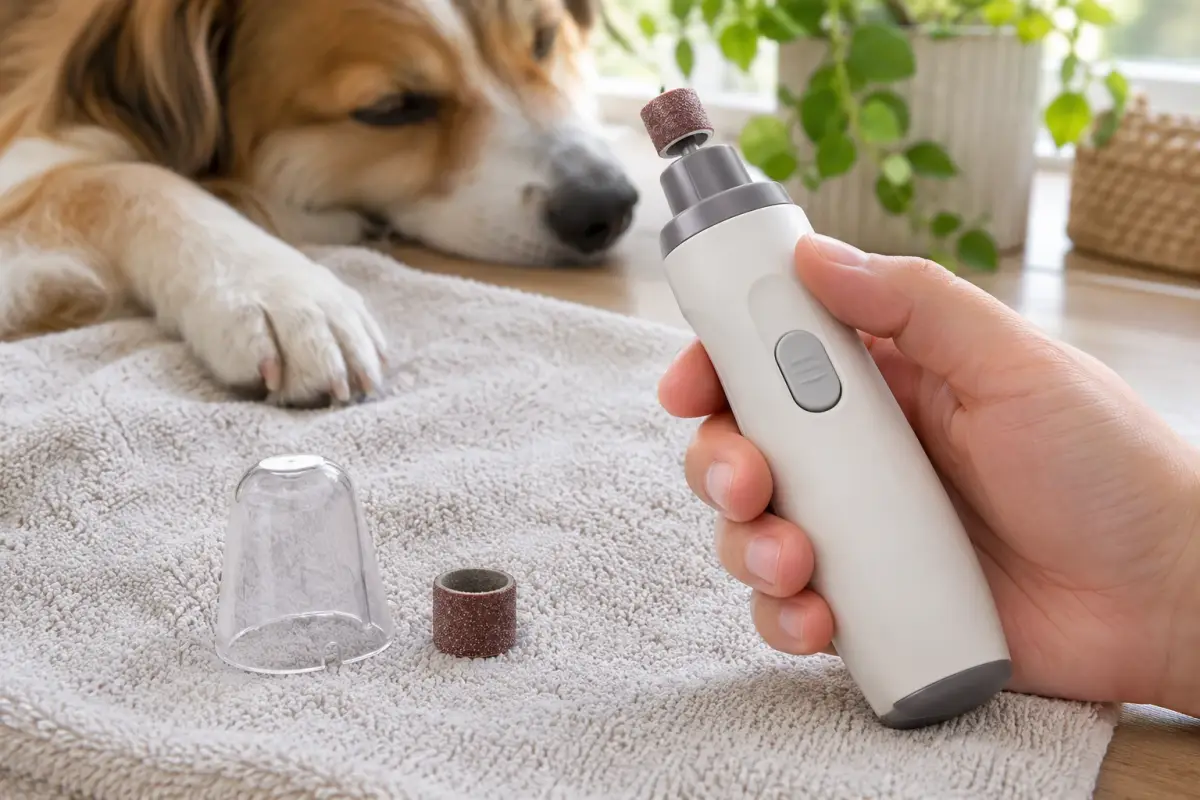
To grind dog nails, get your dog used to the grinder's sound first, then hold the toe firmly and touch the spinning drum to the nail tip for a second or two at a time, working across the bottom and smoothing the edges. Grinders are slower than clippers but give a smooth finish and less risk of hitting the quick. Many owners use both.
By Matt GarnettUpdated November 9, 20264 min read2 sources
Grinder vs clippers: the quick comparison
Clippers are fast, quiet and cheap, and they work well on most nails once you know what you are doing. Their risks are cutting too much in one go and, with guillotine-style clippers, crushing the nail; VCA Animal Hospitals prefers scissor or plier styles for a cleaner cut. Clippers leave a sharp edge that can scratch.
Grinders, rotary tools with a sanding drum, remove a little nail at a time, so the AKC and VCA both note they carry less risk of hitting the quick and leave a smooth, rounded edge. The trade-offs are the buzzing noise and vibration, which some dogs dislike, the time it takes, nail dust, and the risk of long fur catching in the drum. The AKC says some dogs tolerate grinders better and others prefer clippers; both are safe used correctly.
Introduce the grinder first
Most dogs need a few days to get used to a grinder. Day 1: Let your dog sniff the grinder while it is off, and treat. Day 2: Switch it on at a distance, treat, and switch it off. Move it gradually closer over several sessions. Day 3 and 4: Touch the body of the running grinder, not the drum, to your dog's paw, so it feels the vibration, and treat.
Day 5: Touch the drum to the tip of one nail for a second, then treat. Build from there one nail at a time. VCA suggests exactly this kind of gradual introduction, turning the tool on at a distance and pairing the sound with treats. Rushing it is the main reason dogs come to fear grinders.
Step-by-step: how to grind dog nails
Step 1: Use a grinder designed for pets (our nail grinder buying guide covers what to look for), such as a cordless electric pet nail grinder, on a low to medium speed. Step 2: Hold the paw firmly and support the toe between your thumb and finger, pushing fur back; with long-haired dogs, a piece of nylon stocking over the paw with the nail poked through keeps fur out of the drum. Step 3: Touch the drum to the nail tip for one to two seconds, then lift away. Holding it on longer makes the nail warm.
Step 4: Following the AKC's method, grind across the bottom of the nail first, then carefully in from the tip, and smooth any rough edges. Hold the grinder higher up its body for better control. Step 5: Check the nail often. On light nails, stop before the pink quick; on dark nails, stop when a dark dot or soft-looking center appears. Step 6: Reward between nails, and do not forget the dewclaws.
Keeping nails short without clipping
A grinder alone is enough for many dogs, especially if used every week or two. Regular walks on sidewalks and other hard surfaces also wear nails naturally. Some owners use a scratch board, a board covered in coarse sandpaper that the dog is taught to scratch with its front paws for treats, which files the front nails down gradually.
You can also combine methods: clip the tip with dog nail clippers, then use the grinder to smooth the sharp edge. This is faster than grinding alone and leaves a comfortable finish. Whatever you choose, frequent light maintenance keeps the quick short.
Safety tips
Grind in short bursts to avoid heat, keep the grinder away from fur, whiskers and ears, and wear safety glasses or a mask if you like, since nail dust is irritating; VCA suggests grinding outdoors. Check that the drum on your dog nail grinder is in good condition and replace worn bands. Keep styptic powder nearby in case you reach the quick.
If your dog is very fearful, shaking, growling or trying to escape, stop and go back a step, or ask your vet or a groomer to help while you continue training. Call your vet for a nail that bleeds persistently, cracks, or a toe that becomes swollen or sore.
This page is general information, not veterinary advice, and it cannot replace an examination by the vet who knows your pet.
Clippers and grinders: mechanical differences
| Tool | How material is removed | Handling factors described |
|---|---|---|
| Clippers | A cutting action removes a section | The cutting edge and the amount removed in one action |
| Grinder | A rotating sanding surface removes material gradually | Noise,vibration,dust and exposed moving parts |
Common questions
Is it better to grind or clip dog nails?
Neither is better for every dog. Grinding is gentler on the quick and leaves smooth edges; clipping is faster and quieter. Try both and use whichever your dog accepts more calmly.
How often should I grind my dog's nails?
Every one to two weeks keeps nails short with just a little grinding each time. Frequent light sessions are quicker for your dog and help the quick recede on long nails.
Does grinding dog nails hurt?
It should not, if you grind briefly and stop before the quick. Holding the drum on a nail too long can make it warm, so use short touches and give breaks between nails.
Sources we checked
This guide is general information, not veterinary advice. If your pet is unwell or injured, contact your veterinarian.


