






Buying guides
Best Dog Grooming Scissors: Straight, Curved and Thinning Shears
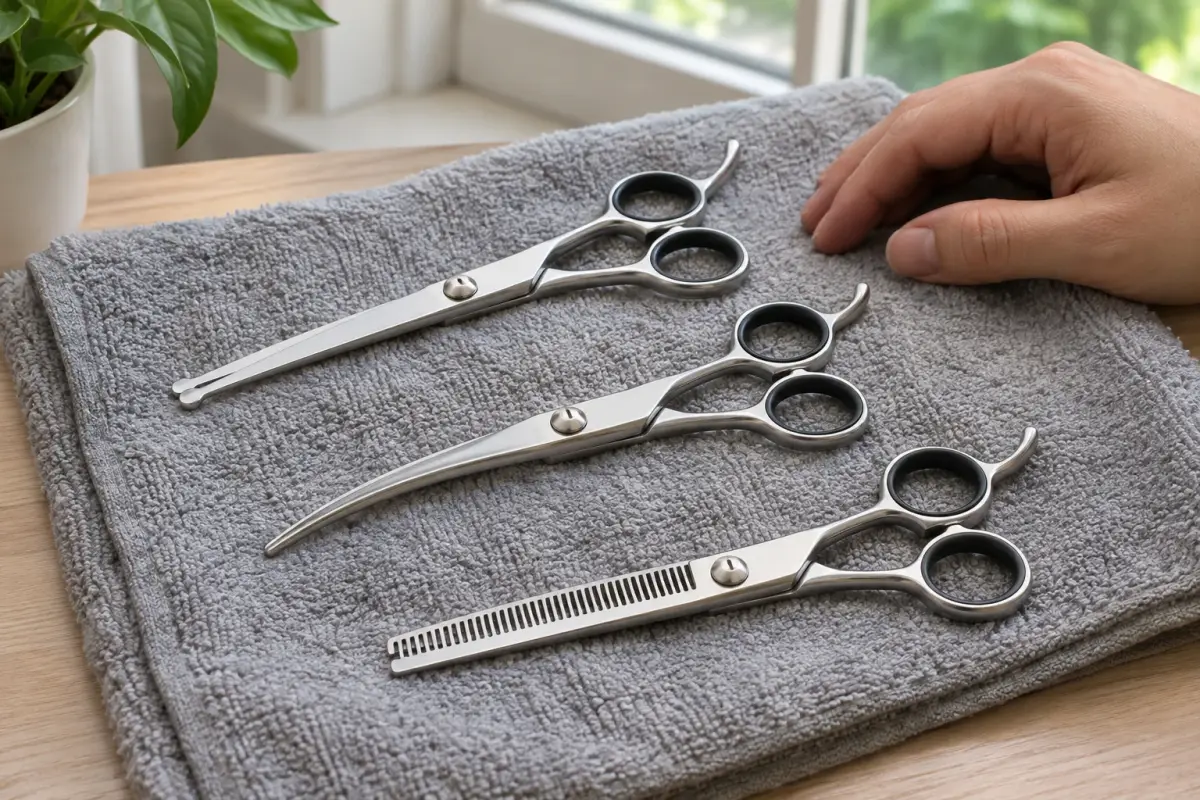
For home grooming, the best dog scissors are a pair with rounded safety tips for the face and paws, plus straight shears of around 6 to 7 inches for general tidying. Curved shears shape feet and heads; thinning shears blend lines so cuts do not show. Sharp, good-quality steel matters more than the number of pieces in a kit, because dull scissors pull hair and dogs remember it.
By Matt GarnettUpdated November 10, 20264 min read2 sources
What matters most: safety tips, sharpness and comfort
The biggest risk with scissors at home is cutting skin, which is easier than people expect because dog skin is thin and lifts with the hair. Ball-tipped or rounded-tip scissors greatly reduce that risk around eyes, ears, paws and the sanitary area. For any home groomer, a pair of safety-tip grooming scissors is the first purchase.
Sharpness is next. Sharp blades cut cleanly; dull ones fold and pull hair, which hurts and makes a dog wary of the whole session. Comfort is third. Offset handles that keep your thumb lower reduce wrist strain, and finger rests and adjustable tension screws make longer sessions easier.
Straight, curved, thinning and safety scissors compared
Straight shears are the workhorse, used for trimming body coat, legs and outlines. Curved shears follow round shapes, such as tidy feet, round heads and curved tails, and are a favorite for Poodle and Bichon styles. Thinning or blending shears have one toothed blade and remove only some hair per cut, softening lines and blending clipper work into scissored areas.
Chunkers are coarse thinning shears that remove more hair while still leaving a natural look. Small safety scissors with rounded tips, often 4.5 to 5 inches, suit faces, paws and between pads. A small home kit of safety scissors, straight shears and thinning shears covers almost everything.
Best scissors for each job and dog
For trimming hair between paw pads and around the feet, short safety-tip scissors. For tidying the face and eyes of a Shih Tzu, Maltese or doodle, rounded-tip scissors and a comb to lift the hair. For shaping a Poodle or doodle's legs and head, 7- to 8-inch straight and curved shears, used by a confident owner.
For blending a home clipper cut, thinning shears. For beginners, start with safety scissors and thinning shears, which are more forgiving than straight shears. Leave any styling around the eyes, genitals and skin folds to a professional groomer if you are unsure.
What to avoid
Avoid household or craft scissors, which are rarely sharp enough and have pointed tips. Avoid cutting mats out with scissors: the AKC's grooming advice warns that a nervous dog moving suddenly can be seriously hurt, and many mats sit right against the skin. Avoid scissoring a wriggling dog; stop and come back later.
Always keep a comb between the scissors and the skin when trimming near the body, and point tips away from the eyes. If you nick the skin and it bleeds heavily, gapes or keeps bleeding after gentle pressure, call your vet, since cuts near the ears and pads can bleed a lot.
Blade length, steel and fit to your hand
Shorter blades, around 5 to 6.5 inches, give control for detail work and small dogs. Longer blades, 7 to 8.5 inches, cover large dogs faster and shape long lines. For a first pair of straight shears, 6.5 to 7 inches is a versatile middle ground.
Look for stainless or hardened steel blades from makers that offer sharpening. Check that the pivot is smooth, the blades meet along their full length and the handles suit your hand size; left-handed groomers should buy left-handed shears, since right-handed ones cut badly when reversed.
Care, sharpening and lifespan
Wipe blades after each use to remove hair and dander, add a drop of scissor oil at the pivot, and store them closed in a case. Never cut anything except clean, dry hair; cutting paper or dirty coat dulls them fast. Bathing and brushing before trimming, as the AKC recommends, also protects your blades.
Have good shears professionally sharpened when they start to push hair rather than cut it, often every few months with regular use. Well-kept quality shears last many years; cheap kits often cannot be sharpened and are best replaced. Browse our dog grooming scissors and grooming kits, or read our best dog grooming kit guide.
Shear blade shapes and edges
| Tool | Blade construction | What to inspect |
|---|---|---|
| Straight shear | Straight cutting blades | Edge condition and usable blade length |
| Curved shear | Blades follow a curve | Curve direction and tip position |
| Thinning or blending shear | A toothed blade removes selected hairs | Tooth pattern and exact instructions |
| Chunker | A coarser thinning pattern | Tooth spacing |
| Rounded-tip scissors | Rounded rather than pointed tips | Tip alignment and the exact cutting edge |
Common questions
What grooming scissors do I need for home grooming?
Start with rounded-tip safety scissors for the face and paws, a pair of straight shears around 6.5 to 7 inches, and thinning shears for blending. That covers most home trims.
What is the difference between grooming scissors and shears?
The terms are used interchangeably. Groomers often call longer blades shears. What matters is the type: straight, curved, thinning or safety-tip. Safety-tip scissors are the most important pair for home use.
Are thinning shears good for beginners?
Yes. They remove only some hair per cut, so mistakes are less visible, and they soften the lines left by straight shears or clippers. Use them with a comb to lift the hair.
Can I cut out my dog's mats with scissors?
It is risky, because mats sit close to the skin. Work mats loose with a comb and conditioner, or ask a groomer to clip them out safely.
Sources we checked
This guide is general information, not veterinary advice. If your pet is unwell or injured, contact your veterinarian.


