






Buying guides
Best Cone Alternatives for Dogs: Matching the Type to the Wound
The best cone alternative depends on where the wound is, not on which product looks softest. An inflatable collar suits head, neck and some belly sites, a recovery suit suits torso wounds, boots suit paws, and a rigid cone is the fallback for dogs that defeat the rest. Browse our dog cone alternatives, and check any switch with your vet first.
By Matt GarnettUpdated November 14, 20266 min read2 sources
Start with the wound, not the product

A cone, or Elizabethan collar, has one job: stopping a dog from licking or chewing a surgical site, a wound or a dressing, and from scratching at the face or head. VCA Hospitals notes that licking can slow healing and lead to infection. Any alternative has to do that same job for the exact spot your dog is trying to reach, which is why location decides the choice.
Sort the options by where the problem is. Torso and belly wounds point toward a recovery suit. Head, neck and face wounds point toward an inflatable or soft fabric collar. Leg and paw wounds point toward recovery boots or sleeves. Wounds on both the body and a leg may need two items worn together. If you are not sure which group your dog's incision falls into, ask the clinic before buying anything.
The main types compared
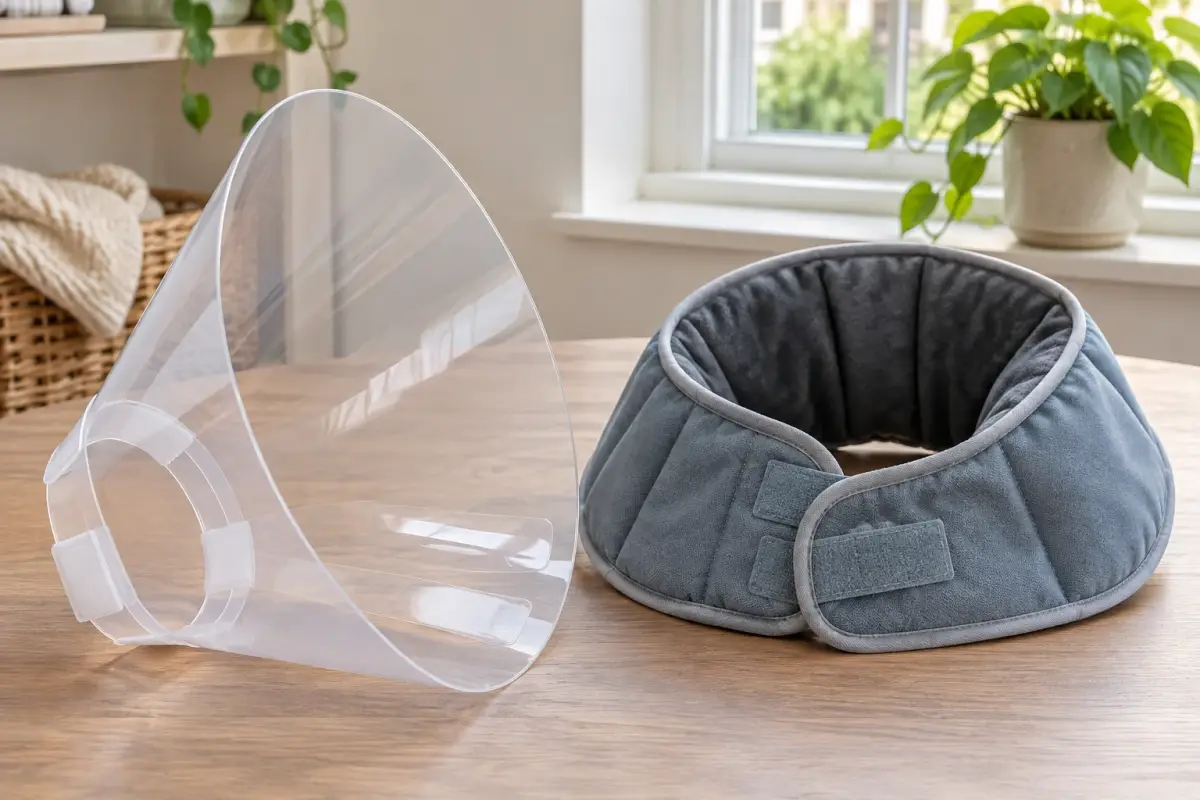
Inflatable collars are donut-shaped rings that sit around the neck. They do not block the dog's side vision the way a hard plastic cone does, and most dogs bump into fewer things. The weaknesses are real: a determined dog with a flexible body can still twist to reach a back foot or a flank, and a heavy chewer can puncture one. Our inflatable pet collars and the inflatable recovery collar are examples of this type.
Soft fabric cones are a flat cloth funnel with a flexible base, quieter than plastic and easier to sleep in. They suit dogs that panic at the rattle of a rigid cone, but a persistent licker or biter can fold one out of the way. The soft mesh recovery cone collar is this style. Recovery suits are stretchy bodysuits that cover the torso, usually with a flap for bathroom breaks, and they cannot protect an eye, a paw or a limb.
Boots and sleeves cover a bandaged or wounded paw and keep a dog from chewing at it, while a standard rigid dog cone remains the most reliable option for a dog that defeats everything softer.
Which type suits which situation
After a spay or neuter, a recovery suit is a popular choice because it covers the belly incision without anything around the neck, as long as the dog will not chew through the fabric. A dog with a neck, face or ear problem usually does better in an inflatable or soft collar, because a suit does not reach that far. For small, round-bodied dogs, an inflatable collar tends to sit better than it does on a long-necked, flexible dog.
Large dogs with long snouts can sometimes reach an incision over the top of a stuffed or inflatable collar, so a wide, firm collar or a suit may suit them better. Dachshunds and Bulldogs have unusual body shapes that standard suits may not fit well, which makes measuring even more important for them. For paws, see our dog boots; a dog that cannot be kept off a paw wound with a boot may need the rigid cone instead.
If your dog has already escaped a soft option once, do not keep trying the same thing. Layering a suit under or over a collar gives two lines of defense, and our guide to best dog cones covers the rigid option for dogs that need it.
How to size and check the fit
Measure your dog's neck against the maker's size chart rather than guessing from weight, because sizing varies a great deal between styles, and some soft collars run small. VCA Hospitals and Vetstreet both give the same fit check: you should be able to slide two fingers comfortably between the collar and the neck. Too loose and the dog backs out of it; too tight and it can restrict breathing or swallowing.
Check the length as well. Whatever sits around the neck should not drag on the floor when your dog walks, or it will catch and fall off. For a recovery suit, check the chest, the back length and the leg openings, and make sure the bathroom flap lines up with where your dog actually goes. Recheck the fit after a day, because swelling and movement can change how a collar sits.
What to avoid
Do not make a homemade cone from a towel, a pool noodle or a cardboard ring. The veterinarian quoted in the Vetstreet guide specifically warns against this, since a poorly shaped collar can slip, restrict the neck or fail to keep the dog away from the wound. Also avoid putting bitter sprays or creams on a wound to discourage licking, which can make the problem worse.
Be careful with inflatable collars in a crate if your dog chews, because a popped collar is no protection at all. Never leave a dog alone in a collar or suit you have not watched them wear for a while, and do not remove a rigid cone to make a dog more comfortable without the vet's agreement. If your dog is licking a wound persistently despite a collar, that can signal pain or infection and deserves a call to the clinic.
Eating, drinking and sleeping in a collar
A properly fitted collar should not stop normal eating and drinking, but a deep bowl can be awkward. VCA suggests a shallow dish or plate, and raising the food or water can help. If you have to remove a collar for meals, supervise the whole time and put it straight back on afterward.
For the first few hours, keep your dog in a room without movable stools, chairs or low tables, and clear small items off shelves, because dogs often bump into things while they adjust. Most settle within a few hours. If you use an inflatable collar in a crate, make sure the dog can still stand, turn around and lie down comfortably.
How long and when to call your vet
Most dogs wear a cone or alternative for 10 to 14 days after spay or neuter surgery, according to the Vetstreet guide, but your vet's discharge instructions come first. VCA says the collar stays on until the wound has fully healed, which can take a few days or several weeks, and dogs with chronic skin problems may need one longer.
Call your vet if the wound looks red, swollen or is oozing, if your dog keeps getting at it, if the collar cannot be put back on properly, or if your dog strongly resists any option and you want to talk through alternatives. For a wider look at the products, see our range of dog cone alternatives.
This page is general information, not veterinary advice, and it cannot replace an examination by the vet who knows your pet.
Common questions
What can I use instead of a cone for my dog?
Common alternatives are inflatable collars, soft fabric cones, recovery suits for torso wounds, and boots or sleeves for paws. Which one works depends on where the wound is, so ask your vet before swapping.
Is a recovery suit better than a cone after spaying?
A suit can protect a belly incision well and does not restrict vision, but it only works if your dog will not chew through it. Check with your vet that it suits your dog's surgery site.
How tight should an inflatable dog collar be?
You should be able to slip two fingers between the collar and the neck. It must be snug enough that the dog cannot back out of it, but it should never restrict breathing or swallowing.
Can my dog sleep in a cone alternative?
Many dogs sleep fine in a soft or inflatable collar, but supervise at first and check for chewing or punctures. In a crate, make sure the dog can still stand, turn around and lie down.
How long does a dog need to wear a cone alternative?
Often 10 to 14 days after spay or neuter surgery, but it depends on the wound and your vet's instructions. Keep the collar or suit on until the vet says the site has healed.
Sources we checked
This guide is general information, not veterinary advice. If your pet is unwell or injured, contact your veterinarian.


