






Buying guides
Best Dog Cone: How to Choose a Recovery Collar That Works
The best dog cone is the one that actually stops your dog reaching the wound, which means it extends a little beyond the tip of the nose and fits snugly at the neck. Hard plastic cones protect the most; soft, inflatable collars and recovery suits are more comfortable but only work for some wounds. Follow your vet's advice on which suits the injury.
By Matt GarnettUpdated November 14, 20264 min read2 sources
What a cone has to do
A cone, or Elizabethan collar, exists to stop a dog licking, chewing or scratching a wound, incision or treated area. VCA notes that many dogs need a protective collar to keep them from injuring a wound, and that vets often recommend one, or an alternative, to stop a dog licking a surgical incision. A dog that reaches the site can reopen stitches or introduce infection.
So the first test is simple: with the cone on, can your dog reach the area? Watch it try to lick its flank, paws and tail. If it can, the cone is too short or the wrong type for that wound, whatever the comfort advantages. Our dog cones are worth comparing with that test in mind.
Cone types compared
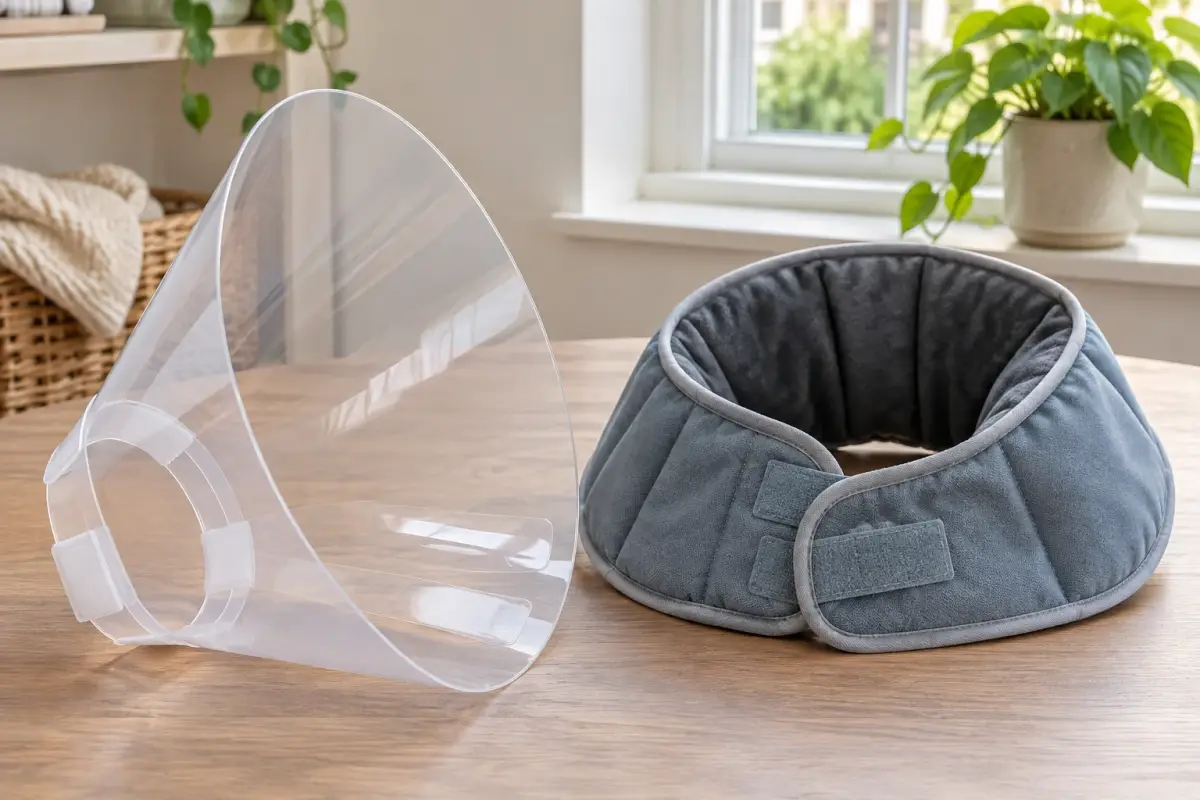
Hard plastic cones give the most reliable protection for head, eye, leg, paw and incision wounds, and clear plastic lets the dog see around it. They are noisy, bump into doorways and can make eating harder. Soft fabric or foam cones, such as this soft mesh recovery cone collar, are quieter and kinder to furniture but some dogs fold them back and get past them.
Inflatable donut collars let the dog see normally and sleep comfortably, but they do not stop a dog reaching its paws, lower legs or tail, so they suit only some upper-body incisions. Recovery suits, body garments that cover the torso, work for abdominal spay or neuter incisions and some skin wounds. VCA mentions bandages, stockinettes or a shirt as alternatives depending on location.
The best type for each situation
For eye injuries or eye surgery, a rigid cone is usually required to stop rubbing; VCA notes dogs with corneal ulcers must wear an e-collar. For paw, leg or tail wounds, a hard or firm soft cone that extends past the nose is needed. For a spay or neuter incision, a cone or a recovery suit can work, depending on your vet.
For hot spots on the body, a cone helps stop chewing while the skin heals. For an anxious dog that panics in a hard cone, ask your vet whether a soft cone or suit would protect the wound adequately. Your vet's instruction for the specific wound takes priority over comfort.
How to size and fit a cone
Measure your dog's neck where the collar sits, and the distance from the neck to the tip of the nose. The cone should extend a little beyond the nose. The neck opening should be snug enough that the dog cannot pull it off but allow two fingers underneath. Most cones fasten to the dog's own collar through loops.
Check that your dog can eat and drink. Raise bowls, or remove the cone briefly at mealtimes only under supervision if your vet agrees. Widen doorways by clearing clutter, and keep a close eye on the first night. VCA notes many dogs try to remove the collar at first but get used to it.
Comfort, care and when to call your vet

Keep the cone on as long as your vet advises, usually until the wound is healed or stitches are removed. Clean it daily with mild soap, and check the skin under the neck edge for rubbing. If a cone cracks or no longer fits, compare dog cones and cone alternatives before replacing it. Never leave a dog in a cone unsupervised near pools, stairs or other hazards.
Call your vet if the wound looks red, swollen, wet or smelly, if stitches open, if your dog will not eat or drink in the cone, or if it seems in pain. Do not remove a cone early because the wound looks good.
This page is general information, not veterinary advice, and it cannot replace an examination by the vet who knows your pet.
Common questions
What is the most comfortable cone for a dog?
Soft fabric cones and inflatable collars are usually more comfortable, but they do not protect every wound. Choose the most comfortable option that still stops your dog reaching the site.
Are inflatable cones as good as plastic cones?
Not for every wound. Inflatable collars can work for some upper-body incisions but do not stop a dog reaching its paws, legs or tail. Ask your vet which suits the injury.
Can a dog sleep with a cone on?
Yes, most dogs must wear the cone overnight, which is when they often lick unsupervised. Give extra space around the bed and check the fit at the neck.
What can I use instead of a cone after a spay?
A recovery suit or body garment often works for abdominal incisions. Check with your vet first, and switch back to a cone if your dog can still reach the incision.
Sources we checked
This guide is general information, not veterinary advice. If your pet is unwell or injured, contact your veterinarian.


