






Buying guides
Best Collapsible Dog Crate: Folding Wire vs Soft vs Plastic
The best collapsible dog crate for most homes is a folding wire crate: it folds flat in seconds, is strong enough for chewers and suits large dogs. Soft-sided folding crates are lighter and better for travel, but only for calm, crate-trained dogs that do not chew. Folding plastic crates sit in between. Whatever the type, size it so your dog can stand, turn and lie down, with 3 to 4 inches spare.
By Matt GarnettUpdated November 10, 20264 min read2 sources
What matters most: strength, how it folds and size
A collapsible dog crate has to do two jobs: hold your dog securely when set up, and fold quickly and compactly when not. The AKC calls metal crates the sturdiest you can buy and the best for chewers, and most wire crates fold flat like a suitcase. Soft crates, the AKC notes, are economical and light, fold for storage and suit small dogs that do not chew.
Size matters as for any dog crate. The AKC's method is to measure your dog standing, nose to tail base and floor to top of head, then add 3 to 4 inches to each. A crate that folds beautifully is no use if your dog has to crouch inside it.
Folding wire, soft-sided and folding plastic compared
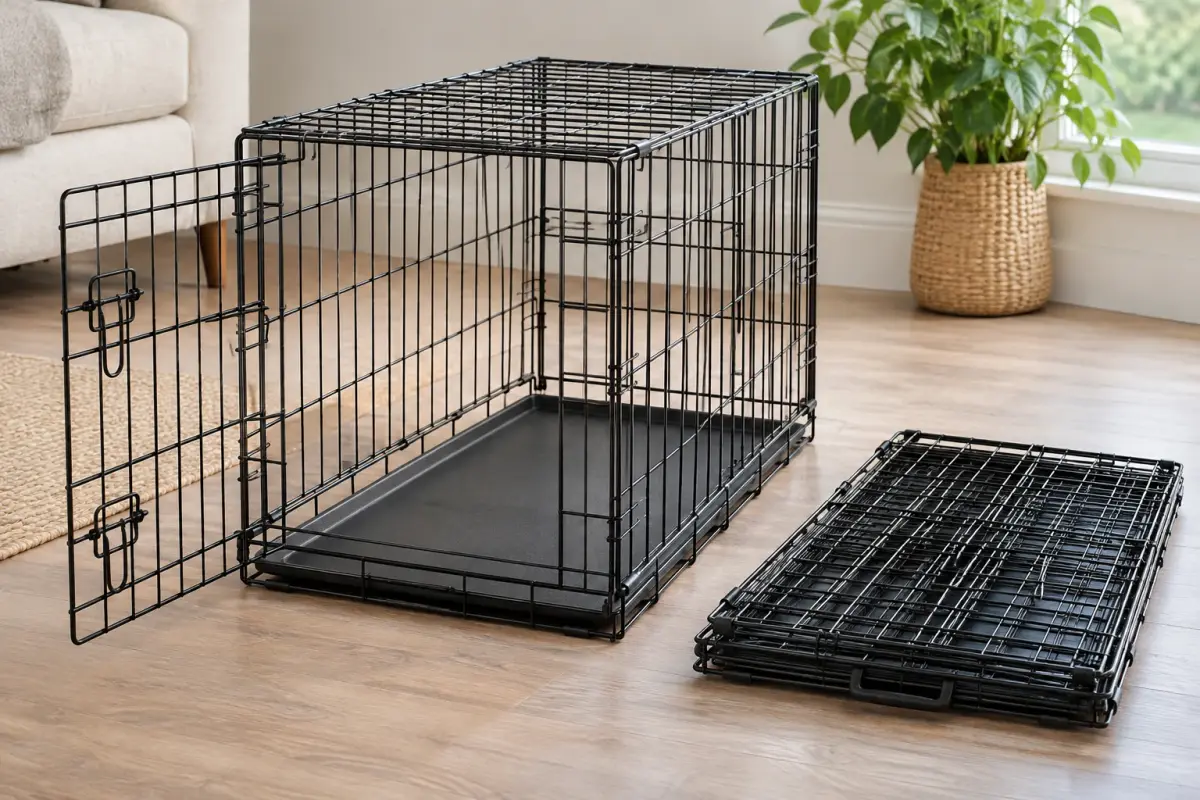
Folding wire crates, such as this single-door metal collapsible dog cage, are strong, ventilated and easy to clean, with a removable tray. Look for heavy-gauge wire, rounded corners, two secure latches per door and a divider for puppies. They are heavy in large sizes, so check the folded weight if you will carry it often.
Soft-sided crates, such as this collapsible soft dog crate with mesh windows, use a metal or plastic frame with mesh and fabric panels. They weigh a few pounds, pop up in a minute and pack into a bag, which suits hotels, camping and visits. They are easy to chew or claw through and harder to clean. Folding plastic crates have hinged panels and a solid base; they give a den feel and fold smaller than standard plastic crates, though fewer are airline approved.
Best collapsible crate for each dog and use
For everyday home use and puppies, a folding wire crate with a divider. For large dogs, a heavy-duty folding wire crate in the right length, often 42 or 48 inches; soft crates rarely hold big dogs securely. For travel with a calm, crate-trained small or medium dog, a soft-sided crate with sturdy zips and a firm floor.
For car travel, a crate that can be secured so it does not slide; the AKC's car safety advice is that dogs should ride in a crate or a crash-tested restraint. For dogs that chew or try to escape, avoid soft crates entirely. For small apartments, any folding crate that stores flat behind a door helps.
What to avoid
Avoid soft-sided crates for puppies, chewers, anxious dogs and escape artists. Avoid thin-gauge wire crates with single latches for strong dogs. Avoid crates that fold with sharp edges or pinch points near the door, and never leave a collar or harness on a dog in a wire crate.
If your dog panics in any crate, drooling, scratching at the door or injuring itself, slow down crate training, and talk to your vet or a positive-reinforcement trainer about anxiety. A sturdier crate is not the answer to a distressed dog.
How to measure and set up
Measure your dog standing: tip of the nose to the base of the tail, and floor to the top of the head. Add 3 to 4 inches to each, as the AKC advises, and compare with the crate's inside dimensions. Standard lengths run 24, 30, 36, 42 and 48 inches. Check the folded size against your car trunk or closet.
Practice folding and unfolding at home, and check every latch clicks shut. Soft crates should have a firm, flat floor panel that does not sag. Put a fitted mat inside and introduce the crate with treats before you need it on a trip.
Care and lifespan
Wash the wire tray and wipe the bars after accidents; most soft crates have removable, washable covers or can be spot cleaned. Dry fabric fully before folding to avoid mildew. Check zips, frame joints and latches regularly.
A good folding wire crate lasts a dog's lifetime and longer, so it is worth comparing collapsible dog crates and dog travel crates before you buy. Soft crates last a few years with careful use; retire one with torn mesh or broken zips. Folding plastic crates last well if hinges and clips are checked.
Collapsible crate bodies and storage
| Construction | How it folds | What to inspect |
|---|---|---|
| Wire | Metal panels collapse around a tray | Folded weight,corners and door latches |
| Soft-sided | Fabric and mesh supported by a folding frame | Frame joints,zippers and fabric condition |
| Folding plastic | Hinged rigid panels and a solid base | Panel locks and the folded footprint |
Common questions
Are collapsible dog crates safe?
Folding wire crates are safe and strong for most dogs. Soft-sided crates are safe only for calm, crate-trained dogs that do not chew or scratch, and should not be used unsupervised for puppies.
What is the best collapsible crate for large dogs?
A heavy-duty folding wire crate in the right length, often 42 or 48 inches, with two latches per door. Soft crates rarely contain large dogs securely.
Is a soft crate good for travel?
Yes, for a calm, crate-trained small or medium dog. It is light and packs small. Secure it in the car and never use it for a dog that chews.
What size folding crate do I need?
Measure your dog standing, nose to tail base and floor to head, and add 3 to 4 inches to each. Compare with the crate's inside dimensions.
Sources we checked
This guide is general information, not veterinary advice. If your pet is unwell or injured, contact your veterinarian.


