






Buying guides
Best Bicycle Dog Carrier: Baskets, Bags and When to Use a Trailer
The best bicycle dog carrier is the one built for your dog's size: the AKC says a basket on the handlebars or rear frame suits a small dog, while a trailer towed behind the bike suits a medium or large dog. Whichever you pick, it needs safety tethers or an enclosure, room for the dog to lie down, and a secure mount.
By Matt GarnettUpdated November 14, 20265 min read2 sources
Basket, bag or trailer: choosing by dog size
The AKC sorts bike carriers mainly by dog size. Baskets suit small dogs, trailers suit medium and large dogs, and it notes that most small-to-medium dogs cannot keep up with a bike on foot because of their shorter legs. A bicycle carrier is therefore a way of letting a dog come along, not a convenience accessory. Browse our dog bike baskets if your dog is small, and read our guide to the best dog bike trailer for larger dogs.
If you are weighing up carriers more broadly, for example for walking as well as riding, see our dog carriers. The key point is that the carrier has to be designed for a dog riding on a bike. The AKC is blunt about it: only put your dog into baskets that are designed for dogs to ride in.
What matters most in a bike basket or bag
Size and restraint come first. The AKC advises choosing a basket large enough for your dog to lie down and rest comfortably on long rides, and says some baskets include safety tethers or are completely enclosed to keep the dog from jumping out. Measure your dog lying down, compare it with the basket's inside dimensions, and ignore marketing weight claims you cannot confirm.
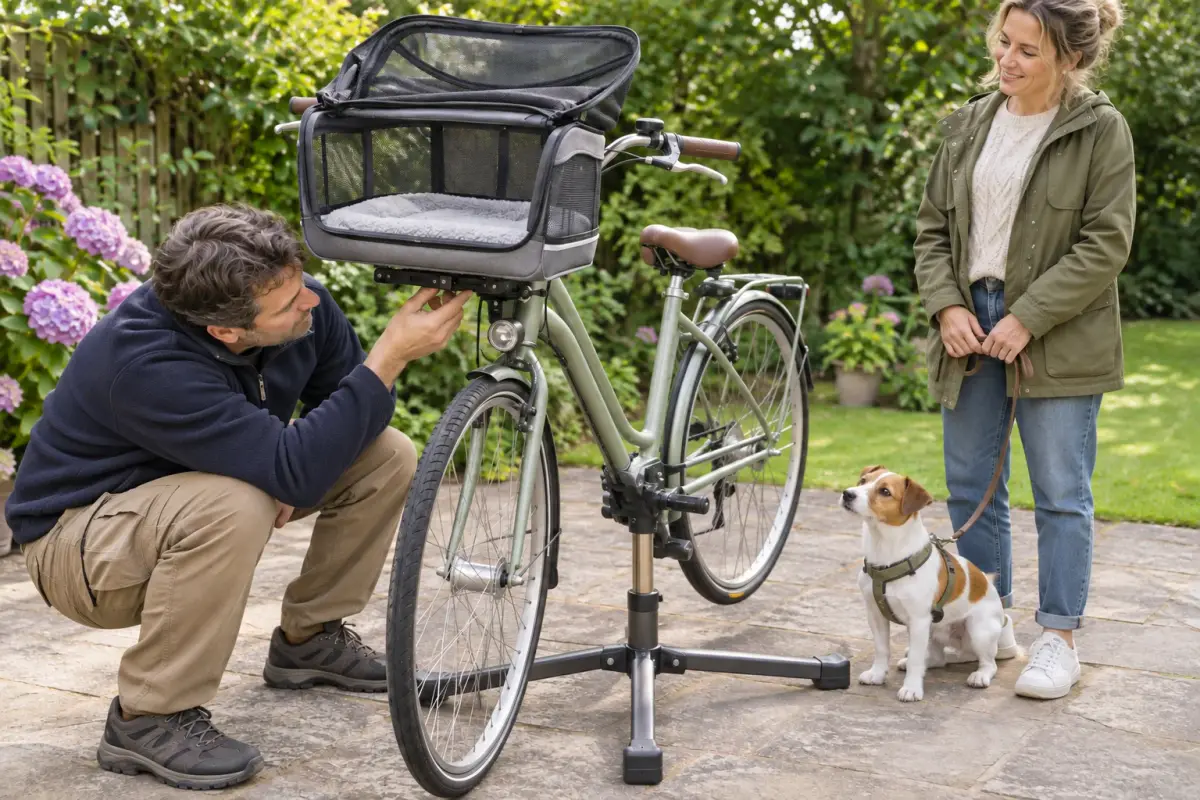
Mounting is second. A basket has to attach firmly to the handlebars or rear rack and hold when you brake or hit a bump. A removable handlebar basket carrier clips on and off for carrying the dog, while a rear-rack basket carrier sits behind you. Check that your bike has a suitable rack or bars before buying, and read the maker's mounting instructions.
Front-mounted versus rear-mounted
A front basket keeps your dog in sight, which makes it easy to spot signs of stress, but weight at the front changes how the bike steers, so take it slowly until you are used to it. A rear carrier moves the weight behind you and out of the steering, but you cannot see your dog without turning, so a calm, well-trained passenger matters more.
Whichever position you choose, ride a short, quiet route first and notice how the bike handles with a dog on board. Keep the carrier's load balanced and avoid putting heavy bags in the same basket. If your bike has a step-through frame or a low rack, mounting is usually simpler, and an e-bike can make carrying a dog easier on hills.
Safety: harness, tether and heat
For baskets the AKC says to follow the manufacturer's instructions for attaching your dog's harness, and for trailers to use the trailer's own harness or seatbelt. The dog must be securely attached before you start so it cannot jump out into traffic. A collar-only attachment is a poor idea, because a sudden stop can load the neck, so use a fitted body harness. Our best dog harness guide covers fit.
Hot pavement and long rides are the other risks. The AKC points out that trailers and baskets help on hot days when concrete would burn paws, but the dog is still exposed to the sun, so plan shade, water and breaks. If your dog seems unwell, pants heavily or will not settle, stop. Get a vet's go-ahead for any new exercise routine, especially for a puppy, a senior or a dog with health problems.
Getting your dog used to a carrier
The AKC advises introducing the basket slowly: lift your dog in, secure the harness, give a treat and praise, then lift it out, and repeat several times. Let your dog get comfortable in the basket before a long ride, then move the bike a few inches, then a few feet. For trailers the same approach applies, starting with the trailer moving only a few inches at a time.
Keep sessions short and rewarding. Many dogs need several days before they accept being in a carrier on a moving bike. If your dog resists, go back a step rather than forcing it, because a carrier a dog fears is also a carrier it may try to leave. Never leave a dog in a carrier on a parked bike, as the bike can tip over.
When a basket is not the right answer
A basket is for small dogs. If your dog is too big to lie down in one, move to a trailer, which the AKC recommends for medium and large dogs. For a very large dog, the AKC says cargo bikes can carry them, and an e-bike can help with hills. Running alongside is an option only for healthy, large dogs, and the AKC advises a vet's clearance first and a leash fixed to the bike to keep the dog away from the wheel.
You can compare options on our dog bike trailers page, and our dog bike baskets page lists the carriers for smaller dogs. If you are unsure which suits your dog, measure your dog first and let the measurements, not the picture on the box, decide.
Common questions
What is the best way to carry a dog on a bicycle?
The AKC suggests a basket on the handlebars or rear frame for a small dog, and a trailer for a medium or large dog. Whichever you choose, the dog must be securely attached and the carrier designed for a dog.
How big does a bike basket need to be for my dog?
The AKC says to choose one large enough for your dog to lie down and rest comfortably on long rides. Measure your dog lying down and compare with the basket's inside size, rather than relying on weight limits alone.
Is a front or rear bike carrier better for a dog?
A front basket lets you see your dog but changes steering with the extra weight. A rear carrier keeps weight behind you but hides the dog from view. Try a short ride either way before committing.
How do I get my dog used to a bike basket?
Introduce it slowly. Lift your dog in, secure the harness, give a treat and praise, then lift it out and repeat. Let the dog get comfortable before any ride, then build to short, slow trips.
Should a dog wear a harness in a bike carrier?
Yes. The AKC says to follow the manufacturer's instructions for attaching the dog's harness to the basket. A fitted body harness keeps the dog secured and avoids loading the neck during sudden stops.
Sources we checked
This guide is general information, not veterinary advice. If your pet is unwell or injured, contact your veterinarian.


