






Buying guides
Best Dog Bike Trailer: How to Choose One for Safe Rides
A good dog bike trailer has a weight limit above your dog's weight, a cabin it can sit and lie down in, a secure hitch with a backup strap, and an internal tether so your dog cannot jump out. The AKC says trailers suit medium and large dogs, older dogs that cannot keep pace, and hot days when concrete would burn paws. Ventilation, suspension and a low floor make rides more comfortable.
By Matt GarnettUpdated November 13, 20263 min read2 sources
When a trailer makes sense
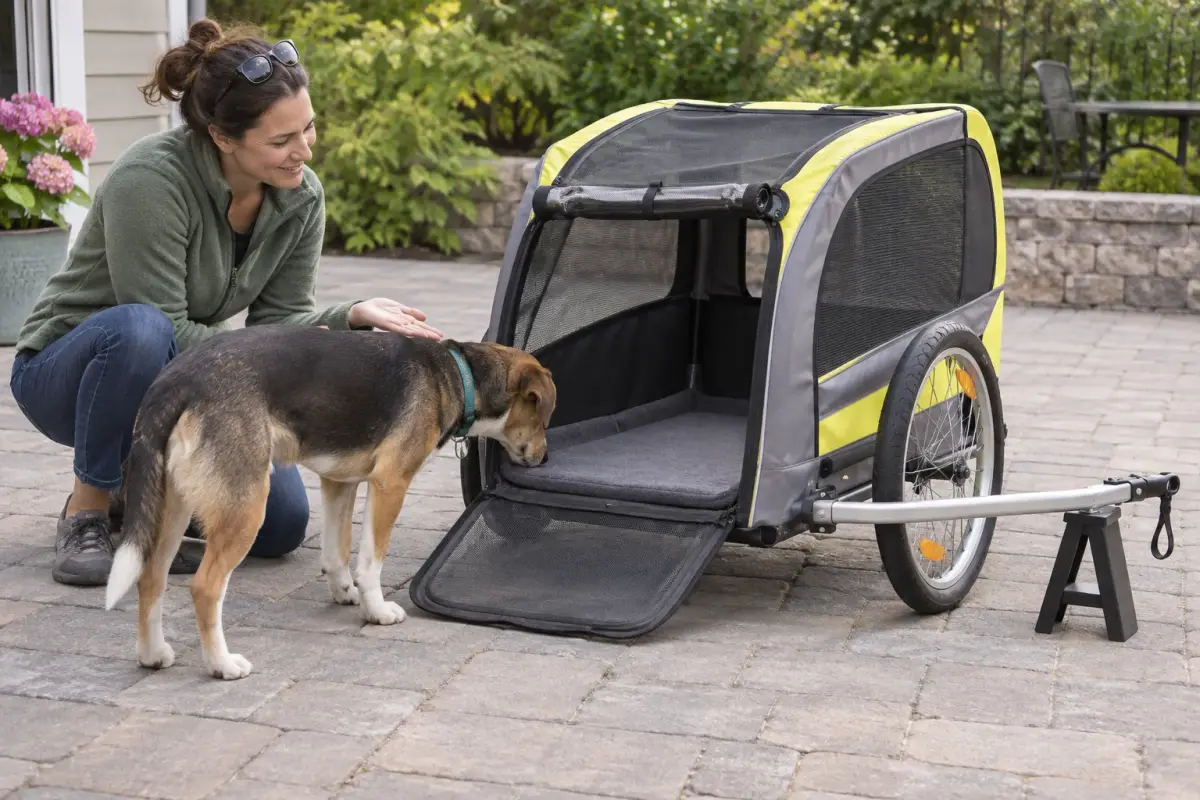
The AKC recommends a vet check before any dog runs beside a bike and notes that most small and medium dogs cannot keep up because of their shorter legs. For those dogs, and for older dogs, a trailer, such as a dog bike trailer with wheels for medium dogs, lets them come along without the strain. The AKC also points out trailers help on busy city streets and when it is too hot for a dog to run on concrete.
For small dogs, the AKC suggests a dog-specific basket with safety straps instead. Trailers suit dogs from roughly 20 lb up to the trailer's rated limit.
What matters most
Weight limit and cabin size come first. Check the limit against your dog's weight and measure your dog sitting and lying, then compare with the cabin's inside dimensions. A dog that cannot lie down will try to stand and shift, which unsettles the trailer.
Security comes next. The AKC stresses making sure your dog is securely attached so it cannot jump out into traffic. Look for an internal tether that clips to a harness, zip-down mesh doors, a flag for visibility, reflectors, and a hitch with a secondary safety strap to the bike frame.
Features compared
Hitch types: axle-mounted hitches are stable and common; seat-post hitches fit more bikes but put more sway on the seat. Wheels: larger air-filled tires roll more smoothly than small solid ones. Suspension: some trailers have it, which is kinder for older dogs and rougher paths.
Floor and entry: a low floor and a rear door make it easier for heavy or stiff dogs to get in. Ventilation: mesh panels on several sides with a rain cover you can roll up. Conversion kits turn some trailers into strollers for walks, and the 2-in-1 Dog Bike Trailer Pet Stroller Carrier is a two-in-one design.
Training your dog to ride
Introduce the trailer at home, unhitched, with treats and a favorite blanket inside, as the AKC suggests for baskets: acclimate gradually with treats and praise. Next, sit your dog in the trailer and walk the bike slowly around a quiet area.
Build up to short rides on quiet paths before any road riding. Stop if your dog pants heavily, whines or tries to climb out, and try again with shorter sessions. A calm dog lies down; a dog standing and shifting is not ready.
What to avoid
Avoid clipping the tether to a collar; use a harness. Avoid riding fast downhill or cornering sharply with a heavy dog, which can tip a trailer. Avoid enclosed cabins in hot sun; the AKC warns hot pavement burns paws, and a closed cabin in heat is just as risky.
Watch for heavy panting, drooling or bright red gums, early heatstroke signs per the AKC, and stop in shade, cool your dog and call a vet if signs persist. Avoid overloading beyond the weight limit.
Care and lifespan
Check tire pressure, hitch bolts and the safety strap before each ride. Wash the cabin fabric and replace mesh that tears.
A well-made trailer lasts years; replace the hitch or frame after any crash, even if it looks fine.
Store the trailer out of the sun when not in use, because UV light weakens mesh and fabric over a season or two. When it is time to replace one, browse our dog bike trailers.
This page is general information, not veterinary advice, and it cannot replace an examination by the vet who knows your pet.
Trailer components to compare
| Component | Alternative arrangements | Verify on the exact trailer |
|---|---|---|
| Hitch | Axle or seat-post connection | Bicycle compatibility and attachment instructions |
| Wheels | Different diameters,treads and tire constructions | Tire type,pressure instructions and replacements |
| Suspension | With or without a listed suspension system | Actual mechanism and maintenance |
| Entrance | Low or raised floor with stated doors | Opening and floor height |
| Cabin panels | Mesh with separate weather covers if listed | Openings,closures and airflow clearance |
| Stroller conversion | A stated conversion kit or convertible frame | Included parts and separate operating instructions |
Common questions
Are dog bike trailers safe?
They can be, with a weight limit above your dog's weight, a secure hitch and safety strap, an internal tether to a harness, and calm, gradual training. Ride steadily and avoid heat.
What size dog fits in a bike trailer?
Most trailers suit dogs from about 20 lb up to their stated limit, often 50 to 100 lb. Measure your dog sitting and lying, and compare with the cabin's inside dimensions.
Can my dog run beside my bike instead?
Only a healthy, large dog cleared by a vet, says the AKC, and with a bike-attached leash. Most small and medium dogs cannot keep up, and running on concrete is hard on joints.
How do I get my dog used to a bike trailer?
Start at home with treats and a blanket inside, then walk the bike slowly, then short rides on quiet paths. End each session while your dog is relaxed.
Sources we checked
This guide is general information, not veterinary advice. If your pet is unwell or injured, contact your veterinarian.


