






Buying guides
Best Bearded Dragon Enclosure: What Actually Matters
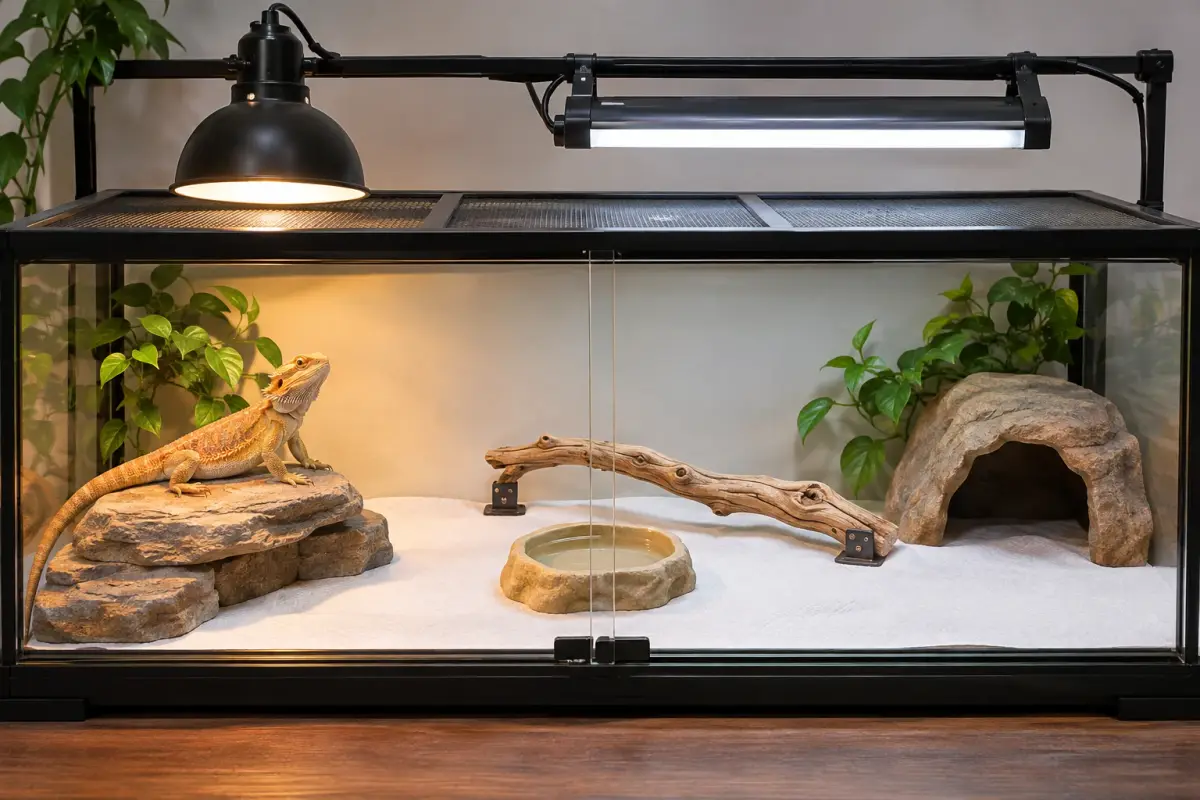
The best bearded dragon enclosure is long enough for a full-grown adult, well ventilated with a secure top, and laid out so you can create a warm end, a cool end and a UVB-lit basking area. VCA Animal Hospitals says an adult needs a 60 to 100 gallon tank or larger, with length at least three times the lizard's body length. Browse our bearded dragon tanks with those numbers in hand.
By Matt GarnettUpdated November 13, 20264 min read3 sources
Size: plan for the adult, not the baby
VCA says a juvenile can start in a 20-gallon aquarium, but as the animal grows you should provide a 60- to 100-gallon tank or larger. It also says the enclosure length should be at least three times the lizard's total body length, and the width at least 16 inches so the dragon can turn around easily. VCA's care page says healthy adults can reach 18 to 22 inches from nose to tail tip.
Do the arithmetic before you buy. Three times 18 inches is 54 inches, and three times 22 inches is 66 inches, so a long enclosure matters more than a headline gallon number. Some common tank sizes are shorter than that for a big adult, so always check the listed length, width and height, and treat bigger as better, as Merck Veterinary Manual's advice to provide the largest enclosure possible also suggests.
Security, ventilation and materials
VCA says the enclosure should be well ventilated with a secure, protective top that keeps your dragon in and other animals out. Merck adds that even when the entire top is covered by mesh, ventilation can still be hampered, so look at how air actually moves through the design. Merck also notes that wood, plastic and fiberglass enclosures are more versatile and preferable, although they can be expensive.
Glass tanks let you see your dragon but need a screened lid. A wooden enclosure with front or top access, such as a wooden reptile cage with top access or a wooden reptile cage with three windows and a slide-out tray, is a different style. Whatever you choose, compare its interior dimensions with the length rule above, since these listings are for reptiles in general. For other styles, see our reptile terrariums.
Room for a heat gradient and UVB
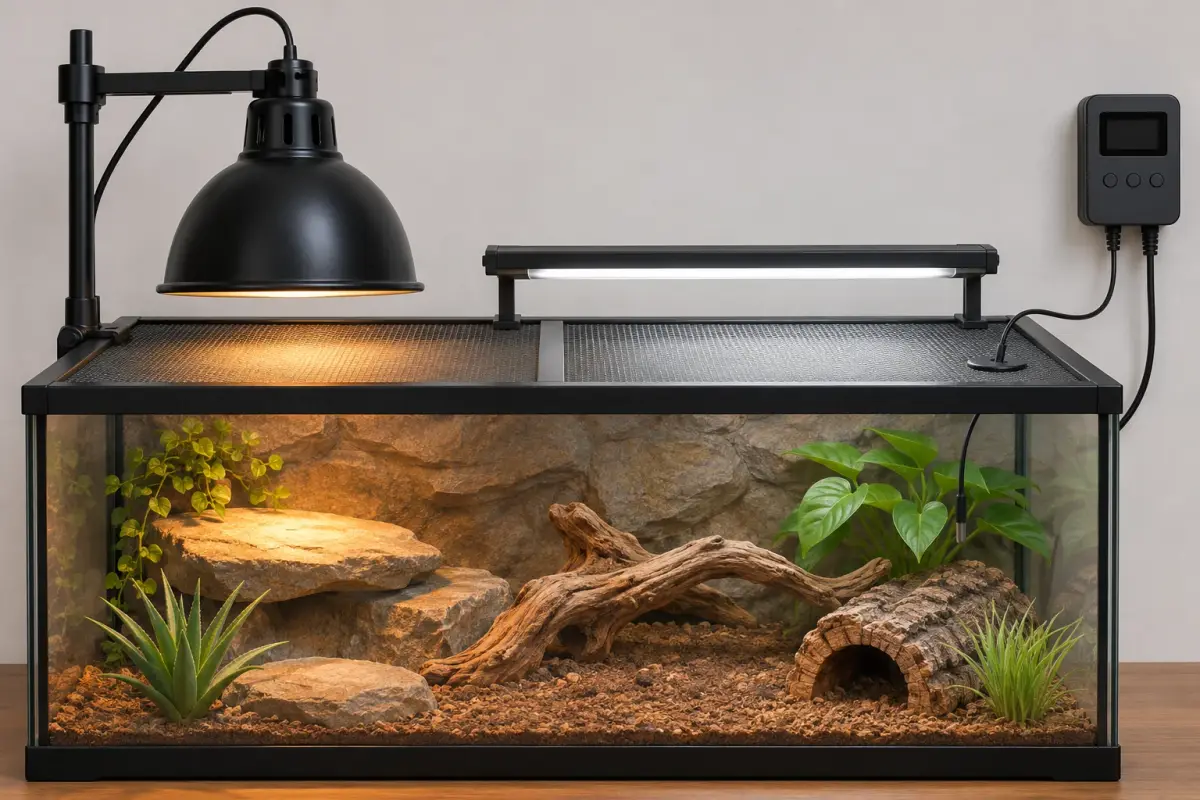
The enclosure has to let you build a temperature gradient. VCA says a bearded dragon needs a warmer area at one end and a cooler area at the other, with the cool end at about 75 to 80 degrees F and the warm end at 90 to 100 degrees F. It advises placing one thermometer at each end near the heat source, and notes that an infrared temperature gun does not replace an air thermometer. A digital unit such as an aquarium and reptile electronic thermometer is the type of tool that fits.
VCA also says bearded dragons need UVB light to make vitamin D3, and that too little UVB can lead to metabolic bone disease. The light must reach the animal without glass or plastic in between, since screening can reduce UVB, and it should sit within about 6 to 18 inches of the pet. Bulbs lose output with age, so VCA says to replace them every six months or as the manufacturer directs. A very short or very tall enclosure can make it hard to place the lamp at the right distance.
Floor, furnishings and what to avoid
VCA recommends a substrate that is easy to clean, such as newspaper, butcher paper or other recycled paper, and says to avoid sand, gravel, wood shavings, walnut shells, corncob and cat litter because they can cause an intestinal blockage if swallowed. It warns even so-called digestible calcium sand may cause a blockage. Ask your vet which floor covering suits your dragon.
Add large rocks that are easy to climb for basking, and low horizontal branches, making sure everything is secure and cannot fall on the lizard. Provide a hiding place and a shallow dish for food that does not move easily. VCA says never to use hot rocks, because they can become dangerously hot and burn your dragon. It also says a bearded dragon is usually best housed alone, since dragons kept together may compete and fight.
Which enclosure suits which situation
For a hatchling, a smaller tank is fine at first, but you will be buying again within months, so many owners go straight to the adult size and use furnishings to make the space feel smaller. For an adult, prioritize length, a secure lid, and enough height to hang a UVB fixture at the right distance above the basking rock.
If you are short on space, a wooden or glass enclosure on a reptile tank stand can work, though the listing says the stand excludes the tank, so check what is actually included. If your dragon becomes unusually inactive or stops eating, call a vet who sees reptiles instead of assuming it is brumating, as VCA advises. For more reading, see our collection of bearded dragon tanks.
Common questions
What size enclosure does an adult bearded dragon need?
VCA says a 60- to 100-gallon tank or larger, with length at least three times the dragon's total body length and width of at least 16 inches. Adults can reach 18 to 22 inches, so check the listed length.
Do bearded dragons need UVB light?
Yes. VCA says they need UVB to make vitamin D3, and too little can lead to metabolic bone disease. The bulb should be a reptile UVB bulb, 6 to 18 inches from the pet, with nothing between.
What temperature should a bearded dragon enclosure be?
VCA recommends about 75 to 80 degrees F at the cooler end and 90 to 100 degrees F at the warmer end. Use a thermometer at each end, and allow the temperature to drop at night.
Can two bearded dragons live in the same enclosure?
VCA says a bearded dragon is usually best housed alone. Dragons kept together may compete for food or basking space and fight, even if they seemed to get along, so ask your vet before housing them together.
Sources we checked
This guide is general information, not veterinary advice. If your pet is unwell or injured, contact your veterinarian.


