






Breeds
American Bulldog vs English Bulldog: Two Very Different Dogs
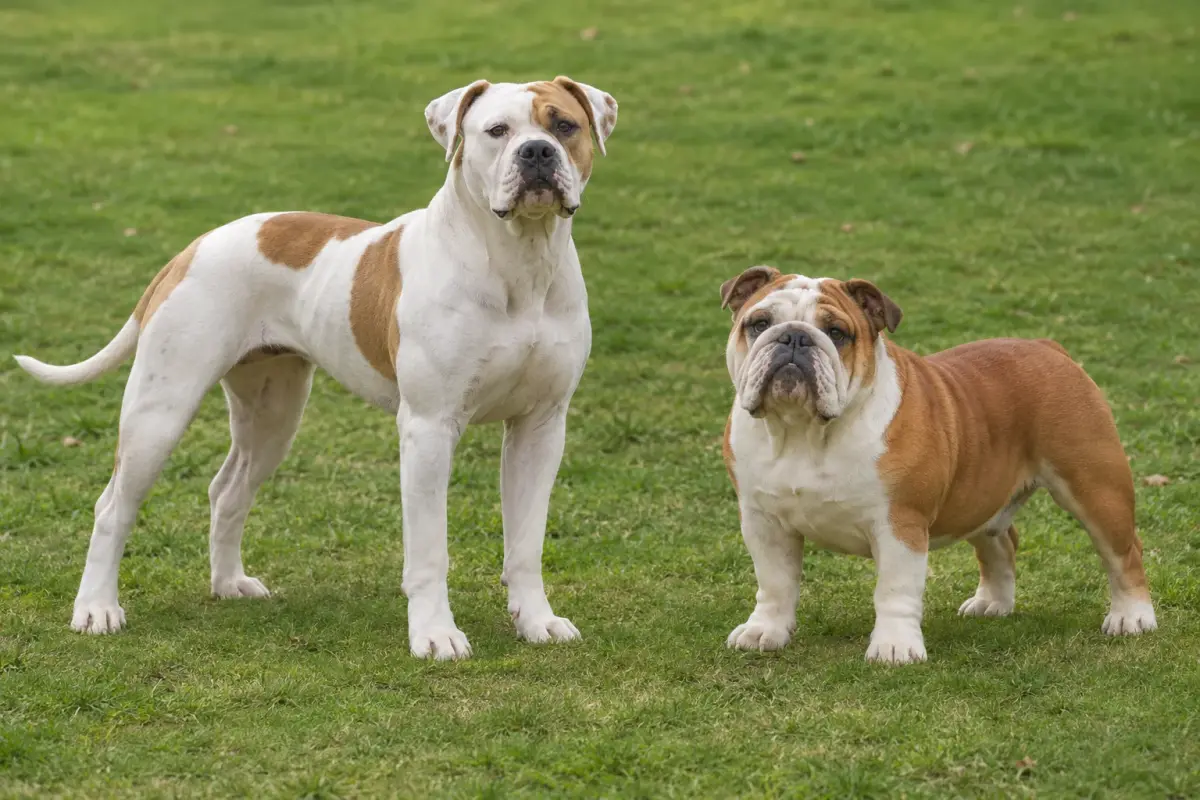
Despite the shared name, the American Bulldog and the English Bulldog, which the AKC simply calls the Bulldog, are very different dogs. The English Bulldog is a short, heavy, low-energy companion of 40 to 50 pounds that overheats easily. The American Bulldog is a tall, athletic farm and guard dog, with males of 22 to 27 inches under its UKC standard, and needs far more exercise and confident training.
By Matt GarnettUpdated November 14, 20264 min read4 sources
Side by side
Size: the AKC lists the Bulldog at 14 to 15 inches, about 50 pounds for males and 40 for females. The UKC standard gives American Bulldog males 22 to 27 inches and females 20 to 25, with weight in proportion. Lifespan: AKC gives the Bulldog 8 to 10 years. Registry: the Bulldog is an AKC breed ranked 10th; the American Bulldog is recognized by the UKC, since 1999. Coat: both short and easy to brush weekly.
Energy: VCA rates the Bulldog 1 out of 5 as a jogging partner and calls it a calm housedog; it rates the American Bulldog moderate to high. Heat: VCA rates the Bulldog 1 out of 5 for warm weather and calls the American Bulldog sensitive to extreme heat. Strangers: Bulldogs are friendly; American Bulldogs may be cautious or protective. Best for: Bulldogs suit relaxed apartment or house life; American Bulldogs suit experienced, active owners with a fenced yard.
Origins
VCA explains that the Bulldog originated in England for bull baiting, a blood sport outlawed around 1835. Admirers then remade it as a stylish companion, breeding for temperament and exaggerated features, so today's Bulldog looks little like the original. The AKC recognized it in 1886 and describes it as kind but courageous, friendly but dignified, a thick-set, low-slung bruiser whose sourmug face symbolizes tenacity.
The American Bulldog kept its working job. The UKC describes it as a hog and cattle catching dog and protector of property, powerful and agile with a large head and strong jaws, and in the same breath a gentle, loving family companion. It comes in a range of types, from leaner standard dogs to thicker bully types, which is why sizes vary so much.
Temperament
VCA describes the Bulldog as a loyal, fun-loving companion, playful and good with children, friendly toward strangers and other pets, though not friendly toward strange dogs. It is willing to please but stubborn and may rebel against forceful methods, so reward-based training works best. The AKC calls Bulldogs docile and loyal, adapting well to town or country.
The American Bulldog is loyal and strongly bonded to family, per VCA, but may be cautious or protective around unfamiliar people and can show territorial behavior without consistent training. The UKC notes young American Bulldogs are often standoffish with strangers until about 18 months. VCA rates it best for confident or experienced owners and advises careful introductions with other pets.
Exercise and heat
The Bulldog needs only a leisurely daily walk or some backyard games, VCA says, and is extremely prone to overheating because of its flat face, so indoor games are better in warm weather. VCA adds that most Bulldogs cannot swim, so supervise closely around pools, and that the short coat gives little protection against cold.
The American Bulldog needs regular daily exercise, playtime and structured activities to prevent boredom, and VCA recommends access to fenced outdoor space. It handles more activity than a Bulldog but is still sensitive to extreme heat, and VCA lists brachycephalic airway disease among its concerns. Exercise both in the cooler hours and watch for heavy, noisy breathing.
Grooming and health
Both coats need only a weekly brush. The Bulldog's facial wrinkles, and any folds around the tail, should be checked, cleaned and dried daily, according to VCA, and it tends to run slightly overweight. For American Bulldogs, VCA advises weekly brushing, routine nail and ear care and watching the skin for irritation or infection.
VCA lists hip and elbow dysplasia, brachycephalic airway disease, ichthyosis and neuronal ceroid lipofuscinosis among American Bulldog concerns, and notes the breed matures slowly, so controlled growth matters. For Bulldogs, VCA suggests a large-breed growth food for puppies, which it says may decrease the incidence or severity of hip dysplasia. Ask your vet about diet and breathing health for either breed.
Which to choose
Choose an English Bulldog if you want a calm, friendly, low-exercise companion that is happy with short walks and lots of couch time, and you are ready for daily wrinkle care, careful heat management and a shorter average lifespan. Choose an American Bulldog if you want a large, athletic, protective family dog and have the experience, space and time for daily exercise and training.
Either way, ask breeders about health screening of both parents, and for Bulldogs specifically about breathing. Check rental and insurance rules before bringing home an American Bulldog, since large bully breeds can face restrictions.
This page is general information, not veterinary advice, and it cannot replace an examination by the vet who knows your pet.
Common questions
Is the English Bulldog the same as the Bulldog?
Yes. The AKC registers the breed simply as the Bulldog, and most Americans call it the English Bulldog to distinguish it from the American Bulldog and French Bulldog.
Which is bigger, an American Bulldog or an English Bulldog?
The American Bulldog, by far. The UKC wants American Bulldog males of 22 to 27 inches, while the AKC lists Bulldogs at 14 to 15 inches and 40 to 50 pounds.
Which is healthier, an American Bulldog or an English Bulldog?
Both have breed risks. The Bulldog's flat face makes it very prone to overheating, and the AKC lists an 8 to 10 year lifespan. American Bulldogs face hip, elbow and some breathing and skin conditions, per VCA.
Are American Bulldogs good with kids?
Generally, with supervision. VCA says they bond strongly with family and are generally good with children, and the UKC calls them gentle family companions, but their size and strength mean play with small children needs watching.
Sources we checked
This guide is general information, not veterinary advice. If your pet is unwell or injured, contact your veterinarian.


