






Buying guides
Best Dog Clothes: How to Choose Comfortable, Safe Outfits
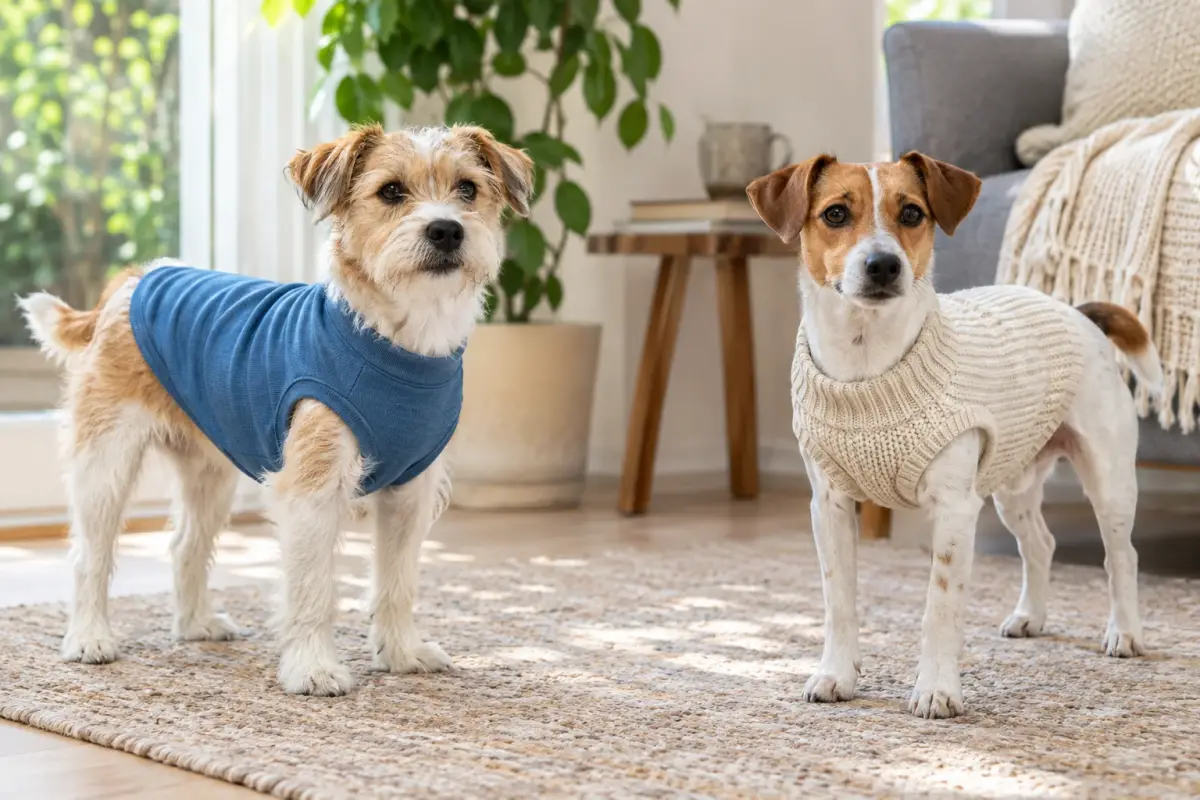
The best dog clothes are practical first: a sweater or coat for a dog that gets cold, a raincoat for wet walks, a light shirt for sun-sensitive skin. Choose by measurements, not weight, so your dog can walk, run and toilet freely, and pick machine-washable fabrics. Costumes and fashion pieces are fine for short, supervised wear.
By Matt GarnettUpdated November 10, 20263 min read2 sources
Which dogs benefit from clothes
The AKC lists the dogs most likely to need warmth: small and toy breeds, hairless breeds, dogs clipped short, low-to-the-ground breeds whose bellies touch snow, lean breeds like Greyhounds and Whippets, short-coated sporting dogs, and puppies, seniors and dogs with conditions like arthritis. For them, a sweater or coat is functional.
Thick double-coated breeds rarely need clothes and can overheat. For any dog, clothes are a choice to make around comfort: a dog that freezes, scratches at or tries to remove an outfit is telling you something. Introduce new clothes indoors with treats first.
The main types compared
Sweaters and hoodies, such as the cable-knit pet jumper, add light warmth for cool days and indoors in chilly homes. Insulated coats and puffer jackets handle real cold, and raincoats keep a coat dry on wet walks. The AKC suggests matching warmth to the weather, from a lightweight jacket for cool days to a thicker one for snow.
T-shirts and light shirts can shield pale or thin-coated dogs from sun on short outings, and pajamas, four-legged jumpsuits and base layers keep hairless or recovering dogs warm indoors. Costumes and dresses are for short, supervised occasions; avoid anything with small attached parts a dog could chew off and swallow.
How to measure your dog
The AKC advises measuring the length of the body and the widest part of the chest; most brands also ask for neck girth. Measure back length from the base of the neck to the base of the tail, chest girth around the deepest part behind the front legs, and neck where a collar sits. Use those numbers against each brand's own chart.
Deep-chested breeds, such as Greyhounds, Dachshunds and pit bulls, often need styles cut for their shape. Between sizes, choose the larger and adjust, because a tight garment rubs under the front legs and restricts movement. Remeasure growing puppies every few weeks and adult dogs after a haircut or a change in weight, because a garment that fitted in the fall may rub by midwinter.
Fit, fabric and safety
The AKC's fit test is that your dog should be able to walk, run and play comfortably, and that the garment should not be so loose it could entangle the dog. Check leg holes for rubbing, make sure a male can urinate without soaking the fabric, and look for a harness opening if you walk on a back-clip harness.
Choose machine-washable fabrics, which the AKC recommends since clothes collect hair and dander. Soft cotton and fleece suit indoor wear; water-resistant shells suit outdoors; reflective trim helps on dark walks. Remove clothes indoors when your dog warms up, and never leave a dog unsupervised in clothing it might chew.
What to avoid and care
Avoid tight necklines, elastic that digs in, buttons, sequins and pom-poms a dog can chew off, and long hems that trip short legs. Avoid clothes during hot weather or hard exercise, when they can lead to overheating, especially for flat-faced breeds.
Wash clothes regularly, check seams and fastenings, and retire anything stretched, frayed or shrunk. When you replace it, measure again and look through small dog clothes or dog clothes in the new size. If your dog's skin is red or irritated where a garment sits, stop using it, and ask your vet if the irritation persists.
Garment construction and fitting areas
| Garment group | Body coverage | Fit area to inspect |
|---|---|---|
| Sweater or hoodie | Torso with a knitted or fabric upper | Neck,front-leg openings and hem |
| Coat or puffer | Additional outer layers or filling | Chest,shoulders and usable movement |
| Raincoat | A shell over the back and sometimes belly | Coverage,fasteners and claimed seam construction |
| T-shirt or light shirt | A lighter torso layer | Sleeves and neckline |
| Pajamas or jumpsuit | Additional leg sections | Every leg opening and body length |
| Costume or dress | Decorative pieces and extra panels | Attachments and anything that can snag |
Common questions
Do dogs need clothes?
Small, short-coated, hairless, lean and clipped dogs, plus puppies and seniors, often benefit from a sweater or coat in cold weather. Thick-coated breeds usually do not.
How do I know what size clothes my dog needs?
Measure back length, chest girth and neck, then use each brand's own size chart. Weight alone is a poor guide, especially for deep-chested breeds. Choose the larger size when between two.
Is it okay for dogs to wear clothes all day?
Only if the garment fits well and your dog is comfortable and not too warm. Remove clothes indoors once your dog is warm and check for rubbing.
What fabric is best for dog clothes?
Machine-washable fabrics: cotton or fleece indoors, water-resistant shells outdoors. Avoid stiff, scratchy fabrics and decorations your dog could chew off. Check the label says machine washable before buying.
Sources we checked
This guide is general information, not veterinary advice. If your pet is unwell or injured, contact your veterinarian.


