






Breeds
Italian Greyhound vs Whippet: Which Small Sighthound Fits?
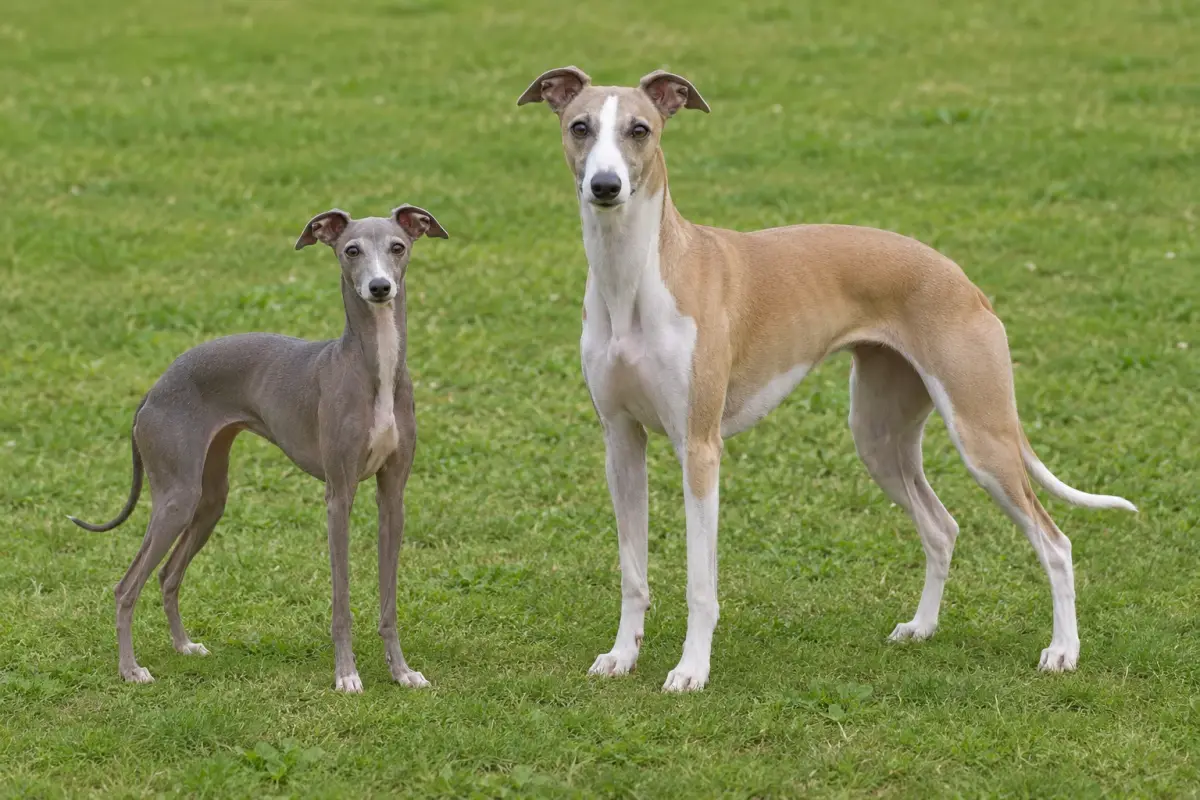
The Italian Greyhound is a toy-sized sighthound of 7 to 14 pounds, while the Whippet is a medium dog of 25 to 40 pounds, according to the AKC. Both are gentle, quiet, couch-loving dogs that sprint in bursts and chase anything small that runs. The Italian Greyhound is the more delicate and clingy of the two, prone to leg fractures and dental disease; the Whippet is sturdier and a better fit for active families and older children.
By Matt GarnettUpdated November 10, 20264 min read4 sources
Side by side
Size: the AKC lists Italian Greyhounds at 13 to 15 inches and 7 to 14 pounds, and Whippets at 18 to 22 inches and 25 to 40 pounds. Lifespan: AKC gives 14 to 15 years for the Italian Greyhound and 12 to 15 for the Whippet. Popularity: Whippets rank 50th on the AKC list and Italian Greyhounds 56th. Coat: both short and smooth, needing only weekly brushing or a wipe-down.
Energy: moderate for both, with bursts of running. Cold: both feel it (see our small dog clothes); VCA calls the Italian Greyhound sensitive to cold and wet weather. Fragility: the Italian Greyhound's fine bones break more easily. Children: VCA says Italian Greyhounds do best with older, gentle children; Whippets are friendly with gentle, respectful kids. Time alone: both prefer company. Best for: Italian Greyhounds suit calm apartments; Whippets suit active homes with a fenced yard.
Toy companion or medium sighthound
The AKC calls the Italian Greyhound a true Greyhound in miniature, an alert, playful and highly affectionate toy companion, and adds that at heart it is a flash-and-dash coursing hound with an instinct for pursuit. VCA describes a slim, fine-boned dog with long legs, a deep chest and large, expressive eyes, bred for both companionship and speed.
The Whippet, nicknamed the poor man's racehorse, is a medium-sized sighthound that resembles a small Greyhound. VCA says many experts believe it was developed in the late 1800s by crossing Greyhounds with small terriers to hunt small game. At three times the weight of a small Italian Greyhound, it is a noticeably sturdier dog, though still lean and thin-skinned.
Temperament at home
VCA describes Italian Greyhounds as affectionate, intelligent and strongly bonded to their owners, often playful indoors but calm and quiet around the house. Some become anxious if left alone for long periods, and VCA rates their tolerance for time alone as limited. They respond best to gentle, reward-based training and suit patient owners.
Whippets, per VCA, are quiet, gentle and well-behaved inside, love the couch and greet their people with great enthusiasm. They are friendly with visitors, so neither breed is a watchdog. Both have a strong prey drive outdoors: VCA warns that the moment a Whippet sees a small animal, its prey drive overrides everything, and the AKC notes Italian Greyhounds will chase prey too.
Exercise and injury risk
VCA recommends moderate daily exercise for the Italian Greyhound: short walks, play sessions and chances to run in a fenced space. It warns that dog park play must be supervised and playmates chosen carefully to avoid injury, and that puppies and young dogs are especially likely to break legs during rough play or by jumping from heights. Use ramps or steps for furniture and keep play with bigger dogs gentle.
Whippets also need a daily walk plus regular sprints in a securely fenced area, and enthusiasts recommend lure coursing to put their speed to work. Never trust either breed off leash in an open area. Both have thin coats and little body fat, so a sweater or coat helps in cold or wet weather, and both appreciate a soft, warm bed.
Grooming, teeth and health
Grooming is easy for both: VCA suggests weekly brushing or wiping for the Italian Greyhound and calls the Whippet a wash-and-go dog that needs only a weekly brush with a hound glove. Nails and ears need regular attention. VCA stresses that dental care should be a priority for Italian Greyhounds, which are particularly prone to dental disease, so start tooth brushing early.
VCA lists patellar luxation, leg fractures, Legg-Calve-Perthes disease, a bleeding disorder, progressive retinal atrophy, epilepsy and hypothyroidism among Italian Greyhound concerns. For Whippets it lists sebaceous adenitis, a skin disease, eye problems and heart defects. Ask breeders for screening of both parents, and ask your vet about dental cleanings and how to keep a fine-boned dog safe.
Which to choose
Choose an Italian Greyhound if you want a small, affectionate shadow for a calm apartment, have no young children, can take care with a fragile dog and will keep up with dental care. Choose a Whippet if you want the same gentle sighthound temperament in a sturdier dog that can handle more play, hikes and older kids, and you have a fenced place for it to run.
Either breed bonds closely and dislikes long days alone, so plan your schedule around a dog that wants to be with you. Book a vet visit soon after bringing your new dog home, and keep a coat and a soft bed ready before the first cold night.
This page is general information, not veterinary advice, and it cannot replace an examination by the vet who knows your pet.
Common questions
Is an Italian Greyhound a puppy Whippet?
No. They are separate breeds. The AKC lists the Italian Greyhound as a toy companion of 7 to 14 pounds, while the Whippet is a medium sighthound of 25 to 40 pounds. Both resemble a small Greyhound.
Which is better with kids, an Italian Greyhound or a Whippet?
The Whippet, usually. VCA says Italian Greyhounds do best with older, gentle children because their fine bones break easily, while Whippets are sturdier and suit gentle, respectful kids.
Do Italian Greyhounds and Whippets need coats?
Often, yes. Both have thin coats and little body fat, and VCA notes the Italian Greyhound is sensitive to cold and wet weather. A sweater or coat keeps either comfortable on chilly walks.
Which lives longer, a Whippet or an Italian Greyhound?
They are similar. The AKC lists Italian Greyhounds at 14 to 15 years and Whippets at 12 to 15 years. Good dental care, a lean weight and regular vet visits help either reach the upper end.
Sources we checked
This guide is general information, not veterinary advice. If your pet is unwell or injured, contact your veterinarian.


