Food safety
Can Dogs Eat Greek Yogurt? Yes, If It's Plain
Yes, in moderation: plain, unsweetened Greek yogurt is safe for most dogs as an occasional treat. Straining removes much of the whey, so Greek yogurt carries less lactose than regular yogurt, which the American Kennel Club says makes it easier on a dog's stomach. The danger is in the flavored tubs. Vanilla, fruit-on-the-bottom and light yogurts add sugar, and some sugar-free versions contain xylitol, which is poisonous to dogs. Read the label every time and start with a spoonful.
By Matt GarnettUpdated November 13, 20264 min read2 sources
Why plain Greek yogurt is usually fine
Yogurt is milk fermented by live cultures, which use up some of the milk sugar, lactose. Greek yogurt is then strained, draining off much of the whey where more of the lactose sits. The result is thicker, higher in protein and easier on most adult dogs than milk.
That matters because most dogs lose much of their ability to digest lactose after weaning. The ASPCA notes that pets make little lactase, the enzyme that breaks lactose down, so dairy can cause diarrhea. Greek yogurt lowers that risk without removing it. It is not a medicine either: the AKC says there are better probiotic sources if gut health is the goal.
The labels to check: xylitol, sugar and fat
Xylitol, sometimes listed as birch sugar, is the reason to read every tub. It turns up in sugar-free, light and keto yogurts and is toxic to dogs even in small amounts. If your dog ate one, call your vet, the ASPCA Animal Poison Control Center at (888) 426-4435, or Pet Poison Helpline at (855) 764-7661 now. A fee may apply.
Flavored yogurts add sugar, and some mix in chocolate chips or raisins, both toxic to dogs. Full-fat Greek yogurt is also rich: the AKC warns that too much dairy fat can lead to pancreatitis, a serious and potentially fatal inflammation of the pancreas. Plain nonfat or low-fat is the better pick.
How to serve Greek yogurt
Spoon out a little plain, unsweetened yogurt and offer it from the spoon, on top of a meal, or smeared inside a rubber chew toy. In hot weather, freeze teaspoon-size dollops on a lined tray, or spread a thin layer on a lick mat and freeze it so it lasts longer.
Keep add-ins simple: three or four blueberries or a little mashed banana is fine. Skip honey, granola, chocolate, raisins and anything sweetened. Serve it cold from the fridge, and never offer yogurt that has sat out or is past its date.
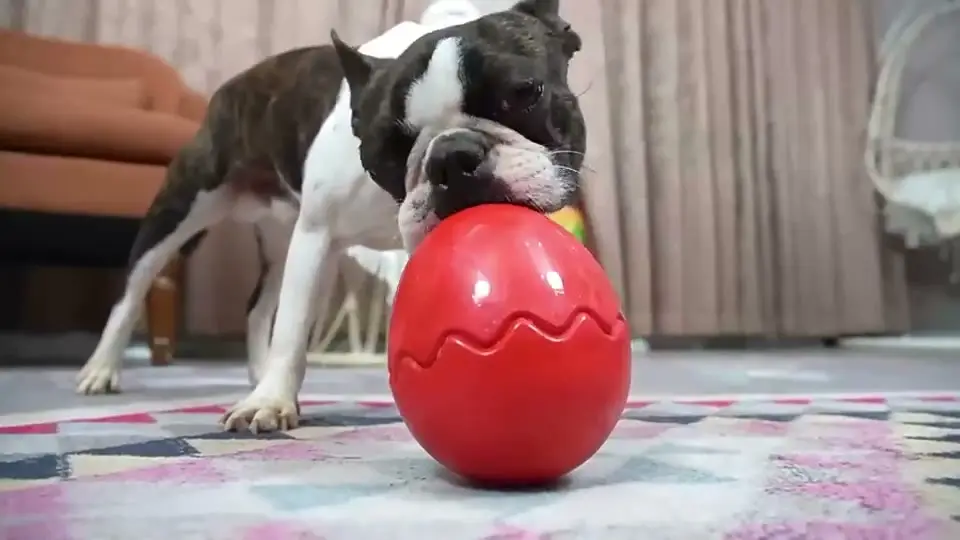
If you like to share small snacks, a lick mat or a treat ball makes a little go further and slows a fast eater down.
How much Greek yogurt by dog size
Think in spoonfuls, not bowls. As a starting point for a healthy adult dog: under 20 lb, about one teaspoon; 20 to 50 lb, one to two teaspoons; over 50 lb, up to a tablespoon or two. Use the low end the first time and offer it a few times a week rather than daily.
Ask your vet first if your dog is overweight, eats a prescription diet or has had pancreatitis. Greek yogurt is calorie-dense next to cucumber or green beans, so on yogurt days, trim the other treats to keep the total steady.
Puppies and Greek yogurt
Puppies can try a taste of plain Greek yogurt once they are fully weaned onto solid puppy food, but there is no need to rush. A growing puppy needs a complete puppy diet, and extras can crowd it out. A quarter teaspoon is plenty for a small-breed puppy; even a large-breed puppy needs no more than a teaspoon.
Puppies react to new foods more easily than adults, so introduce yogurt on a quiet day, not before a car trip or a change of food, and never with another new food. If your puppy is still nursing or has had diarrhea recently, skip it and ask your vet.
Signs it disagreed with your dog, and when to call a vet
Mild lactose trouble usually shows within a day: gas, a gurgling stomach, softer stool or one bout of diarrhea. If your dog is otherwise bright and eating, stop the yogurt and the stool usually firms up within a day or two. Next time, try far less or leave dairy out.
Call your vet the same day if vomiting or diarrhea keeps coming back, there is blood in the stool, your dog hunches up or seems sore in the belly, or stops eating. If the yogurt contained xylitol, treat it as an emergency: weakness, wobbling or collapse mean go to a vet immediately.
What to give instead
If yogurt does not suit your dog, try a spoonful of plain canned pumpkin (not pie filling), a few blueberries, cucumber slices, apple with the core and seeds removed, or a little plain cooked chicken. Plain pumpkin or mashed banana also freezes well inside a chew toy.
If you wanted yogurt for its live cultures, ask your vet about a probiotic made for dogs, which lists known strains in known amounts.
This page is general information, not veterinary advice, and it cannot replace an examination by the vet who knows your pet.
Common questions
Can dogs eat Greek yogurt every day?
A small daily spoonful suits some dogs, but most do better with it a few times a week. Daily dairy raises the chance of loose stool, and the calories add up quickly for small dogs.
Can dogs eat vanilla Greek yogurt?
It is not a good choice. Vanilla yogurts add sugar, and some sugar-free versions use xylitol, which is toxic to dogs. Stick to plain, unsweetened Greek yogurt and check the label each time.
Can dogs eat Greek yogurt with honey?
Honey-sweetened yogurt is not poisonous, but it adds sugar and calories your dog does not need. Plain is the better option, and sweetened yogurt is best avoided for overweight or diabetic dogs.
Can Greek yogurt help a dog with diarrhea?
Do not use yogurt to treat diarrhea, because dairy can make it worse in a lactose-sensitive dog. If diarrhea lasts more than a day, contains blood or comes with vomiting or tiredness, call your vet.
Is Greek yogurt better for dogs than regular yogurt?
Usually, yes. Straining removes much of the whey, so plain Greek yogurt tends to carry less lactose than regular yogurt. Both need to be plain, unsweetened and free of xylitol to be a safe treat.
Sources we checked
This guide is general information, not veterinary advice. If your pet is unwell or injured, contact your veterinarian.