Food safety
Can Dogs Eat Bones? Never Cooked, and Raw Has Risks Too
Never give a dog cooked bones, and treat raw bones with caution. Cooked bones from chicken, turkey, pork, beef or lamb splinter into sharp shards that can injure the mouth, throat or intestines, and the American Kennel Club warns that pieces too big to pass can block the gut, which can be fatal. Raw bones are less brittle but can carry bacteria, crack teeth and still cause blockages. If you want to give one, ask your vet first and supervise every minute.
By Matt GarnettUpdated November 13, 20265 min read2 sources
Why cooked bones are the most dangerous
Heat dries a bone out and makes it brittle. When a dog bites down, a cooked bone breaks into sharp fragments rather than wearing down slowly. The AKC says those shards can injure the mouth, throat or intestines, and that fragments can lodge in the throat or cut the tongue, stomach or gut on the way through.
Every kind of cooked bone does this: chicken wings and drumsticks, the Thanksgiving turkey carcass, pork chops, T-bone steaks and lamb shanks. The ASPCA also warns that dogs can suffer injury or obstruction anywhere in the digestive tract from bones. Cooking does not make a bone safer; it makes it worse.
Raw bones are not risk-free
Raw bones are softer and less likely to splinter, which is why some owners and vets use them. They still carry risks. The AKC notes raw bones may carry bacteria such as salmonella, which can make dogs and the people handling the bones sick, and that bones harder than a tooth can fracture it.
Raw bones can also block the gut if a dog swallows a large piece, and bone and marrow can cause diarrhea in dogs with sensitive stomachs. Marrow and fatty rib bones bring a pancreatitis risk as well. Whether a raw bone suits your dog is a question for your vet, who knows your dog's teeth, gut and history.
If your vet says a raw bone is OK
The AKC's safer practices are specific. Choose a bone longer than your dog's muzzle, such as a beef shank bone for a large breed, so it cannot be swallowed whole. Give it after a meal, when your dog is less likely to gulp, and give it when your dog is apart from other dogs, since even friendly dogs may guard a bone.
Take the bone away after 10 to 15 minutes and refrigerate it, and throw it away after three or four days, when bacteria can grow. Stay with your dog the whole time and remove the bone as soon as it splinters or wears down small enough to swallow. Wash your hands and any surfaces it touched.
What to do if your dog swallowed a bone
Take away any remaining pieces calmly, so your dog does not gulp them. Check the mouth for a bone wedged across the roof of the mouth or between the teeth, a common problem with round marrow and leg bones, but do not reach into the throat. Do not make your dog vomit unless a vet tells you to, because sharp pieces can cut on the way back up.
Call your vet for advice, as the AKC recommends after a cooked bone, and tell them what kind of bone, whether it was cooked, how much and when. Some dogs pass small pieces without trouble; your vet will decide whether to monitor at home or examine your dog.
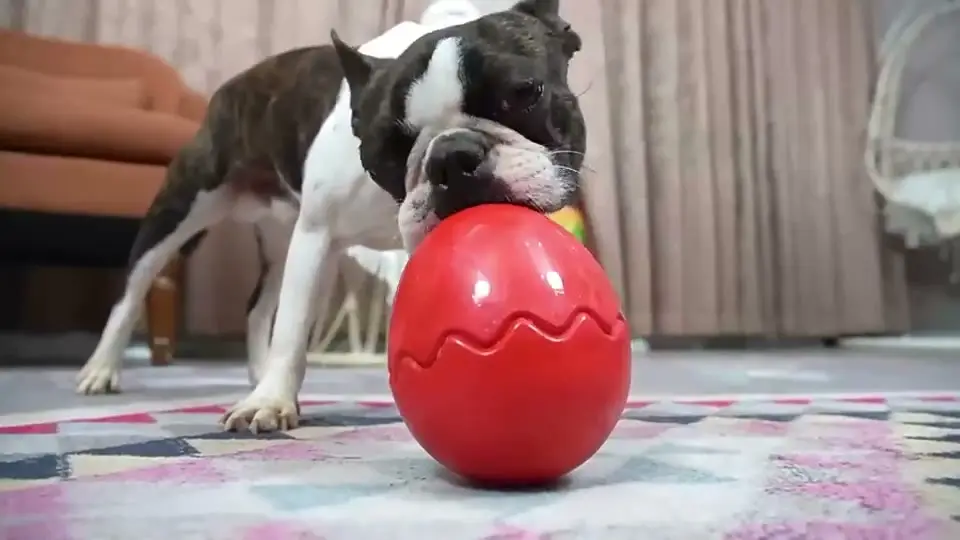
If you like to share small snacks, a lick mat or a treat ball makes a little go further and slows a fast eater down.
Signs that need a vet, and how fast
Over the next few days, watch for vomiting or retching, drooling, loss of appetite, lethargy, a tender belly, straining to pass stool, constipation, or blood in the stool or vomit. The AKC notes that rib fragments can even lodge near the rectum, which shows up as straining and discomfort. Any of these means call your vet that day.
Go immediately if your dog is choking, gagging repeatedly, pawing at the mouth, cannot keep water down, has a swollen belly or collapses. After a fatty bone, repeated vomiting with a hunched back can mean pancreatitis, which the AKC warns can be deadly in severe cases.
Puppies and bones
Puppies should not have bones without their vet's advice. Their teeth are still developing, their jaws are strong enough to break off pieces, and their intestines are narrow enough that a small fragment can block them. Teething puppies chew hard and often swallow what they break off.
Give a puppy a chew toy or teething toy made for its size instead. If your puppy has swallowed any piece of bone, call your vet straight away rather than waiting for signs, because a blockage in a small puppy becomes serious quickly.
Safer chews, and keeping bones out of reach
Commercial chew toys, rubber toys you can fill with food, and dental chews sized for your dog satisfy the urge to chew without splinters. Rotate them so your dog stays interested, and replace any that start to break into pieces.
Most bone injuries happen when a dog raids the trash or a plate. Use a lidded or locked trash can, bag holiday carcasses and ham bones and take them outside straight away, and ask guests at cookouts not to share leftovers.
This page is general information, not veterinary advice, and it cannot replace an examination by the vet who knows your pet.
Common questions
Can dogs eat cooked bones?
No. Cooked bones are brittle and splinter into sharp pieces that can cut the mouth, throat or intestines, or block the gut. This applies to chicken, turkey, pork, beef and lamb bones alike.
Can dogs eat raw bones?
Some dogs can, with care, but raw bones can carry bacteria, crack teeth and cause blockages. Ask your vet first, choose a bone longer than the muzzle, and supervise every minute.
Can dogs eat steak bones?
Cooked steak bones should not be given to dogs. They can splinter and break teeth, and the fat around them can upset the stomach. Give a dog chew made for its size instead.
How long should a dog chew on a bone?
The AKC suggests taking a raw bone away after 10 to 15 minutes, refrigerating it, and throwing it out after three or four days so bacteria do not build up.
What happens if a dog swallows a bone?
Some dogs pass small pieces, but a bone can splinter, injure the gut or cause a blockage. Call your vet for advice and watch for vomiting, straining, loss of appetite or a sore belly.
Sources we checked
This guide is general information, not veterinary advice. If your pet is unwell or injured, contact your veterinarian.