Food safety
Can Dogs Eat Boiled Eggs? Yes, Plain and Peeled
Yes. A plain hard-boiled egg, cooled, peeled and chopped, is one of the safest people foods you can share with a dog. Boiling cooks the egg through, which removes the Salmonella risk the ASPCA links to raw eggs and the raw-white enzyme that can block biotin. Keep it plain: no salt, pepper, butter or mayonnaise, and no deviled or pickled eggs. Eggs are rich, so for most dogs that means a few slices at a time rather than a whole egg every day.
By Matt GarnettUpdated November 13, 20265 min read2 sources
Why a hard-boiled egg works for dogs
An egg is mostly protein and fat, with vitamins and minerals packed into the yolk, and dogs digest cooked egg easily. The American Kennel Club says eggs should be cooked thoroughly and served plain, and hard-boiled is one of the two ways it names, alongside scrambled.
Cooking is what makes the difference. The ASPCA warns that raw eggs can carry bacteria such as Salmonella and E. coli, and that raw egg whites contain an enzyme that interferes with biotin absorption, which can show up as skin and coat problems. A fully set hard-boiled egg avoids both, and it needs no added fat, which scrambling often does.
How to boil and prepare an egg for your dog
Boil the egg until both white and yolk are completely firm, with no runny center. Cool it under cold water, then let it reach room temperature before serving, because a yolk can stay hot inside long after the shell feels cool. Peel it fully and pick off every bit of shell.
Chop it to suit your dog. For a dog under 20 lb, dice it to about the size of a blueberry; for larger dogs, slices or quarters are fine. A whole peeled egg can lodge in the throat of a dog that gulps, so do not toss it whole.
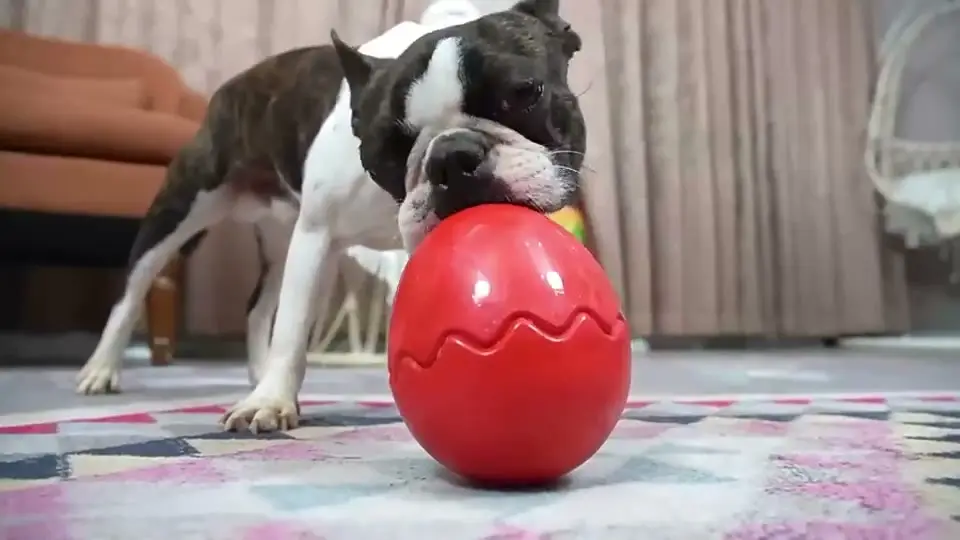
If you like to share small snacks, a lick mat or a treat ball makes a little go further and slows a fast eater down.
Deviled eggs, pickled eggs and egg-hunt leftovers
Deviled eggs are not a plain egg. The filling is usually mayonnaise, mustard, salt and paprika, and some recipes add onion, chives or garlic powder, which are toxic to dogs. Pickled eggs sit in salty, vinegary brine and often onion slices. Keep both off the dog's plate, and call your vet if your dog cleared a tray that contained onion or garlic.
At Easter, dyed eggs that sat out during a hunt are a food-safety risk for dogs as much as people, so skip any that were left unrefrigerated for hours. Watch for plastic eggs too: the shell pieces can block the gut, and chocolate inside them is poisonous to dogs.
How much boiled egg by dog size
The AKC says the right amount depends on size, age, activity and health, and that too many eggs can lead to weight gain because they are calorie-dense. As a starting point for a healthy adult dog: under 20 lb, two or three small pieces, about a quarter of an egg; 20 to 50 lb, up to half an egg; over 50 lb, up to one whole egg.
Offer it a few times a week rather than every day, and count it as part of the day's treats rather than an extra. If your dog is overweight, eats a prescription diet or has had pancreatitis, ask your vet before adding egg yolk, which carries most of the fat.
Puppies and boiled eggs
Puppies can have small amounts of cooked egg, the AKC says, with smaller portions than adult dogs and a gradual start. Mash a little hard-boiled yolk and white together with a fork so there are no firm chunks; a young puppy's throat is narrow, and a slippery piece of white is easy to inhale.
A thumbnail-size amount is plenty for a first try, mixed into the usual puppy food. Wait a day before offering more, so that any loose stool is easy to link back. Egg is a treat, not a replacement for a complete puppy diet, and puppies still nursing or under about eight weeks should skip it.
Signs egg disagreed with your dog, and when to call a vet
Most dogs handle plain egg well, but a few are sensitive to it. Gas, a soft stool or one bout of vomiting after a first serving is usually mild; stop the egg and offer only the normal food. Egg allergies are uncommon, but the AKC lists vomiting, diarrhea, itching, hives and swelling as signs.
Call your vet if vomiting or diarrhea keeps coming back or your dog becomes lethargic. Facial swelling, hives spreading quickly, coughing or any trouble breathing mean get seen right away. If your dog swallowed large pieces of shell or a plastic egg and is retching or straining, call your vet the same day.
Common questions
Can dogs eat hard-boiled egg yolk?
Yes, a fully cooked yolk is safe for most dogs. It holds most of the egg's fat and calories, so keep portions small, especially for small dogs and dogs that have had pancreatitis.
Can dogs eat boiled eggs every day?
Most dogs are better off with egg a few times a week. A whole egg every day adds a lot of calories for a small dog, and the AKC warns that too many eggs can lead to weight gain.
Can dogs eat boiled egg shells?
It is best to peel the egg fully. The AKC notes shells can have sharp edges that injure the throat or gut, and there are easier ways to give calcium, which a complete dog food already covers.
Can dogs eat deviled eggs?
No. Deviled egg filling is usually mayonnaise, mustard, salt and paprika, and some recipes include onion, chives or garlic, which are toxic to dogs. Share a plain boiled egg instead.
Can I give my dog a boiled egg for an upset stomach?
Do not use egg as a home treatment. If your dog has vomiting or diarrhea, ask your vet what to feed, and get your dog seen if it lasts more than a day or comes with lethargy.
Sources we checked
This guide is general information, not veterinary advice. If your pet is unwell or injured, contact your veterinarian.