Food safety
Can Dogs Eat Bananas? Yes, as a Small, Peeled Treat
Yes, dogs can eat bananas, and most of them love the soft, sweet flesh. Banana is not toxic to dogs, and the AKC and VCA both list it as a reasonable snack. The catch is sugar and fiber: a whole banana is a lot of fruit for a small dog, and the peel is hard to digest. Peel it, slice it thin, and treat it as a bite-sized extra rather than a meal.
By Matt GarnettUpdated November 13, 20265 min read3 sources
Why bananas are safe for dogs
Bananas contain no compound that is known to poison dogs. The fruit brings potassium, vitamin B6, vitamin C, magnesium and fiber, which is why the American Kennel Club describes it as a healthy treat when portions stay small. A dog on a complete commercial diet already gets these nutrients, so banana is a pleasant extra, not a supplement.
The real limit is sugar. A medium banana carries roughly 100 calories, most of them from natural sugar, which is a big share of a small dog's daily allowance. Veterinary guidance keeps all treats, fruit included, to about 10 percent of daily calories, and many owners find a few thin coins are plenty.
What to watch out for
Always remove the peel. Banana skin is not poisonous, but it is tough and fibrous, and a dog that swallows a large piece can end up vomiting or, in the worst case, with a piece stuck in the gut. Keep peels in a lidded trash can, because a dog raiding the kitchen bin is the most common way a whole skin gets eaten.
Watch what the banana comes with. Banana bread, muffins and smoothies often contain raisins, chocolate chips, nutmeg or the sweetener xylitol, all of which are dangerous for dogs. Banana chips are usually fried and sweetened, and banana pudding is mostly sugar and dairy. Plain, fresh, ripe fruit is the only form worth sharing.
How to serve banana to your dog
Peel the banana, then cut it into coins about a quarter inch thick. For a toy breed, quarter those coins again so each piece is roughly the size of a blueberry, which removes any choking risk for a dog that gulps. A ripe banana with a few brown spots is softer and easier to chew than a green one.
Banana also works well as a filler. Mash a spoonful into a lick mat or the bottom of a rubber treat toy and freeze it for a slow, cooling snack on a hot afternoon. If you mix it with peanut butter, read the label first and use a brand with no xylitol, sometimes listed as birch sugar.
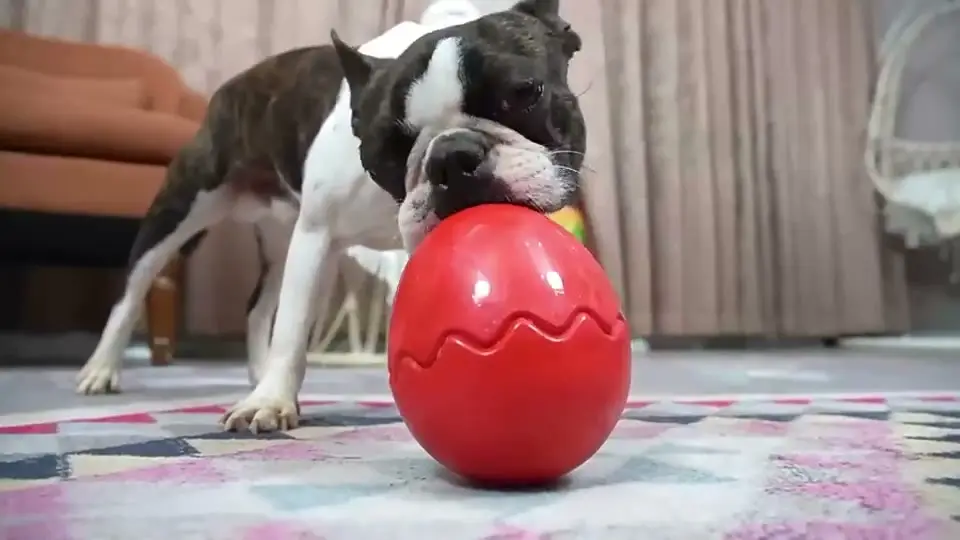
If you like to share small snacks, a lick mat or a treat ball makes a little go further and slows a fast eater down.
How much banana by dog size
Under 20 lb: one or two thin coins, a couple of times a week. Between 20 and 50 lb: up to a quarter of a medium banana. Over 50 lb: up to half a medium banana. These are treat-sized portions, and they assume the rest of the day's food stays the same rather than being topped up.
Start lower than these figures the first time, then wait a day to see how the stool looks. Dogs that are overweight, diabetic or on a weight-loss plan should have far less, or none, because the sugar adds up quickly. If your vet has your dog on a prescription diet, ask before adding any fruit.
Puppies and bananas
Puppies can taste banana once they are eating solid food comfortably, usually from about eight weeks. Their stomachs are more sensitive than an adult's, so one mashed coin is enough for a first try. Offer it on its own rather than mixed into a new food, so you know what caused any upset.
Growing puppies need a balanced puppy food to get their calcium, protein and calorie levels right, and fruit dilutes that diet. Use banana as an occasional training reward or a frozen teething treat, not as a daily habit, and keep the pieces small enough to swallow without chewing.
Signs banana disagreed with your dog
Too much banana most often shows up as loose stool, gas or constipation within 6 to 24 hours, because the fiber can swing either way. A single soft stool is not an emergency. Give plain water, skip treats for a day and the gut usually settles on its own.
Call your vet the same day if your dog vomits repeatedly, strains without passing stool, has a swollen or painful belly, or stops eating after swallowing a peel. Those are signs of a possible blockage. If the banana was in a baked good with raisins, chocolate or xylitol, call your vet or a pet poison line straight away.
Other fruit to try instead
If your dog likes banana, there are lower-sugar options that work just as well. Blueberries are small and need no prep, apple slices are crunchy once the core and seeds are removed, and seedless watermelon cubes without the rind are mostly water, which is useful in summer.
Some fruit must never be shared. Grapes and raisins can cause kidney failure in dogs, and cherries, peaches and plums have pits that are hazardous. When in doubt, check before you offer it.
This page is general information, not veterinary advice, and it cannot replace an examination by the vet who knows your pet.
Common questions
Can dogs eat banana peels?
No. Banana peels are not toxic, but they are very hard to digest and can cause vomiting or a blockage in the gut. Remove the peel and throw it where your dog cannot reach it.
Can dogs eat bananas every day?
A couple of thin slices a day is unlikely to harm a healthy adult dog, but it is better as an occasional treat. Daily fruit adds sugar and calories that can lead to weight gain over time.
Can dogs eat frozen bananas?
Yes. Frozen banana coins make a cool summer treat. Cut them small before freezing so a hard chunk cannot get stuck, and let them soften for a minute if your dog tends to gulp.
Can dogs eat banana bread?
It is best avoided. Banana bread is high in sugar and fat, and many recipes include raisins, chocolate chips, nutmeg or xylitol, which can poison dogs. Share plain banana instead.
Do bananas help a dog with an upset stomach?
Bananas are not a treatment for diarrhea or vomiting, and the sugar can make loose stool worse. If your dog has stomach trouble lasting more than a day, or seems unwell, call your vet.
Sources we checked
This guide is general information, not veterinary advice. If your pet is unwell or injured, contact your veterinarian.