Food safety
Can Puppies Eat Watermelon? Flesh, Seeds, and Rind
Yes, a weaned puppy already eating an appropriate complete growth diet may have a little plain watermelon flesh if your veterinarian agrees it fits. VCA includes seedless watermelon among suitable training foods in guidance that covers new puppies and dogs. Remove the rind and seeds first, and make the presentation manageable. Watermelon is an optional reward, not a weaning food, a substitute for growth nutrition, or a replacement for drinking water.
By Matt GarnettUpdated November 13, 20264 min read4 sources
Match the question to the puppy’s feeding stage
A puppy still dependent on nursing or milk feeding needs a different discussion from one already eating a complete growth food independently. Watermelon is not a way to start weaning or replace an appropriate milk-feeding plan. Ask your veterinarian about feeding-stage concerns instead of following a fruit-treat routine intended for an older animal.
For a puppy established on solid growth food, describe the age, usual food, and purpose of the proposed extra. A treat for occasional training has a different role from a food used to fill a missed meal. Keep that distinction clear before adding anything new to a developing puppy’s routine.
Prepare only the identified fruit flesh
The AKC advises removing watermelon seeds and the tough rind before sharing the fruit. It describes seed-related choking concerns and digestive or obstruction concerns from rind. Do that preparation yourself rather than handing a puppy a whole slice and expecting it to stop at the right boundary.
Inspect the portion even when the fruit is sold as seedless, and keep discarded rind inaccessible. Offer a manageable piece of the soft flesh and supervise eating. If the puppy gulps, coughs, or struggles with the texture, stop and ask the veterinarian about a suitable presentation instead of offering a larger piece to slow it down.
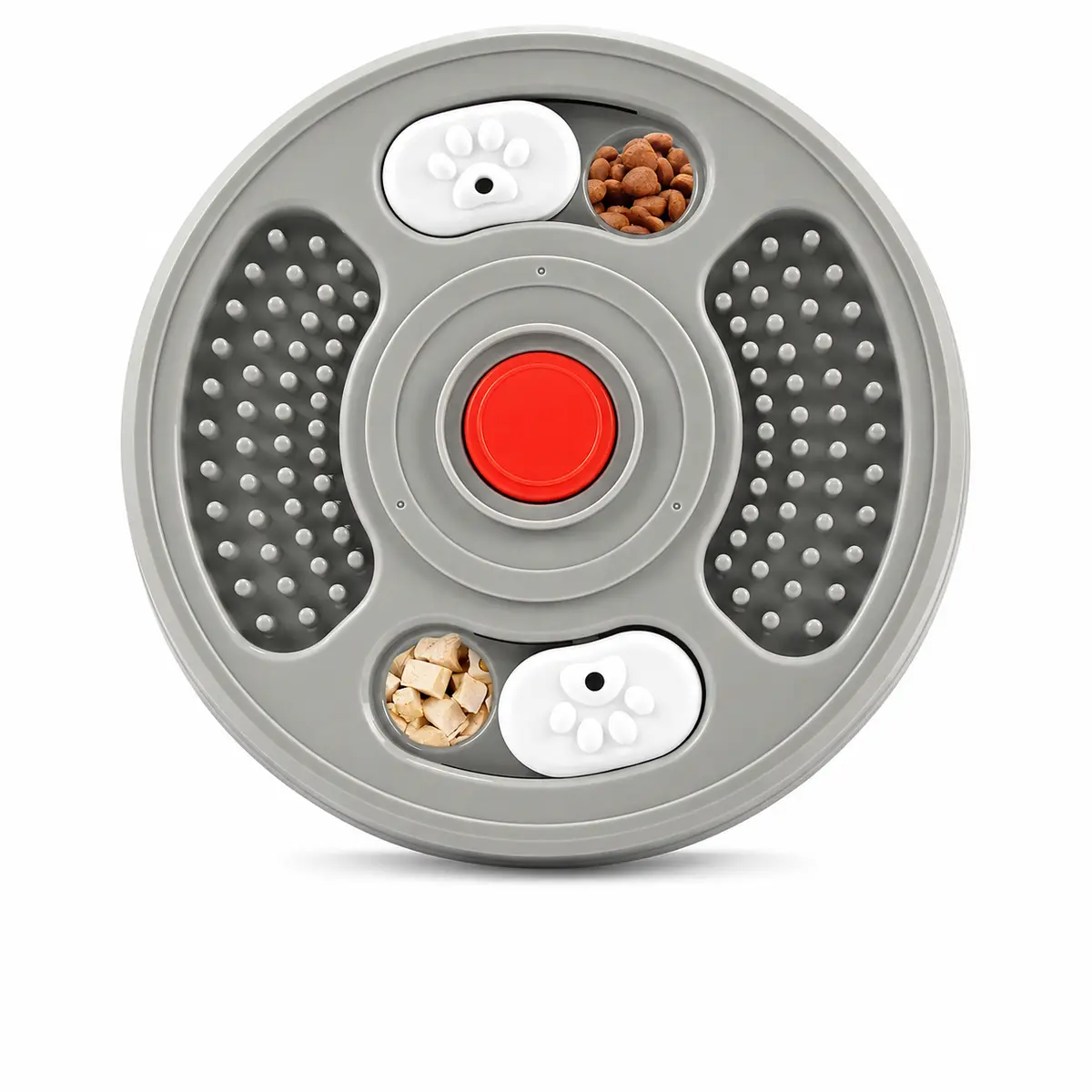
For dogs that gulp anything new, a slow feeder bowl or a lick mat keeps portions small and eating slow.
Keep the reward plain and separate from mixed products
VCA’s training guidance recommends suitable whole-food rewards without seasonings. Plain prepared watermelon is different from a dessert, drink, or mixed fruit bowl. Check what the puppy can actually reach instead of applying a single-fruit answer to every product bearing a watermelon flavor name.
Set the puppy’s permitted portion aside before preparing a human dish. If a theft occurs, retain the full recipe or label and note any other food available. Tell the veterinarian when the contents are uncertain rather than assuming the pink color or fruit name identifies everything the puppy ate.
Training rewards must leave room for growth nutrition
VCA emphasizes that food appropriate for the dog’s life stage should form the nutritional foundation. Watermelon cannot supply a puppy’s complete growth requirements. Its appeal as a reward does not justify replacing normal food or assembling an ongoing diet from individually acceptable table foods.
VCA also explains how training extras can add calories and unbalance a diet when not monitored. Count rewards from everyone involved in training, including other foods given in the same session. Ask whether some of the normal food can be used when many repetitions are needed, rather than making fruit the answer to every successful behavior.
Summer treats do not replace fresh water or supervision
The AKC describes watermelon as a refreshing occasional food while emphasizing continued access to drinking water. Keep fresh water available during play and warm weather. Do not use fruit to manage a puppy that is refusing water, acting unusually tired, or struggling in the heat; report those concerns to the veterinarian.
During a picnic or cookout, keep rind and other scraps off low tables and accessible ground. Tell visitors exactly which rewards the puppy may receive and supervise children sharing food. The preparation needs to remain consistent even when several people are eating watermelon and assume someone else removed the seeds or rind.
Stop a new extra if the puppy becomes unwell
The AKC notes that too much watermelon can cause digestive upset. Stop the optional extra and contact the veterinarian about vomiting, diarrhea, poor appetite, apparent pain, or unusual behavior. Report any swallowed rind or other material separately. Repeated vomiting, marked weakness, collapse, breathing difficulty, or severe distress needs prompt care. Do not give human medicine or try to treat symptoms by replacing growth food with more fruit.
This page is general information, not veterinary advice, and it cannot replace an examination by the vet who knows your pet.
Common questions
Can an unweaned puppy use watermelon instead of milk feeding?
No. Watermelon is not a weaning food or an appropriate substitute for a milk-feeding plan. Ask the veterinarian about the puppy’s stage and feeding needs before introducing solid-food extras.
Can I let my puppy chew watermelon rind?
No. Remove it before offering the flesh and keep discarded pieces inaccessible. The AKC describes digestive and obstruction concerns from rind, so a whole slice is not a suitable chewing activity.
Does seedless watermelon still need preparation for a puppy?
Yes. Inspect the portion, remove any seeds and all rind, and make the soft flesh manageable. Supervise eating rather than assuming a seedless label makes a whole slice appropriate.
Can watermelon replace water during a puppy’s summer play?
No. Keep fresh drinking water available, and treat fruit as an optional extra. Ask for veterinary advice about refusal to drink, unusual tiredness, or other concerns rather than relying on a snack.
Sources we checked
This guide is general information, not veterinary advice. If your pet is unwell or injured, contact your veterinarian.