Food safety
Can Puppies Drink Water? Weaning and Hydration Basics
Yes, puppies need fresh drinking water as they wean onto solid food, while very young nursing puppies obtain hydration from their mother’s milk. The AKC distinguishes these stages in its puppy hydration guidance. Water does not replace milk nutrition for a newborn, and a puppy that cannot nurse or drink normally needs veterinary help. Provide a clean, accessible bowl for a weaning or weaned puppy and monitor changes in drinking.
By Matt GarnettUpdated November 13, 20264 min read3 sources
Age changes what the question means
A newborn that cannot nurse presents a different problem from a weaned puppy learning the location of a water bowl. The AKC explains that very young puppies get hydration from milk and need a fresh water supply as weaning begins. Establish which stage the puppy is in before applying general drinking advice.
If you are unsure about age or feeding history, tell the veterinarian what you know. Do not substitute water for a missed milk feed or build a homemade replacement recipe. A puppy that has become separated from its mother needs advice about nutrition and care together, rather than a decision about one drink in isolation.
Make fresh water easy to find
The AKC recommends keeping the bowl clean and refreshing the water. Place it where the puppy can reach it during ordinary daily activity, and show new caregivers where it belongs. VCA’s general feeding guidance also says fresh water should be available; access is part of routine care rather than an occasional reward.
Check the bowl yourself instead of assuming that someone else filled it. A bowl can be present but empty, tipped over, or difficult for the puppy to reach. When the puppy moves between rooms or spends time with another caregiver, include the water arrangement in the handover just as you would the food instructions.
Avoid turning housetraining into water restriction
The AKC cautions against excessive water restriction during housetraining and notes that puppies are more prone to dehydration than adults. Do not respond to daytime accidents simply by withholding the bowl. Discuss an appropriate bathroom routine and any unusual urination with your veterinarian rather than reducing access on your own.
Keep the observations useful: note when the puppy drinks, when accidents occur, and whether the pattern is new. That history can distinguish an everyday training question from a concern that needs medical assessment. A puppy should not have to demonstrate thirst through frantic behavior before someone checks that drinking water is available.
Discuss the individual puppy rather than imposing a target
Water needs are affected by the puppy’s growth and circumstances. The AKC discusses age, activity, and food moisture when describing intake. Ask your veterinarian what to expect for your puppy instead of forcing a fixed quantity or copying a calculation intended for a different dog.
Tell the clinic the puppy’s weight in pounds, age, regular food, recent activity, and any vomiting or diarrhea. If asked to monitor intake, explain whether there are other bowls or pets sharing them. Those details matter because an uncertain estimate of what disappeared from a shared bowl may not reflect what one puppy drank.
Too little drinking and unusual thirst both deserve attention
The AKC identifies vomiting and diarrhea among situations associated with dehydration risk and advises discussing changes in water intake with a veterinarian. Contact the clinic if the puppy will not drink normally, cannot keep water down, or seems unwell. Do not rely on a single home observation to rule out a problem.
Drinking much more than usual also merits a call, particularly when urination changes. Describe the pattern without deciding which disease it represents. Weakness, collapse, staggering, repeated vomiting, or marked distress needs prompt veterinary assessment. Give the clinic a clear account of the puppy’s behavior and any recent water-related activity.
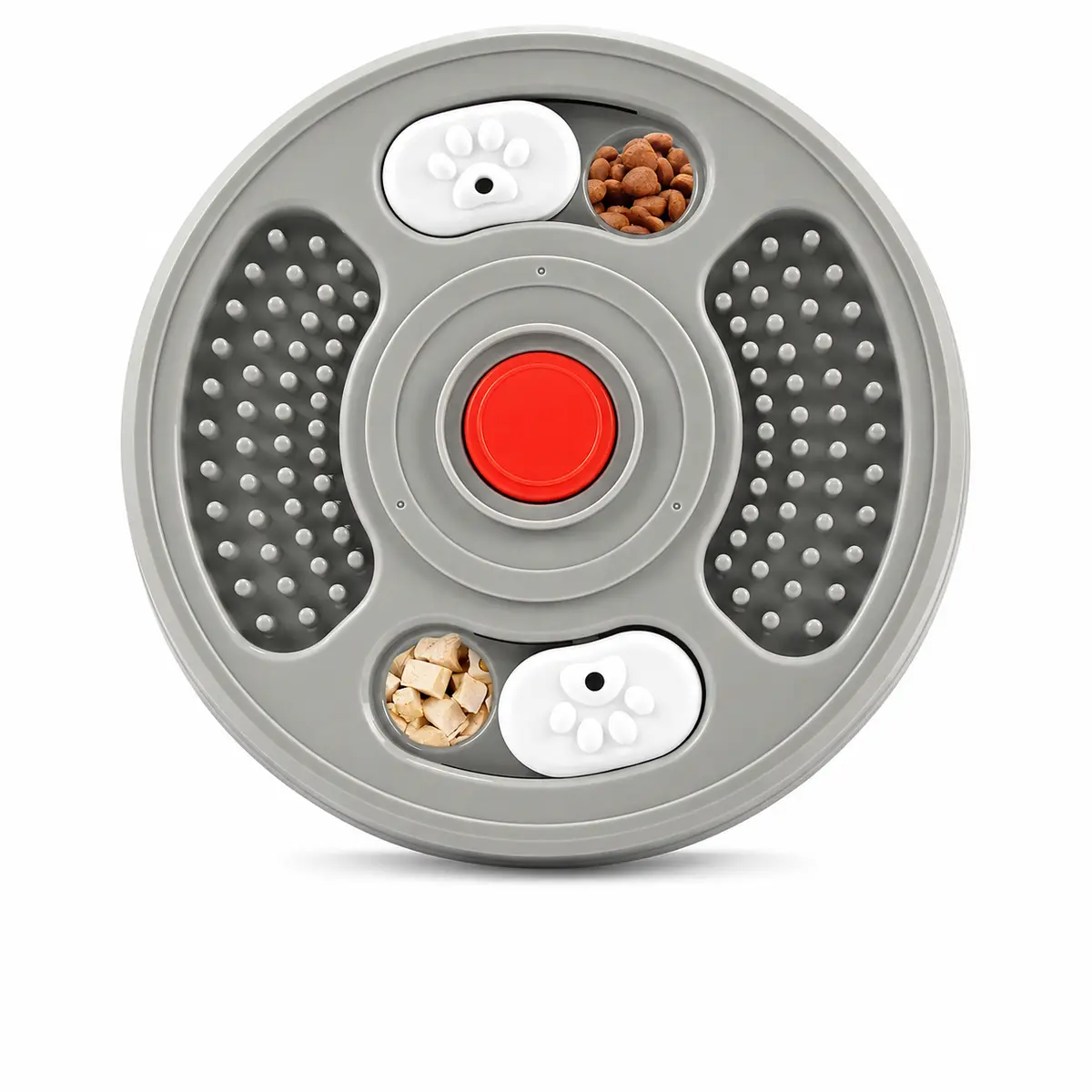
For dogs that gulp anything new, a slow feeder bowl or a lick mat keeps portions small and eating slow.
Supervise play around water as well as drinking
The AKC warns that excessive water can be swallowed during swimming or water play and that overhydration can be dangerous. Do not encourage repeated gulping as a game. If unusual symptoms follow water activity, tell the veterinarian about the activity itself instead of assuming that ordinary bowl drinking explains everything.
This page is general information, not veterinary advice, and it cannot replace an examination by the vet who knows your pet.
Common questions
Can a newborn puppy drink water instead of milk?
Do not use water as a replacement for the nutrition a newborn receives from milk. A puppy that cannot nurse needs prompt veterinary advice about appropriate feeding and care for its age.
When do puppies start needing a water bowl?
The AKC says puppies need a fresh water supply as they wean and begin eating solid food. Ask your veterinarian about your puppy’s stage and provide a clean bowl the puppy can reach.
Should I withhold water to prevent puppy accidents?
Do not restrict daytime water simply to reduce accidents. The AKC warns against taking restriction too far. Discuss housetraining and any unusual drinking or urination pattern with your veterinarian.
What if my puppy suddenly drinks much more water?
Call your veterinarian about the change, especially if urination, appetite, energy, or behavior also changes. Record the puppy’s age, food, activity, and approximate intake rather than guessing at a diagnosis.
Sources we checked
This guide is general information, not veterinary advice. If your pet is unwell or injured, contact your veterinarian.