Food safety
Can Puppies Eat Mango? Flesh Only, No Skin or Pit
Yes, a weaned puppy may have a little prepared mango flesh, but the pit contains a poisonous cyanide compound and also poses choking and blockage risks. The AKC permits mango for dogs when peeled, pitted, and cut small. For a growing puppy, ask your veterinarian whether this optional extra fits the complete growth diet. Never hand over a whole mango or let the puppy chew the discarded center.
By Matt GarnettUpdated November 13, 20264 min read3 sources
Keep the verdict specific to prepared flesh
The AKC describes ripe mango flesh as suitable in moderation when prepared appropriately. That advice does not apply to the whole fruit, a pit, or a mango-flavored dessert. Before offering anything, identify which form the puppy would actually eat and whether it contains additional ingredients.
A puppy exploring new objects may not distinguish an offered piece from the peel or pit on the counter. Prepare the fruit before bringing it within reach and put discarded parts somewhere the puppy cannot investigate. Do not leave a partly eaten mango beside the puppy while you finish preparing the rest.
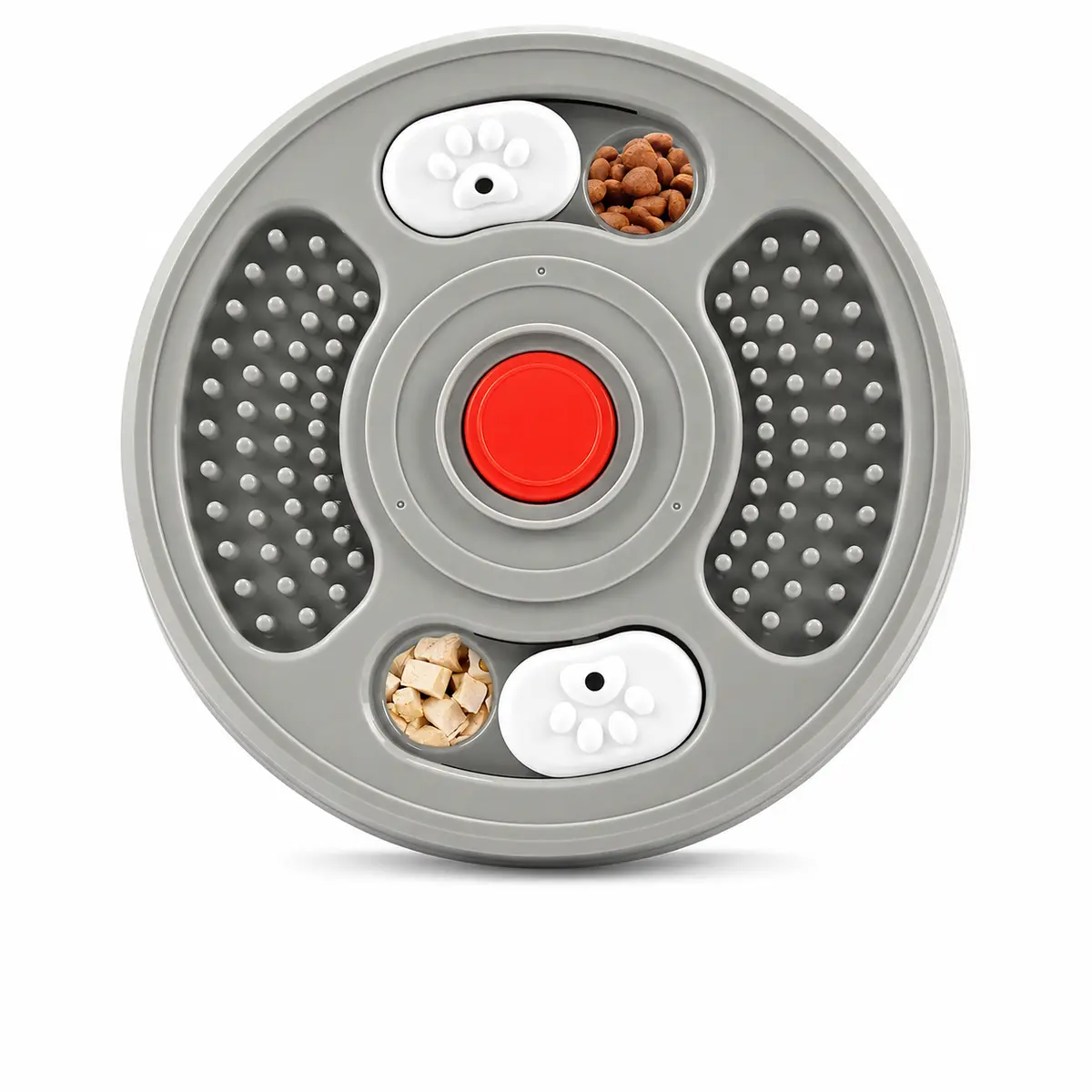
For dogs that gulp anything new, a slow feeder bowl or a lick mat keeps portions small and eating slow.
Remove skin and pit before cutting a portion
The AKC advises peeling mango because the skin is difficult to digest. It also warns that the pit can cause choking or become stuck in the digestive tract. Cut flesh away from the center yourself and check the separated pieces before deciding whether any are suitable to offer.
If a puppy swallows a pit, call your veterinarian instead of waiting to see whether it will pass. Describe the puppy’s age, weight in pounds, the time of swallowing, and whether the pit was chewed. A small puppy’s ability to pick up an object does not establish that it can safely swallow it.
Make texture and size a deliberate choice
Even ripe mango should be cut into small pieces, according to the AKC, to reduce choking risk. Do not judge a puppy’s portion by what an adult dog can manage. Ask your veterinarian about appropriate texture if the puppy is very small, has trouble chewing, or has another concern affecting eating.
Supervise the puppy directly during any new snack. Offer the prepared portion in a calm setting rather than tossing chunks for the puppy to catch. If coughing, gagging, or distress develops, stop the snack. Breathing difficulty, collapse, or signs of choking requires immediate veterinary help rather than a search for another food.
Protect the balance needed for growth
VCA explains that puppies have particular energy and nutrient needs during growth, and that their relatively small stomachs limit what they can eat at once. A complete puppy diet should remain the foundation. Mango is an optional extra, not a way to make an incomplete homemade diet suitable for a growing animal.
Ask the veterinary team how extras fit your puppy’s current food rather than using an adult dog’s snack habits. Count training treats and other handouts as well. A puppy receiving several different rewards across a day may already have enough extras without a fruit serving added by another member of the household.
Stop for digestive changes and seek advice
The AKC cautions that too much mango can cause stomach upset and diarrhea. If a change follows a snack, stop offering it and tell your veterinarian what the puppy ate, how it was prepared, and when symptoms began. Include the regular food and any other new treats in that account.
For suspected poisoning involving the pit or another ingredient, call your veterinarian, ASPCA Animal Poison Control at (888) 426-4435, or Pet Poison Helpline at (855) 764-7661; a fee may apply. Do not induce vomiting or give a home remedy unless directed by a veterinary professional. Persistent vomiting, pain, marked tiredness, or poor appetite needs prompt assessment.
Young or unwell puppies need a different conversation
A puppy that is not weaned should not be introduced to mango as a substitute for appropriate early nutrition. VCA’s birth-to-weaning guidance emphasizes the transition to a diet formulated for puppy development. If the puppy cannot nurse, will not eat normally, or seems unwell, contact the veterinarian about that problem rather than trying fruit.
This page is general information, not veterinary advice, and it cannot replace an examination by the vet who knows your pet.
Common questions
Can a puppy eat mango skin?
Remove it before offering any flesh. The AKC says mango skin is difficult to digest. Preparation matters even when the ripe flesh itself is acceptable for a dog in moderation.
What if my puppy swallows a mango pit?
Call the veterinarian promptly and describe the timing, the puppy’s size, and whether the pit was chewed. The AKC identifies choking and digestive blockage risks as well as a cyanide compound in the pit.
How much mango should I give a puppy?
Ask your veterinarian how a small optional extra fits your puppy’s complete growth diet. Do not copy an adult dog’s serving, and account for training treats and other rewards already given that day.
Can mango replace a puppy meal?
No. A growing puppy needs a complete diet formulated for its life stage. Mango does not establish that nutrient balance, and a puppy refusing normal meals needs veterinary advice rather than a fruit replacement.
Sources we checked
This guide is general information, not veterinary advice. If your pet is unwell or injured, contact your veterinarian.