Food safety
Can Puppies Eat Ice Cubes? Teeth and Choking Risks
No, avoid hard ice cubes as routine puppy chews because they can damage teeth or cause choking. Advice differs: the AKC permits supervised ice with precautions, while VCA’s puppy dental guidance specifically advises against ice cubes. A developing mouth deserves that caution. Ask your veterinarian about an appropriate teething option for your puppy, and keep ordinary fresh water available rather than relying on frozen treats for drinking.
By Matt GarnettUpdated November 13, 20264 min read4 sources
Why a simple yes can be misleading
The AKC describes ice as generally acceptable for dogs when individual needs, size, and supervision are considered. It also recognizes tooth and choking hazards. VCA’s guidance about developing puppy teeth takes a more cautious position and lists ice cubes among hard objects to avoid because they can damage teeth.
These recommendations should not be collapsed into a promise that every cube is harmless. The decision concerns a particular puppy’s mouth and chewing behavior, not just the fact that the ingredient is water. Discuss that puppy with the veterinarian if you want a cool teething option rather than choosing a hard cube by habit.
A teething puppy has a developing mouth
VCA explains that puppies replace their baby teeth as permanent teeth develop. During this process, the mouth can be tender and puppies commonly want to chew. A strong urge to chew does not mean any hard item is suitable, and enthusiasm for ice does not protect a tooth from injury.
Ask the veterinary team which textures and toys are appropriate for the puppy’s stage of development. Bring up any reluctance to eat or change in chewing rather than assuming that every mouth problem is ordinary teething. You do not need to offer an object simply because the puppy keeps trying to pick it up.
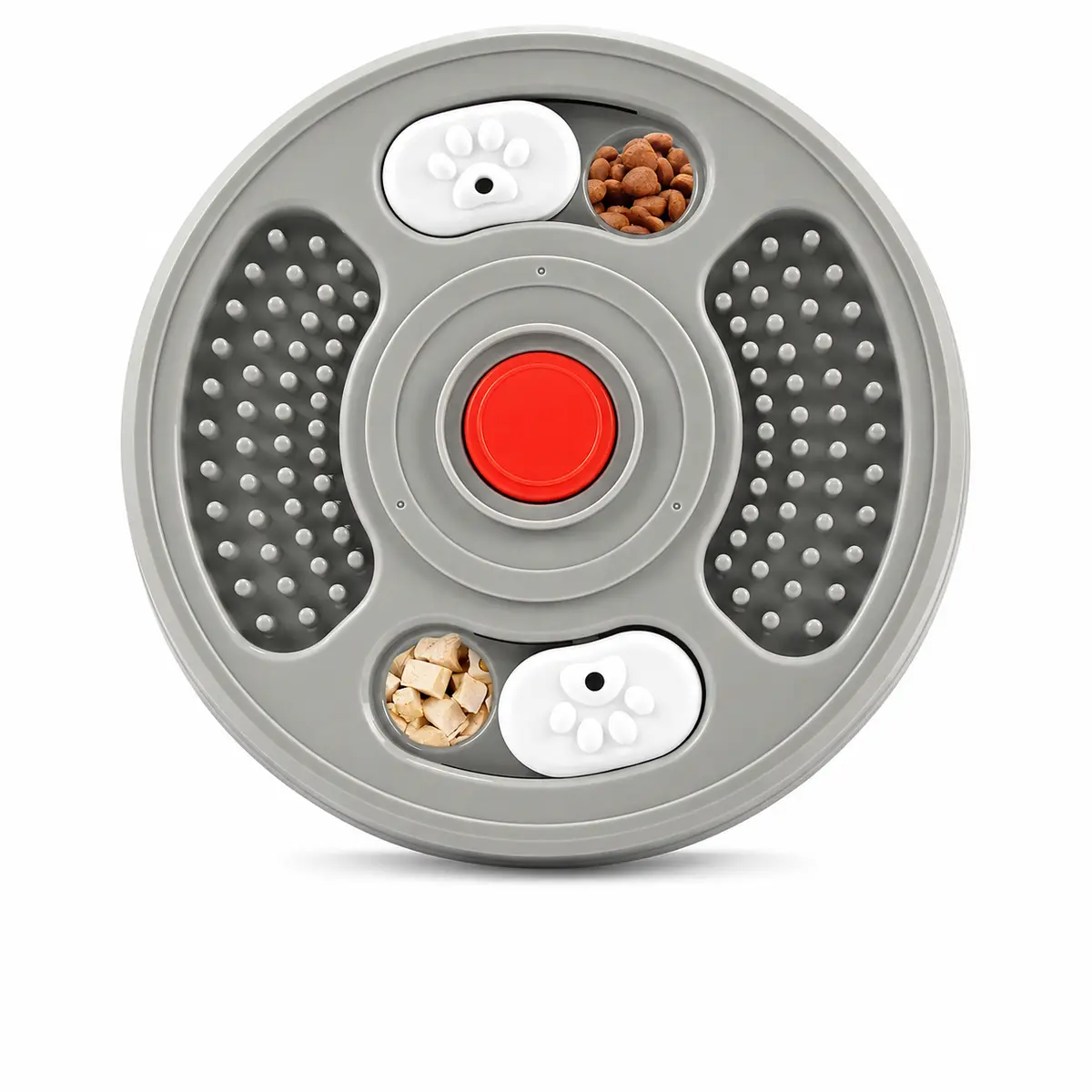
For dogs that gulp anything new, a slow feeder bowl or a lick mat keeps portions small and eating slow.
Choking is a separate consideration
The AKC advises matching ice to a dog’s age, jaw size, teeth, and chewing ability, and warns that swallowed pieces can present a choking risk. There is no universal cube size that makes every puppy safe. A size suitable for one dog may be unsuitable for a younger or smaller puppy.
Supervise any approved chew or frozen item directly. Do not leave the puppy alone with a bowl of cubes, and do not assume that ice melting eventually removes an immediate problem. Breathing difficulty, severe distress, or collapse calls for emergency veterinary help at once, regardless of what you think was swallowed.
Cool options still need individual judgment
The AKC mentions shaved ice as an alternative when tooth damage is a concern. That is different from encouraging a puppy to crunch a hard block. Ask your veterinarian whether a softer option makes sense and whether the puppy’s dental development or health means frozen items should be avoided altogether.
Do not add unfamiliar flavors or ingredients to make the experience more exciting. Keep the discussion about the puppy’s needs rather than adapting an adult dog’s dessert recipe. Plain water in a clean bowl remains a straightforward way to provide drinking water without introducing a new chew or an unknown food mixture.
Ice is not home treatment for an ill puppy
The AKC says ice is not a treatment for heatstroke and advises veterinary care when heatstroke is suspected. A puppy that appears overheated, weak, or unwell needs assessment rather than an experiment with frozen treats. Move away from heat and contact the clinic promptly for instructions appropriate to the situation.
Likewise, vomiting or refusal to drink should not lead to a homemade fluid plan based on ice cubes. Tell the veterinarian the puppy’s age, recent activity, food and water intake, and symptoms. Their advice may differ from guidance for a healthy puppy simply playing with a supervised enrichment item.
Keep water and dental concerns on the routine agenda
VCA’s feeding guidance calls for fresh water to be available, while the AKC’s puppy hydration article explains that growing puppies have particular water needs. Discuss drinking changes with your veterinarian. Also mention broken-looking teeth, difficulty chewing, or a baby tooth remaining beside an adult tooth instead of trying to solve those concerns with a harder chew.
This page is general information, not veterinary advice, and it cannot replace an examination by the vet who knows your pet.
Common questions
Are ice cubes a harmless teething toy for puppies?
They should not be treated as harmless. VCA advises against hard ice cubes during puppy dental development, while the AKC permits ice with precautions and acknowledges tooth and choking risks.
Is shaved ice different from a hard ice cube?
Yes. The AKC suggests shaved ice when tooth damage is a concern. Ask your veterinarian whether it suits your puppy rather than assuming every frozen texture is appropriate for every developing mouth.
Can ice replace a puppy’s water bowl?
No. Provide fresh drinking water. Ice can complicate supervision and does not replace attention to normal drinking, particularly if your puppy is unwell, refusing water, or drinking differently than usual.
Should I give ice to an overheated puppy?
Do not use ice as treatment for suspected heatstroke. The AKC advises veterinary care. Contact the clinic immediately, describe the symptoms and heat exposure, and follow its instructions for the puppy.
Sources we checked
This guide is general information, not veterinary advice. If your pet is unwell or injured, contact your veterinarian.