Care & how-to
The Smartest Dog Breeds, and What Smart Means at Home
The Border Collie is generally ranked the smartest dog breed, followed by the Poodle, German Shepherd Dog, Golden Retriever and Doberman Pinscher. That order comes from psychologist Stanley Coren's widely cited rankings, which the AKC reports. Smart, in those lists, mostly means quick to learn and respond to cues. A clever dog is rewarding to train, but it also needs daily mental work, or it will invent jobs of its own.
By Matt GarnettUpdated November 14, 20265 min read3 sources
How dog intelligence is measured
The best-known ranking comes from Stanley Coren, a psychologist who studied 120 breeds in the early 1990s and again in 2006. He described three kinds of canine intelligence. Instinctive intelligence is what a breed was developed to do without being taught, such as herding, retrieving or guarding. Adaptive intelligence is a dog's ability to solve problems on its own, like working out how to open a box or get around a barrier.
The third kind is learning from people: picking up new cues and understanding words. This is the kind the rankings mostly reflect, because it is the easiest to compare across breeds. So a breed low on the list is not necessarily dim. A hound that ignores a sit cue while following a scent trail is using a different kind of intelligence very well.
The top 10 smartest dog breeds
The AKC lists Coren's top ten as: Border Collie, Poodle, German Shepherd Dog, Golden Retriever, Doberman Pinscher, Shetland Sheepdog, Labrador Retriever, Papillon, Rottweiler and Australian Cattle Dog. Most are herding, working or retrieving breeds, developed to take direction from a handler over long working days, which is exactly the skill the rankings reward.
On AKC breed standards, the Border Collie is 18 to 22 inches and 30 to 55 pounds and lives 12 to 15 years. The Poodle comes in Toy, Miniature and Standard sizes, from 4 pounds to 70, living 10 to 18 years. The German Shepherd is 50 to 90 pounds, the Shetland Sheepdog 15 to 25 pounds, the Papillon just 5 to 10 pounds, and the Australian Cattle Dog 35 to 50 pounds with a life expectancy of 12 to 16 years. Smart dogs come in every size.
What a smart dog needs every day
The AKC rates mental stimulation needs on a 1 to 5 scale, and the Border Collie, Poodle, German Shepherd and Australian Shepherd all score 5. A walk alone does not meet that need. These dogs want problems to solve, things to learn and a job to do, and their high energy ratings mean they need physical exercise on top.
When the need goes unmet, clever dogs find their own outlets. VCA notes that under-stimulated Border Collies can become anxious or destructive and may try to herd children or other pets. Chewing, barking, digging and fence escapes are common in bored working breeds. A dog that is causing trouble is very often a dog that needs more to do, not a bad dog.
Smart is not the same as easy
A dog that learns fast learns everything fast, including the habits you would rather it did not. It will notice that whining at the door gets it let out, or that jumping on the counter sometimes pays off. Consistency from everyone in the household matters more with a clever breed, not less.
At the other end of the list, some breeds the AKC rates low for trainability are anything but slow. The Basenji and Shiba Inu both score 2 out of 5 for trainability. They are independent thinkers, bred to work things out for themselves, and they tend to ask what is in it for them. Patience, high-value rewards and short sessions work far better with them than repetition.
Smart breeds for families and first-time owners
Not every clever breed is a handful. The Golden Retriever and Labrador Retriever both score 5 out of 5 for trainability and 5 with young children, with moderate to high energy that an active family can meet. The Poodle, in any of its three sizes, pairs top trainability with a low-shedding coat, though it needs regular grooming.
The Papillon is a good choice for a smaller home: 8 to 11 inches tall, top marks for trainability, and a life expectancy of 14 to 16 years, though the AKC also rates it 5 for barking. The Border Collie and Australian Cattle Dog are better suited to experienced, active owners who can give them several hours of real activity and training every day.
Keeping a clever dog busy
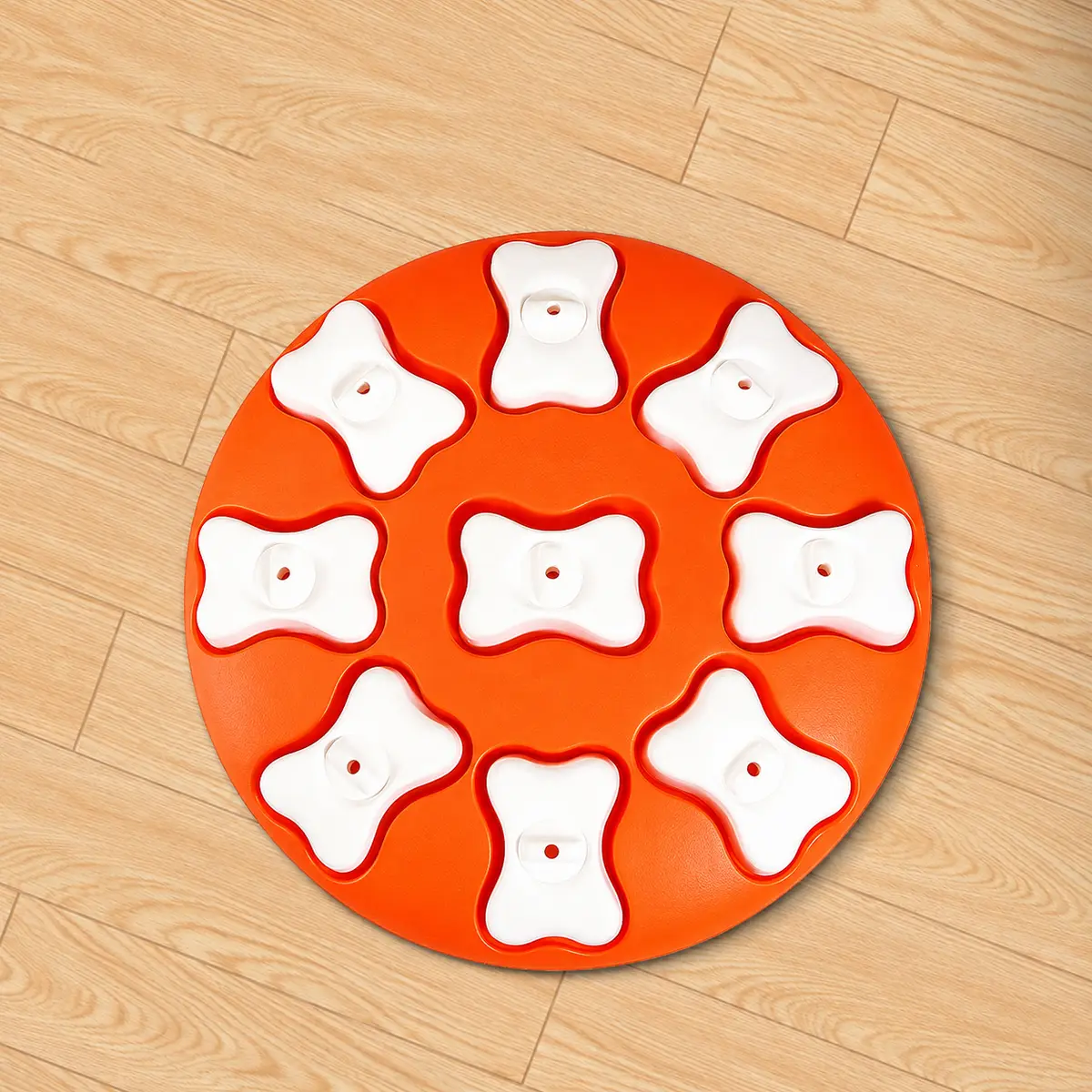
Feed meals from puzzle toys, such as a slide puzzle treat dispenser, or scatter kibble in the yard so the dog has to search for it. Teach a new trick every week, keeping sessions to a few minutes and ending on a success. Scent games, such as hiding treats around the house for the dog to find, tire dogs out quickly and suit every breed. A snuffle mat is an easy way to start nose work indoors. Dog sports such as agility, herding, nosework and obedience give working breeds the structured job they were built for.
Use reward-based training, and a training clicker can help you mark the exact moment of success. Clever dogs learn just as fast from fear as from reward, and the fear lingers. If a previously sharp dog seems confused, forgets house training or stops responding as it ages, mention it to your vet, because changes like these can have a medical cause and are worth checking.
This page is general information, not veterinary advice, and it cannot replace an examination by the vet who knows your pet.
Common questions
What is the smartest dog breed?
The Border Collie is ranked the smartest dog breed in Stanley Coren's widely cited rankings, as reported by the AKC. It learns new cues very quickly, but it also needs a great deal of physical and mental exercise every day.
What is the smartest small dog breed?
The Papillon, at 5 to 10 pounds, ranks eighth on Coren's top-ten list and is the smallest breed in it. The Shetland Sheepdog, at 15 to 25 pounds, ranks sixth. Toy and Miniature Poodles share the Poodle's reputation for quick learning.
Are smart dogs easier to train?
They learn faster, which makes good habits quick to teach, but bad habits form just as quickly. Highly intelligent working breeds also need more daily mental exercise, so they can be harder to live with than a less driven dog.
Is a German Shepherd smarter than a Golden Retriever?
In Coren's rankings the German Shepherd Dog places third and the Golden Retriever fourth, so the difference is small. Both are very trainable; the German Shepherd is more protective, and the Golden is usually more relaxed with strangers.
Sources we checked
This guide is general information, not veterinary advice. If your pet is unwell or injured, contact your veterinarian.