Care & how-to
Natural Remedies for Dog Anxiety: What Helps and What to Skip
The most reliable natural remedies for dog anxiety are not products but changes: more exercise and sniffing, a predictable routine, a quiet safe space, sound masking, and gentle, reward-based training that changes how your dog feels about its triggers. Pheromones, calming music and some supplements may help a little on top. Natural does not always mean safe, so ask your vet before giving any herb or supplement.
By Matt GarnettUpdated November 14, 20263 min read3 sources
Start with exercise, sniffing and routine
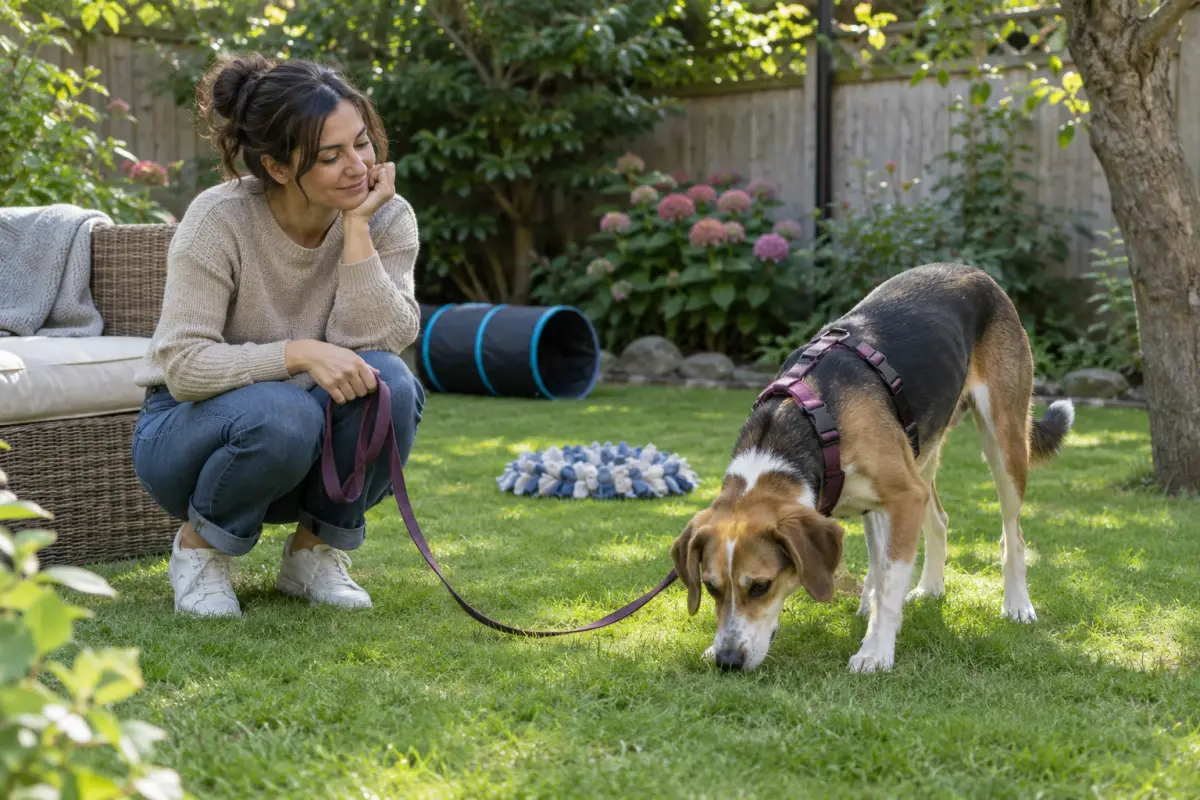
A dog that is physically tired and mentally busy finds it easier to relax. Daily walks matched to your dog's age and fitness, with plenty of time to sniff, plus play, food puzzles and scatter feeding, burn off nervous energy. Sniffing in particular is calming for many dogs, and a snuffle mat lets a dog sniff out part of its meal indoors.
Predictability matters just as much. Regular times for meals, walks and rest help an anxious dog feel safe. Build in quiet downtime too, so your dog learns to settle on its own rather than being on alert all day.
Create a safe space at home
Give your dog a retreat it can choose, such as a crate covered on three sides with the door open, or a calming dog bed in a quiet corner away from windows and foot traffic. Feed some meals there, and give chews or a slide puzzle treat dispenser, so it feels good, and teach children and guests to leave a dog alone when it is in its spot.
For noise-related fear, add a fan, white noise machine or steady music, and draw curtains to block flashes and outside movement. These simple changes can make a bigger difference than any supplement.
Gentle training is the most natural remedy of all
Desensitization and counterconditioning change how your dog feels about a trigger. Meet the scary thing at a low level, from far away or very quietly, and pair it with something your dog loves. Increase the intensity only as fast as your dog stays relaxed.
Teaching a settle-on-a-mat cue, a hand target and simple tricks gives an anxious dog something familiar to do when it is unsure. Always use positive methods; punishment and aversive tools add fear.
Pheromones, music, wraps and scents
Dog-appeasing pheromone diffusers, sprays and collars mimic a calming scent produced by nursing mother dogs. They are considered safe and do not interact with medicines, and some dogs seem to benefit, though results vary. Some dogs also relax with calm classical music or audiobooks.
A snug anxiety wrap helps some dogs, especially if introduced on calm days first. Lavender or chamomile scent may ease mild anxiety for some dogs, but never let your dog lick or ingest essential oils, and keep diffusers out of reach, as concentrated oils can be harmful.
Herbs and supplements: be careful
Supplements such as L-theanine and alpha-casozepine have some early evidence for a mild calming effect in dogs. Melatonin is sometimes used by vets for sleep and noise fears. Many herbal remedies, such as valerian or St. John's wort, have little dog-specific research, and St. John's wort must never be combined with antidepressants.
Supplements are not checked by the FDA before sale, so quality varies, and human products can contain xylitol. Ask your vet before giving any herb or supplement, especially if your dog takes other medicines. If anxiety is severe or getting worse, see your vet, who can look for medical causes and discuss stronger support.
This page is general information, not veterinary advice, and it cannot replace an examination by the vet who knows your pet.
Common questions
What is a natural sedative for dogs?
There is no natural product that safely sedates a dog without risk. Some supplements may have a mild calming effect, but anything strong enough to sedate should only be used under your vet's guidance.
Does lavender calm dogs?
The scent of lavender may help some dogs relax in stressful situations. Use it lightly in the room, never on your dog or in a form it can lick, and remove it if your dog avoids the smell.
How can I calm my dog's anxiety naturally at home?
Use exercise and sniffing, a safe space, steady routines, background noise, food puzzles and reward-based desensitization. Add pheromones or a vet-checked supplement if needed, and see your vet for severe anxiety.
Are calming herbs safe for dogs?
Some are low risk, but others can interact with medicines or are untested in dogs. Products vary in quality and may contain harmful additives. Ask your vet before giving any herb.
Sources we checked
This guide is general information, not veterinary advice. If your pet is unwell or injured, contact your veterinarian.