Care & how-to
Why Does My Dog Lick Everything or the Floor?
Your dog may lick people or objects during ordinary interaction, but persistent floor or surface licking can have medical or behavioral contributors and deserves veterinary assessment. Licking alone does not establish boredom, anxiety, nausea, or a compulsive disorder. Note when it happens, whether it disrupts normal activity, and any other changes, then contact your veterinarian about a new, frequent, or escalating pattern.

By Matt GarnettUpdated November 11, 20263 min read4 sources
Separate an occasional lick from a persistent pattern
AKC describes several reasons dogs lick, including ordinary social interaction and learned attention. It advises speaking with a veterinarian about obsessive licking of the dog, a person, or an object. The important question is how the behavior fits into the dog’s day, rather than whether licking occurs at all.
Describe the target precisely: a person’s skin, one floor area, bedding, furniture, or the dog’s own body. Record whether the dog moves between surfaces or repeatedly returns to one place. Note whether the licking interrupts rest, walks, play, or other usual activities. This gives the clinic a clearer starting point than saying the dog “licks everything,” and helps you notice whether the pattern is changing.
Medical assessment comes before a behavioral label
Merck’s veterinary guidance lists licking among behavioral signs that can accompany gastrointestinal conditions. It also explains that medical problems must be considered when behavior changes. This association does not mean floor licking diagnoses stomach disease, and it is not enough information to choose a remedy or change the dog’s treatment at home.
Tell your veterinarian about vomiting, appetite changes, gulping, discomfort, altered stool, or any other change you have noticed. Explain whether the licking started suddenly, followed an illness, or appeared after a prescription changed. If the dog seems acutely unwell, contact the clinic immediately and describe that first. Ask the team what examination is appropriate instead of assuming a training problem accounts for every episode.
Document what happens before and after the licking
Merck recommends a detailed history covering onset, frequency, duration, daily routine, and previous attempts to change the behavior. It also considers what happens immediately before and afterward. A short video can help a veterinarian see the action you are describing, provided obtaining it does not delay needed care.
Use a simple record rather than trying to stage an episode. Note the location, activity beforehand, approximate duration, and your response. Include whether the dog stopped on its own or moved to another activity. Ask other caregivers for direct observations and distinguish them from guesses. Bring the record to the appointment and ask which parts are most useful to continue tracking while assessment or treatment proceeds.
Reduce conflict and offer an appropriate alternative
VCA advises against scolding dogs for repetitive behavior because fear and frustration can make recovery more difficult. When possible, it suggests redirecting toward an appropriate activity and teaching a calm alternative. Ask the veterinarian which activities suit your dog’s health and the pattern being assessed.
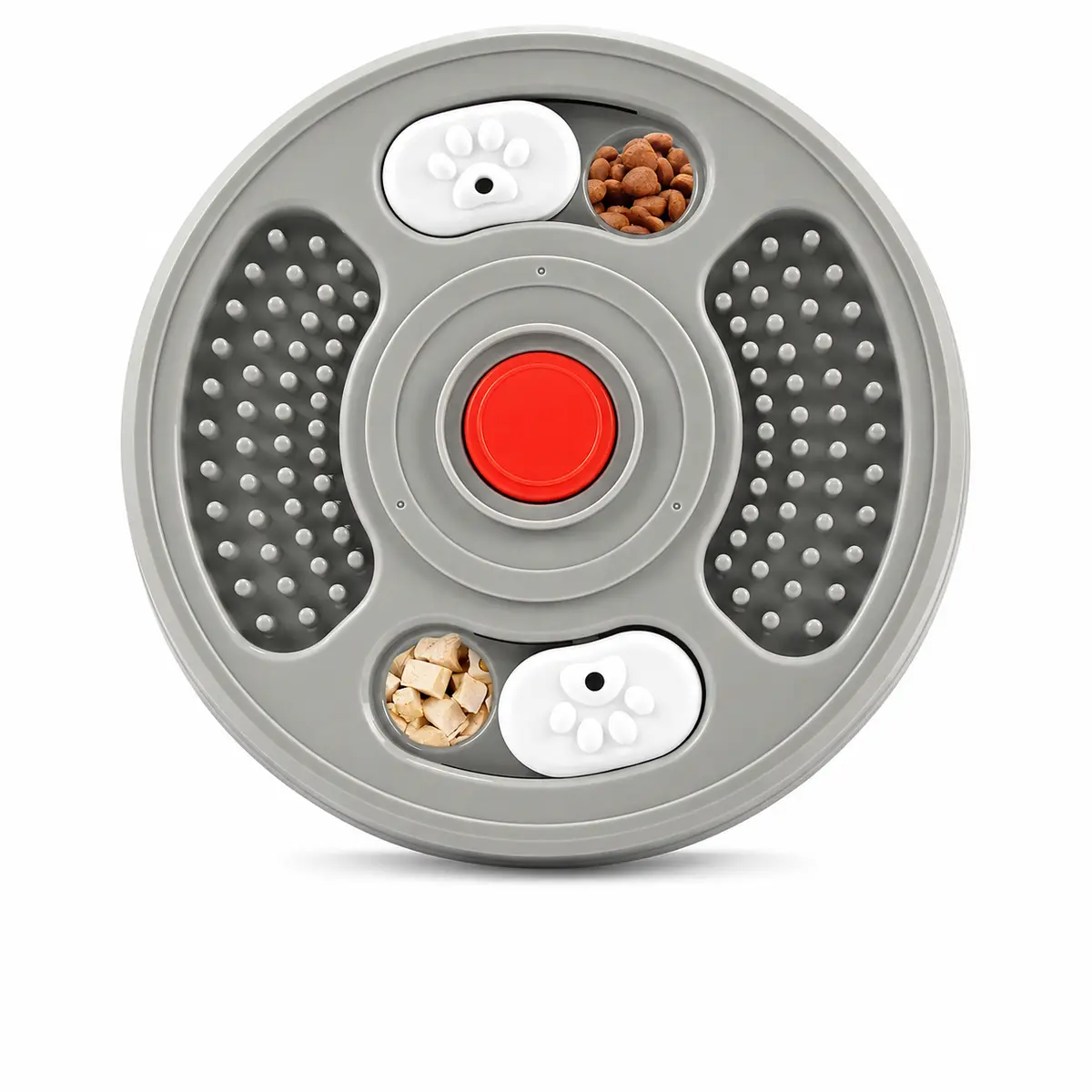
Keep the response calm and consistent across the household. If the dog can comfortably engage in a familiar activity, such as a lick mat or an interactive dog toy your veterinarian is happy with, offer that opportunity without forcing it or turning the interruption into a confrontation. Tell the clinician if redirection does not work or the dog rapidly resumes licking. Avoid repeatedly escalating commands or punishment; difficulty interrupting the behavior is useful information for the assessment, rather than proof the dog is being disobedient.
Build a plan for the identified contributors
VCA describes compulsive disorders as complex and requiring careful evaluation; surface licking can appear among repetitive behaviors, but the movement itself does not establish that diagnosis. Medical and behavioral care may both be relevant. A veterinary behaviorist may help when the pattern persists or the emotional and environmental contributors need specialist assessment.
Ask for a practical plan covering daily activity, social contact, training, and any treatment the clinician recommends. Confirm what improvement should look like and when to review progress. If a prescription is provided, follow its instructions and report problems instead of changing it independently. An ongoing record can show whether episodes are becoming less frequent or disruptive and help the team adjust the plan when needed.
This page is general information, not veterinary advice, and it cannot replace an examination by the vet who knows your pet.
Common questions
Does licking the floor always mean nausea?
No. Merck includes licking among signs that can accompany gastrointestinal conditions, but the behavior alone does not establish nausea or its cause. Describe associated changes and arrange the assessment your veterinarian recommends.
Is constant licking just boredom?
Do not assume that. VCA explains that repetitive behaviors can have physical and emotional contributors. A veterinarian should evaluate the pattern before a behavioral label or an individual management plan is chosen.
Should I scold my dog to stop the licking?
VCA advises against scolding repetitive behavior because it can increase fear and frustration. Respond calmly, offer an appropriate alternative when possible, and tell the veterinarian if the behavior is difficult to interrupt.
Sources we checked
This guide is general information, not veterinary advice. If your pet is unwell or injured, contact your veterinarian.