Care & how-to
Large Dog Breeds: Sizes, Lifespans and What to Expect
Large dog breeds usually weigh 50 to 100 pounds, and giant breeds such as the Great Dane and Mastiff go well past that, with male Mastiffs reaching 230 pounds on the AKC standard. Big dogs are often calm, devoted companions, but size shortens lifespan, with many giants living 7 to 10 years, and brings specific risks, above all bloat. This guide compares the popular large breeds and the care that size demands.
By Matt GarnettUpdated November 9, 20265 min read4 sources
What counts as a large or giant breed?
There is no official line, and the AKC sorts breeds by original job rather than by weight. In everyday use, a large dog is one that weighs roughly 50 to 100 pounds as an adult and stands about 22 to 27 inches at the shoulder. Giant breeds are the ones that regularly top 100 pounds, and some stand over 30 inches. That is the split this guide uses.
The distinction is not just about how much floor space a dog takes up, or how big a bed for a large dog needs to be. Giant breeds grow for longer, reach adult size later, carry more weight on their joints and tend to have shorter lives. Their food, medication and boarding costs also rise with their size, because many products and treatments are priced or measured by body weight.
Popular large breeds compared
The Labrador Retriever stands 21.5 to 24.5 inches and weighs 55 to 80 pounds, with a life expectancy of 11 to 13 years. The Golden Retriever is 21.5 to 24 inches and 55 to 75 pounds and lives 10 to 12 years. Both score 5 out of 5 with young children on the AKC scale, and both shed heavily. The German Shepherd Dog is 22 to 26 inches and 50 to 90 pounds, living 12 to 14 years.
The Boxer is 21.5 to 25 inches, with males at 65 to 80 pounds and females about 15 pounds lighter, and lives 10 to 12 years. The Doberman Pinscher stands 24 to 28 inches, weighs 60 to 100 pounds and lives 10 to 12 years. The Standard Poodle, 40 to 70 pounds, stands out for its long range of 10 to 18 years and a coat that barely sheds. The Belgian Malinois, 40 to 80 pounds, lives 14 to 16 years.
Giant breeds over 100 pounds
The Mastiff is the heaviest: males 160 to 230 pounds and females 120 to 170, standing 27.5 inches and up, with a life expectancy of 6 to 10 years. The Great Dane is one of the tallest breeds, males 30 to 32 inches and 140 to 175 pounds, living 7 to 10 years. The Newfoundland weighs 100 to 150 pounds and lives 9 to 10 years, and the Bullmastiff weighs 100 to 130 pounds and lives 7 to 9.
The Bernese Mountain Dog weighs 70 to 115 pounds and lives 7 to 10 years under a heavy double coat that the AKC rates 5 out of 5 for shedding. The Great Pyrenees starts at 85 pounds for females and 100 for males and lives 10 to 12 years. Rottweiler males reach 95 to 135 pounds and live 9 to 10 years. Many of these breeds drool too: the AKC gives the Newfoundland its top score, and the Mastiff and Great Dane 4 out of 5.
Size and lifespan
Across dog breeds, bigger usually means shorter-lived. Compare the AKC figures: the Great Dane, Bernese and Bullmastiff sit around 7 to 10 years, the Labrador and Golden Retriever around 10 to 13, and many small breeds reach 14 to 16. That pattern holds well enough that it should shape your expectations before you bring home a giant puppy.
Breed averages are not destiny. Keeping a large dog lean is one of the most useful things an owner can do, because extra weight speeds wear on hips, elbows and knees. Regular checkups give your vet the chance to catch joint, heart and other problems early, when there are more options. Some breeds benefit from screening before breeding, so ask the breeder for the parents' health results.
Bloat (GDV): the emergency every big-dog owner should know
Gastric dilatation-volvulus, often called bloat, happens when the stomach fills with gas and can twist on itself, cutting off blood supply. It is seen most often in large, deep-chested dogs. VCA lists the Great Dane, Saint Bernard, Weimaraner, Irish Setter, Gordon Setter, Standard Poodle, Basset Hound, Doberman Pinscher and Old English Sheepdog as predisposed, though any dog can be affected.
Warning signs include restlessness, heavy drooling, retching that brings nothing up, labored breathing, a swollen belly that is often most obvious on the left, and collapse. GDV is a life-threatening emergency: get to your vet or the nearest emergency vet immediately, day or night. For high-risk breeds, ask your vet about a preventive gastropexy, a surgery that attaches the stomach to the body wall and prevents twisting in most cases, often done at spay or neuter.
Puppy growth and joint health
Large and giant puppies grow fast for a long time, and their joints are vulnerable while they do. Ask your vet about a puppy food formulated for large breeds, which is designed to support steady rather than rapid growth. Hip dysplasia, elbow dysplasia and other developmental joint problems are common in many big breeds, including the Great Dane, Rottweiler and German Shepherd.
Exercise matters as much as food. Regular walks and gentle play are good for a growing giant, but repeated high-impact activity such as long runs on pavement, jumping from heights or endless ball chasing can strain developing joints. Your vet can tell you when your puppy's growth plates have closed and it is ready for more demanding work.
Living with a large dog
Start training on day one. A jumping 15-pound puppy is cute; the same habit in a 120-pound adult can knock someone over. Polite walking on a loose leash, a solid sit and a reliable recall are safety skills for a big dog, and reward-based training builds them without damaging trust. Early, positive socialization with people and other dogs matters especially for guarding breeds.
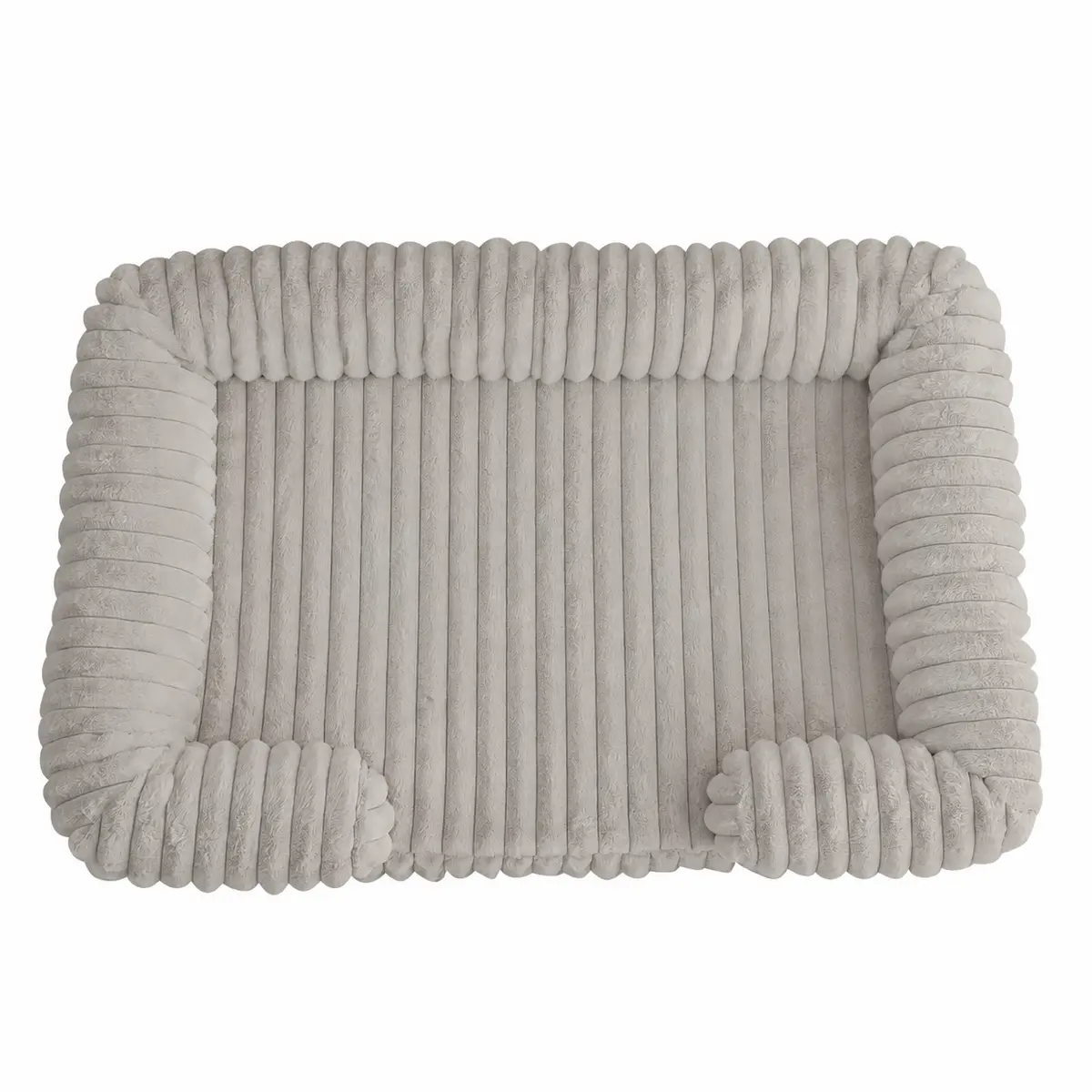
Think about the practical side as well. You will need a vehicle and a crate that fit, a sturdy fence, and a budget for food and weight-based medications. Many giants are mellow indoors and need moderate rather than extreme exercise, but they still need room to stretch out and lie down, whether on a padded bed for medium and large dogs or a large dog bed. Talk to your vet before choosing a breed about the health issues to plan for.
This page is general information, not veterinary advice, and it cannot replace an examination by the vet who knows your pet.
Common questions
What is the biggest dog breed?
By weight, the Mastiff is the heaviest AKC breed, with males reaching 160 to 230 pounds. The Great Dane is among the tallest, with males standing 30 to 32 inches at the shoulder and weighing up to 175 pounds.
How long do large dogs live?
It depends on the breed. Labradors and Golden Retrievers typically live 10 to 13 years, while giant breeds such as the Great Dane, Bernese Mountain Dog and Bullmastiff are often 7 to 10 years on the AKC figures.
What is the calmest large dog breed?
Many giant breeds are calm indoors once grown. The AKC rates the Newfoundland and Mastiff 3 out of 5 for energy and 5 for affection with family, but every puppy is lively, and all need daily walks and training.
Are large dog breeds good with kids?
Many are. The AKC rates the Labrador, Golden Retriever, Newfoundland, Bernese Mountain Dog and Boxer 5 out of 5 with young children. Their size still means a young child can be knocked over, so supervise play and teach both sides good manners.
Sources we checked
This guide is general information, not veterinary advice. If your pet is unwell or injured, contact your veterinarian.