






Training & behavior
How to Keep Your Dog Off the Couch
To keep your dog off the couch, give it a comfortable spot of its own nearby, teach a go-to-place cue, and reward it every time it chooses that spot. While it is learning, block the couch when you are out so it cannot practice the old habit. Calmly lead it off if it climbs up, and make sure everyone in the house follows the same rule.
By Matt GarnettUpdated November 14, 20264 min read3 sources
Why dogs love the couch
From a dog's point of view, the couch is the best seat in the house. It is soft, warm, raised up so your dog can watch the room or the window, and it smells strongly of you. The AKC points out that a couch by a window is especially tempting for dogs that like to watch the street or guard the house, and that bored, high-energy dogs climb more because they are looking for something to do.
Knowing the reason helps you pick the fix. A dog that climbs to look outside needs the view blocked. A dog that climbs to be near you needs a bed right next to your seat. A dog that climbs because it is restless needs more exercise and mental work earlier in the day.
Step 1: give your dog a better spot
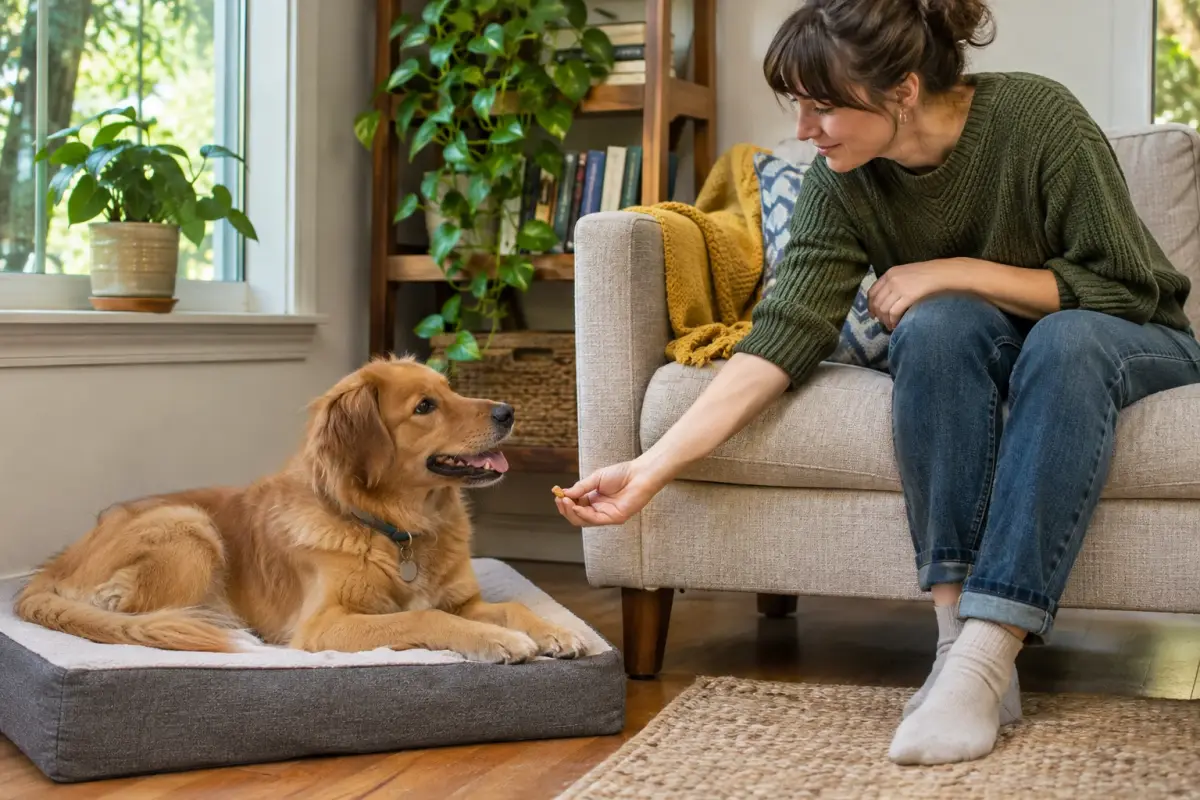
Put a comfortable dog bed, or even an old armchair you are happy to give up, right beside the couch. Make it as inviting as possible: a soft blanket, a favorite chew, and a few treats hidden in it now and then. Dogs choose spots partly for comfort and partly for closeness, so a bed across the room rarely competes with the couch.
For larger dogs or dogs with sore joints, a raised or orthopedic bed, such as an elevated dog bed for large breeds, often wins over the couch because it offers the same height and cushioning. If the couch is near a window, try closing blinds or curtains during the day so the perch loses its appeal.
Step 2: teach a place cue
Teach your dog to go to its bed on cue. Lure it onto the bed with a treat and reward the moment all four paws are on it. Then ask for a down on the bed and reward again, and add a release word such as free so your dog knows when it can get up. Over sessions, build the time it stays, then the distance you send it from, then distractions.
The AKC recommends working on just one of duration, distance or distraction at a time and going back a step if your dog struggles. Once your dog goes to its place reliably, ask for it when you sit down on the couch and pay it with a treat or chew. You are teaching it that its own bed is where good things happen.
Step 3: manage the couch while your dog learns
Every time your dog gets onto the couch when you are not there, it gets rewarded by comfort, which undoes your training. While you are teaching the new habit, block the couch when you go out or to bed: close the door to that room, put a baby gate across the doorway, or lay something on the cushions that makes them less inviting, such as upturned laundry baskets or chairs.
If your dog climbs up while you are home, calmly lead it off by the collar or with a treat lure and send it to its bed, then reward it there. Avoid shouting or pushing; it can make some dogs anxious or turn getting off into a game. Teaching an off cue is useful too: reward all four paws on the floor.
Consistency and exercise
Rules only work if everyone in the household follows them. If one person invites the dog up for cuddles and another tells it off, your dog will keep trying because sometimes it pays. Decide as a family whether the couch is off limits always, or only allowed when invited with a cue, and stick to it.
A tired dog is far less likely to go looking for trouble. A good walk, a sniffing game or a training session before you settle for the evening often does more than any deterrent. Food puzzles and chews given on your dog's own bed make that spot the obvious place to relax.
Dealing with dog hair on the couch
If your dog is allowed up, or the habit is still being broken, a washable throw or fitted couch cover catches most of the hair and is far easier to clean than upholstery. Regular brushing, especially during spring and fall shedding, removes loose hair before it lands on furniture. A rubber glove or lint roller lifts hair from fabric quickly.
Sudden heavy shedding, bald patches or itchy, sore skin are worth a call to your vet, because allergies, parasites and some hormonal conditions can cause excessive hair loss. Normal seasonal shedding, though, is simply managed with brushing and a good vacuum.
This page is general information, not veterinary advice, and it cannot replace an examination by the vet who knows your pet.
Common questions
How do I keep my dog off the couch when I'm not home?
Remove access while your dog is learning: close the room, use a baby gate, or cover the cushions with something uninviting. Leave a comfortable bed and a chew elsewhere so your dog has a good alternative.
Is it bad to let my dog on the couch?
Not necessarily. Many dogs share the couch without any problems. It is a household choice, but be consistent, and keep dogs off if they guard the space or if someone in the home has allergies.
Do couch deterrent mats work?
Some owners use them, but they work by making the dog uncomfortable and do not teach what to do instead. Blocking access and rewarding a dog bed is a kinder, longer-lasting approach.
Sources we checked
This guide is general information, not veterinary advice. If your pet is unwell or injured, contact your veterinarian.


