






Buying guides
Best Elevated Dog Bed: How to Choose a Raised Cot
The best elevated dog bed has a rigid frame of steel or aluminum, a taut, breathable mesh or heavy fabric bed, non-slip feet, and a weight rating well above your dog. Raised cots keep dogs off hot, cold or damp floors and let air flow underneath, which the AKC notes can help keep dogs cool and support joints. Size it for a stretched-out dog and choose chew-resistant edges for chewers.
By Matt GarnettUpdated November 13, 20264 min read2 sources
What matters most: frame, fabric and weight rating
An elevated bed is a fabric surface stretched across a frame, so the frame decides how long it lasts. Powder-coated steel is strong and inexpensive; aluminum is lighter and does not rust, which suits outdoor use; PVC frames are light but flex and crack under heavy dogs. Joints should lock tightly, and the feet should grip.
The fabric is the bed. Breathable mesh lets air through and dries quickly, which suits hot climates and outdoor use. Heavier woven fabrics such as canvas or vinyl-coated textiles are more chew-resistant and warmer. The AKC notes cot-style beds can help keep dogs cool and support joints, and recommends beds that are durable, breathable and easy to clean.
The main types compared
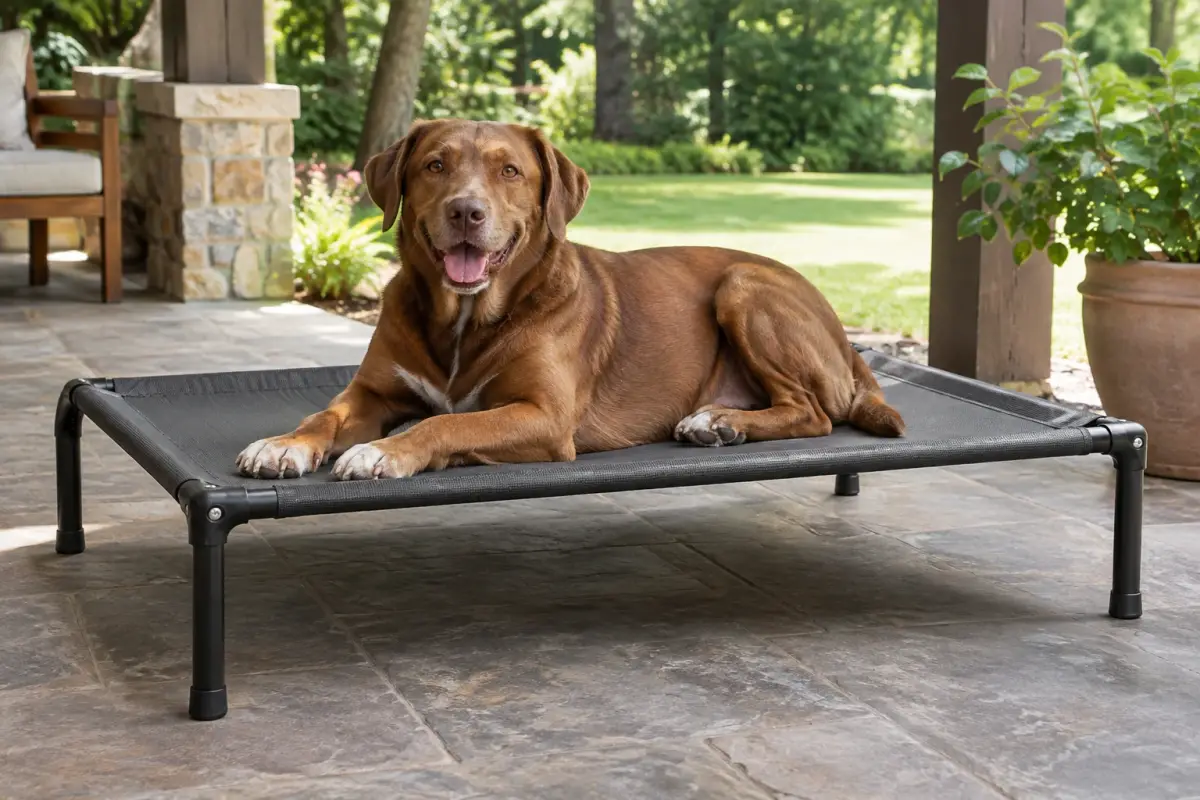
Standard cots, like the Elevated Dog Bed for Large Breeds, are a rectangular frame a few inches off the ground, ideal for dogs that sprawl. Cots with a bolster or a removable cushion add a headrest and softness for dogs that like to curl. Canopy cots add a shade cover for outdoor use. Folding travel cots pack flat for camping and trips.
Chew-resistant cots hide the fabric edges inside the frame so a dog cannot start a tear. Elevated beds for crates are made to fit standard crate sizes. Some indoor raised beds look like furniture, with a padded mattress on a wooden or metal frame, combining the airflow benefit with more cushioning.
Best elevated bed for each dog
For dogs that run hot, such as thick-coated breeds in warm climates and flat-faced breeds, a mesh cot, such as this cooling dog cot, keeps them cooler than a plush bed. For large and senior dogs, a sturdy steel or aluminum cot with a high weight rating keeps joints off cold, hard floors, though very stiff dogs may need a cushion or a low-entry foam bed instead.
For outdoor dogs and kennels (see outdoor dog beds), an aluminum frame with mesh resists rust and dries fast. For chewers, a cot with hidden fabric edges and a metal frame. For puppies still house training, a cot is easy to hose off; the AKC notes washable beds suit puppies still learning.
What to avoid
Avoid PVC-framed cots for heavy dogs, cots with exposed fabric edges for chewers, and frames that wobble on uneven floors. Avoid assuming a cot is warm enough in cold weather; the airflow that cools in summer chills in winter, so add a pad or blanket on cold nights.
Avoid very high cots for small, senior or arthritic dogs that would have to jump. If your dog struggles to step onto a low cot, or seems stiff after lying on it, a cushioned orthopedic bed may suit it better, and your vet can check for joint pain.
How to size an elevated bed
Measure your dog lying stretched out on its side, nose to the base of the tail, and add 6 to 10 inches. Check the cot's sleeping surface, not the outer frame, which is larger. Most cots sit 5 to 9 inches off the floor; lower is easier for small and older dogs.
Choose a weight rating comfortably above your dog's weight, especially for dogs that jump onto the bed. If two dogs share a cot, add their weights and choose a larger size so both can lie flat.
Care and lifespan
Brush off hair and hose or wipe mesh beds clean; many fabrics can be removed and washed. Let them dry fully before use. Tighten frame screws every few months, since fabric tension loosens them over time.
Replace the fabric when it sags, tears or frays at the edges; many brands sell replacement covers, which extends the frame's life for years. Store outdoor cots out of strong sun in the off-season to slow fabric breakdown. To replace a whole bed, compare elevated dog beds again.
Cot frame and resting-surface options
| Layout | What changes | What to inspect |
|---|---|---|
| Standard cot | Fabric stretched across a raised frame | Usable surface and frame rating |
| Bolster or cushion cot | Additional soft pieces on the cot | Center space and attachment/removal |
| Canopy cot | A cover rises above the frame | Deployed canopy clearance and fastenings |
| Folding cot | The frame folds for transport | Locks and folded dimensions |
| Crate cot | A raised surface intended for a crate | Inside crate compatibility |
| Furniture-style raised bed | A mattress on a wood or metal frame | Mattress dimensions and entry edge |
Common questions
Are elevated dog beds good for dogs?
For many dogs, yes. They keep dogs off hot, cold or damp floors, let air circulate and are easy to clean. Very stiff or senior dogs may prefer a cushioned foam bed.
Are raised dog beds good for large dogs?
A steel or aluminum cot with a high weight rating suits large dogs well, especially those that run hot. Add a pad for comfort if your dog has stiff joints.
Are elevated dog beds chew-proof?
No bed is chew-proof, but cots with hidden fabric edges and metal frames resist chewing much better than plush beds. Supervise a new chewer. Remove it if your dog starts a tear.
What is the best elevated bed for outdoor use?
An aluminum or powder-coated steel frame with breathable mesh, which resists rust and dries quickly. A canopy adds shade in hot weather. Move it out of strong sun in the off-season.
Sources we checked
This guide is general information, not veterinary advice. If your pet is unwell or injured, contact your veterinarian.


