






Training & behavior
How to Crate Train an Older Dog
Yes, you can crate train an older dog. Adult dogs usually have better bladder control than puppies, but they may arrive with past experiences of confinement, good or bad. Go slower than you would with a puppy: leave the door open, feed meals inside, close it only once your dog walks in happily, and build time in small steps over days or weeks.
By Matt GarnettUpdated November 14, 20264 min read4 sources
Why crate train an adult dog at all
A crate is useful at any age. It gives a newly adopted dog a quiet retreat while it learns a new home, keeps a dog safe while you are out during the first weeks, and makes vet stays, boarding, travel and recovery from surgery far less stressful. The AKC notes that crates also help many dogs cope with fireworks, storms and visitors, because the dog already knows the space as its own.
It is not required for every dog, though. If your adult dog is house trained, calm alone and not destructive, it may never need to be shut in. In that case, crate training is mostly insurance for the days when confinement cannot be avoided, and an open crate as a bed is a perfectly good outcome.
Step 1 to step 3: introduce the crate
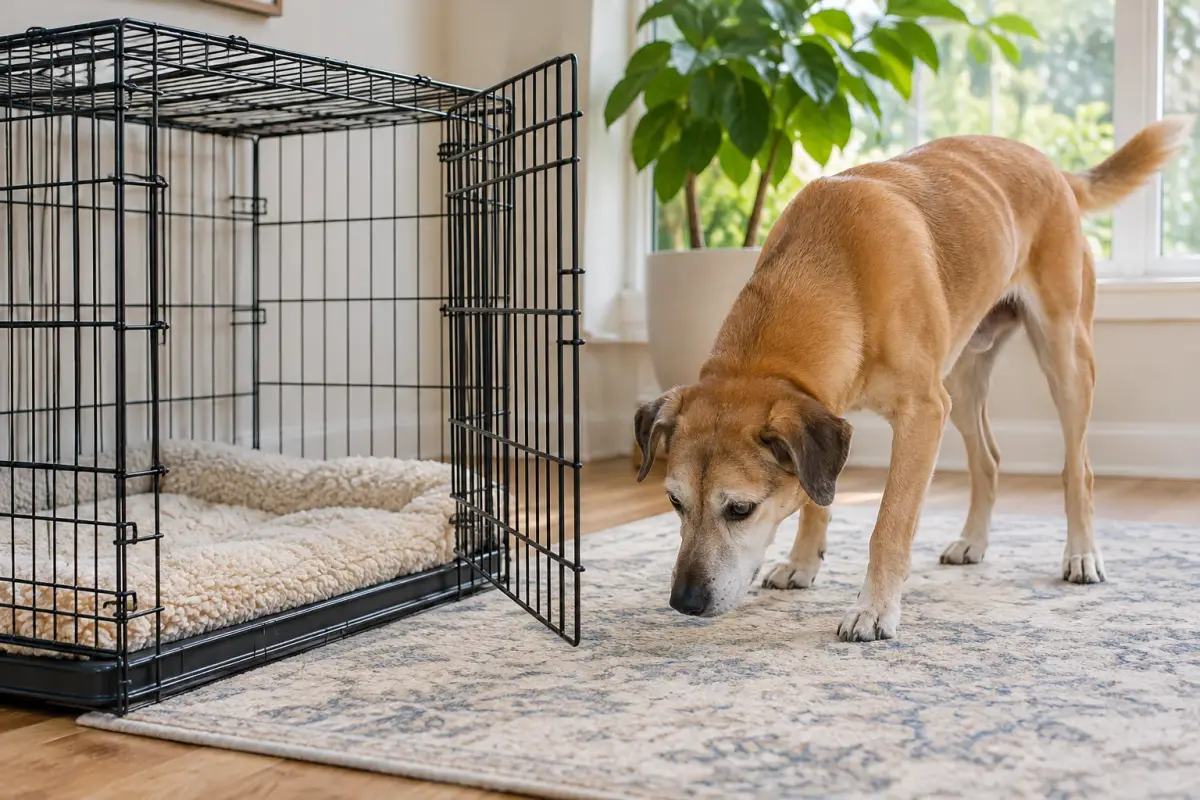
Step 1: Set the crate up in a room where your dog already relaxes, door tied open so it cannot swing shut and startle. Put a familiar blanket or a washable padded crate mat inside and scatter a few treats near and inside the door. Let your dog investigate at its own pace and reward any interest. Step 2: Feed every meal near the crate, then just inside it, then at the back.
Step 3: Once your dog is eating happily at the back, close the door while it eats and open it as soon as the bowl is empty. Over the next few days, keep it closed for a minute or two after the meal. Adult dogs that have had a bad experience with crates may need many days at step one, and that is fine. VCA Animal Hospitals recommends exactly this sequence: open crate, food and bedding inside, then very short closed periods with rewards.
Step 4 to step 6: build time and practice absences
Step 4: Add a cue word and reward your dog for going in on request. Step 5: Give a long-lasting chew or a dog puzzle toy stuffed and frozen, close the door and sit nearby reading or watching TV. Gradually move farther away and out of sight for a few minutes. Step 6: Leave the house for five minutes, then fifteen, then longer, returning calmly without a big greeting.
Once your dog settles for longer stretches by day, you can crate it at night if that is your plan. Keep mixing short and long sessions, and keep crating while you are home as well, so going in does not always predict that you are leaving. Many adult dogs reach the point of choosing the crate for naps within a couple of weeks.
Senior dogs and dogs with joint pain
Older dogs with arthritis or stiffness may find a small crate uncomfortable for long, because they cannot shift position easily. Choose a crate large enough to stretch out fully, add a thick supportive crate bed, and keep crate stretches short. For many seniors a gated room or an exercise pen with an orthopedic bed works better than a crate, giving safety without tight confinement.
A senior dog that suddenly starts soiling the crate, pacing at night or crying when it never used to should see the vet. Kidney disease, diabetes, urinary problems, pain and age-related cognitive changes can all show up first as a change in crate or sleep habits.
When a crate is not the right tool
Some dogs do not tolerate crates, especially rescue dogs with a history of long confinement. Signs of real panic include frantic scratching, bent bars, broken teeth or bloody paws, heavy drooling and soiling in distress. Do not keep forcing the crate in that case; it can deepen fear and cause injury. A dog-proofed room, a folding metal playpen or a dog-safe area may suit better.
Ongoing distress whenever you leave points to separation anxiety, which needs its own plan. Talk to your vet, who can check for medical causes and refer you to a qualified veterinary behaviorist or positive-reinforcement trainer. The crate should feel like a safe den, and if it never does for a particular dog, that dog is telling you something useful.
This page is general information, not veterinary advice, and it cannot replace an examination by the vet who knows your pet.
Common questions
How long does it take to crate train an adult dog?
Anywhere from a few days to several weeks. Dogs with no history with crates often adjust quickly, while dogs who were confined too long in the past need a much slower, reward-heavy introduction.
Can a rescue dog be crate trained?
Often yes, but watch closely for signs of panic, since some rescue dogs have had bad experiences. Keep the door open at first, never force your dog in, and consider a pen if the crate stays frightening.
How long can an adult dog stay in a crate?
Healthy, house-trained adults can manage longer than puppies, but a crate should never hold a dog all day. The ASPCA advises against more than about six hours at a time without a break.
Sources we checked
This guide is general information, not veterinary advice. If your pet is unwell or injured, contact your veterinarian.


