






Buying guides
Best Dog Crate Bed: Mats and Pads That Fit and Last
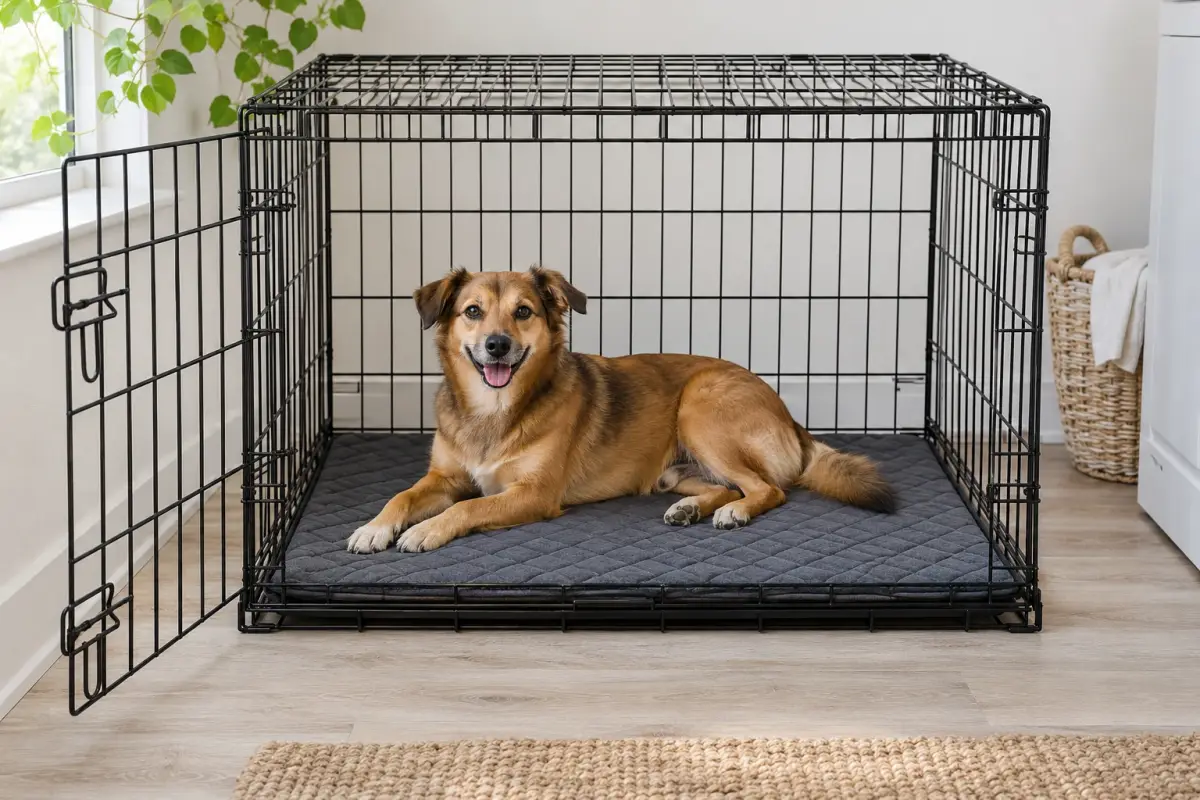
The best crate bed fits the crate floor exactly, so it cannot bunch or be dragged around, and suits your dog's stage of life. For puppies and chewers, a thin, durable, chew-resistant mat or no bedding at all until chewing passes. For adults, a washable pad with a supportive foam or fiber core. For seniors, a thicker orthopedic crate pad. Waterproofing helps with accidents.
By Matt GarnettUpdated November 14, 20264 min read2 sources
What matters most: exact fit, safety and washability
A crate bed should match the inside of the crate, since a pad that is too big buckles and one that is too small slides and leaves bare tray. Most crate pads are sold to match standard crate lengths of 24, 30, 36, 42 and 48 inches, but crates vary, so measure the floor. The AKC notes a bed inside a crate can give a dog a cozy hideaway.
Safety comes next. A dog that chews its bedding can swallow stuffing or fabric, which can cause a blockage. Washability is the third factor: crate pads take drool, hair and the odd accident, and the AKC recommends washable beds or removable covers, especially for puppies and seniors.
Mats, pads and crate beds compared
Thin crate mats are flat, light and quick to wash; they add some comfort and grip without much to chew. Padded crate pads have a fiber or foam core and a fitted cover, giving more comfort for adults, like this padded pet crate mat with corner ties. Orthopedic crate pads use a solid foam core 2 to 4 inches thick, which suits large and senior dogs that spend hours in the crate.
Chew-resistant crate beds use ballistic nylon or canvas with hidden zips and bound edges. Elevated crate cots lift the dog off the tray on a taut fabric frame, which suits dogs that run hot. Bolster beds can work in large crates but take up space and are easier to chew.
Best crate bed for each dog
For a young puppy in house training, a thin, washable mat or a towel, and nothing at all for a puppy that shreds bedding, until the chewing phase passes. For an adult dog that leaves bedding alone, a padded, fitted crate pad. For a large or senior dog, an orthopedic foam crate pad with a waterproof liner.
For destructive chewers, a chew-resistant mat with no exposed seams or a crate cot, used under supervision at first. For dogs that overheat, a cot or a cooling mat. For travel crates, a thin, non-slip pad that grips the floor and washes easily.
What to avoid
Avoid oversized beds that bunch into lumps, loose blankets that a puppy can wrap itself in, and stuffed beds for dogs that chew. Avoid beds with dangling tags, tassels or exposed zips. Avoid leaving a collar or harness on a dog in a wire crate, since it can catch.
Avoid assuming a chew-resistant label means chew-proof; no bed is indestructible. If your dog swallows stuffing or fabric, or vomits, strains or stops eating after chewing its bedding, call your vet straight away, because fabric can block the gut.
How to measure for a crate bed
Measure the inside of the crate floor, length and width, not the outside of the crate or the size printed on the label. Choose a pad that matches or is up to about an inch smaller in each direction, so it lies flat without folding up the sides.
For thick orthopedic pads, check that your dog still has enough headroom when standing on the pad; a 4-inch pad in a crate that was just big enough can leave a tall dog crouching. The AKC's crate sizing advice is to allow 3 to 4 inches above your dog's head when standing.
Care and lifespan
Wash crate mats and covers weekly, and immediately after accidents, using an enzyme cleaner on the tray to remove odor. Dry foam cores fully before replacing the cover. Keeping two pads makes swapping easy.
Thin mats last a year or two of daily use; orthopedic foam pads two to five years. Replace any pad with torn seams, exposed stuffing or a foam core that stays flattened, then compare fitted dog crate beds for a replacement. Check pads weekly for chewing, which often starts at a corner.
Crate bedding construction
| Format | Physical difference | Measure or inspect |
|---|---|---|
| Thin mat | A light flat layer | Crate floor fit and seams |
| Padded pad | Fiber or foam inside a cover | Core type and washing access |
| Solid foam pad | A continuous foam core | Actual thickness and cover removal |
| Reinforced fabric bed | A heavier outer fabric with enclosed fastenings | Edges,zips and exact material |
| Elevated cot | Fabric above a supporting frame | Frame footprint and sleeping area |
| Bolster | Raised sides around the center | Usable center inside the rim |
Common questions
Should I put a bed in my dog's crate?
Yes, for most adult dogs, a fitted, washable pad makes the crate more comfortable. For puppies that shred bedding, use a thin mat or nothing until the chewing passes.
What is the best crate pad for a chewer?
A chew-resistant mat in ballistic nylon or canvas with hidden zips and bound edges, or a raised crate cot. No bed is chew-proof, so supervise at first.
What size crate mat do I need?
Measure the inside of the crate floor and choose a mat that matches or is up to an inch smaller, so it lies flat without folding.
Are orthopedic crate pads worth it?
For large and senior dogs that spend hours in the crate, yes. A solid foam core keeps joints off the hard tray. Check that the pad leaves enough headroom.
Sources we checked
This guide is general information, not veterinary advice. If your pet is unwell or injured, contact your veterinarian.


