






Care & how-to
Why Does My Cat Meow at Night?
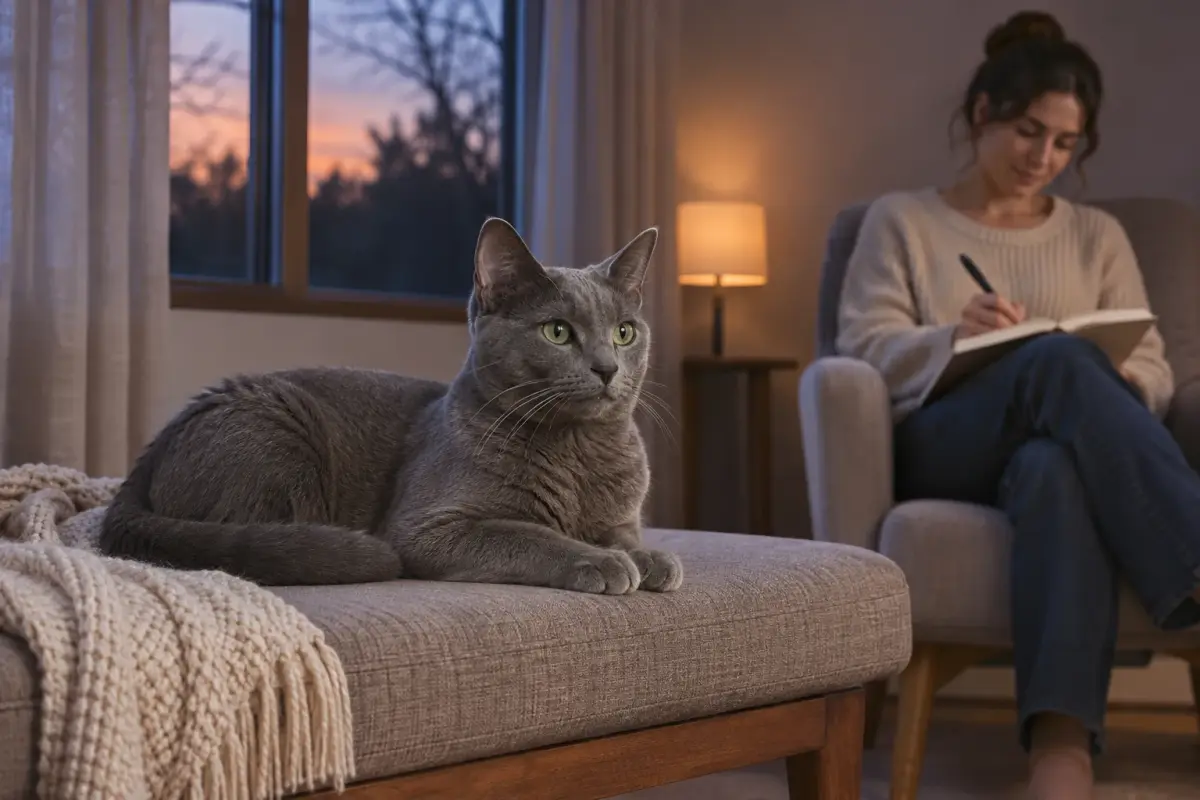
Your cat may meow at night to request attention or access, because its active hours differ from yours, or because something has changed in its health or environment. A sudden or persistent increase warrants veterinary advice, particularly in an older cat. Check your cat’s wellbeing before treating the noise as a habit to train away.
By Matt GarnettUpdated November 14, 20264 min read3 sources
Identify the pattern before choosing a response
VCA describes meowing as communication that can accompany requests for attention, food, or access. The sound alone does not reliably tell you which need is involved. Note whether the cat calls beside a particular door, approaches a person, or walks around vocalizing without an obvious destination. Compare this with the cat’s ordinary daytime behavior and previous nights.
Keep a brief log of timing, location, and what happens immediately before and after an episode. Include recent changes to household schedules or room access. If you can safely record a short video without disturbing the cat, ask whether the clinic would find it helpful. An accurate account supports a more useful discussion than assuming every nighttime call has the same cause.
Arrange a health check for a new or persistent change
VCA advises consulting a veterinarian about sudden changes or persistent meowing. Merck also emphasizes assessment for medical causes when evaluating behavior problems. Being awake when your household is asleep may be ordinary feline activity, but a change in vocalization still deserves context. Do not decide that a cat is deliberately being difficult because the timing is inconvenient.
Tell the clinic about changes in appetite, drinking, movement, litter box habits, and sleep along with the calling. Ask how promptly an examination is needed and whether any new signs should trigger an earlier visit. Avoid trying human sleep medication, sedatives, or a supplement to quiet the cat. A nighttime behavior plan should follow an understanding of the cat’s needs rather than conceal a possible health change.
Give older cats particular attention
Penn Vet explains that aging cats can develop altered sleep patterns and nighttime vocalization, sometimes alongside disorientation or changes in social contact. These can be clues worth sharing, not a diagnosis that owners can establish from a checklist. A cat that seems lost in a familiar room needs a broader assessment than a simple assumption that all older cats become noisy.
Describe whether your cat appears to recognize familiar places and people, sleeps differently, or has new difficulty navigating its routine. Record when the signs started and how frequently they happen. Ask about practical accommodations for that individual cat, such as making familiar resting and litter areas easier to reach. Keep interactions gentle and predictable while the veterinarian works through the possible explanations.
Support an appropriate daily rhythm
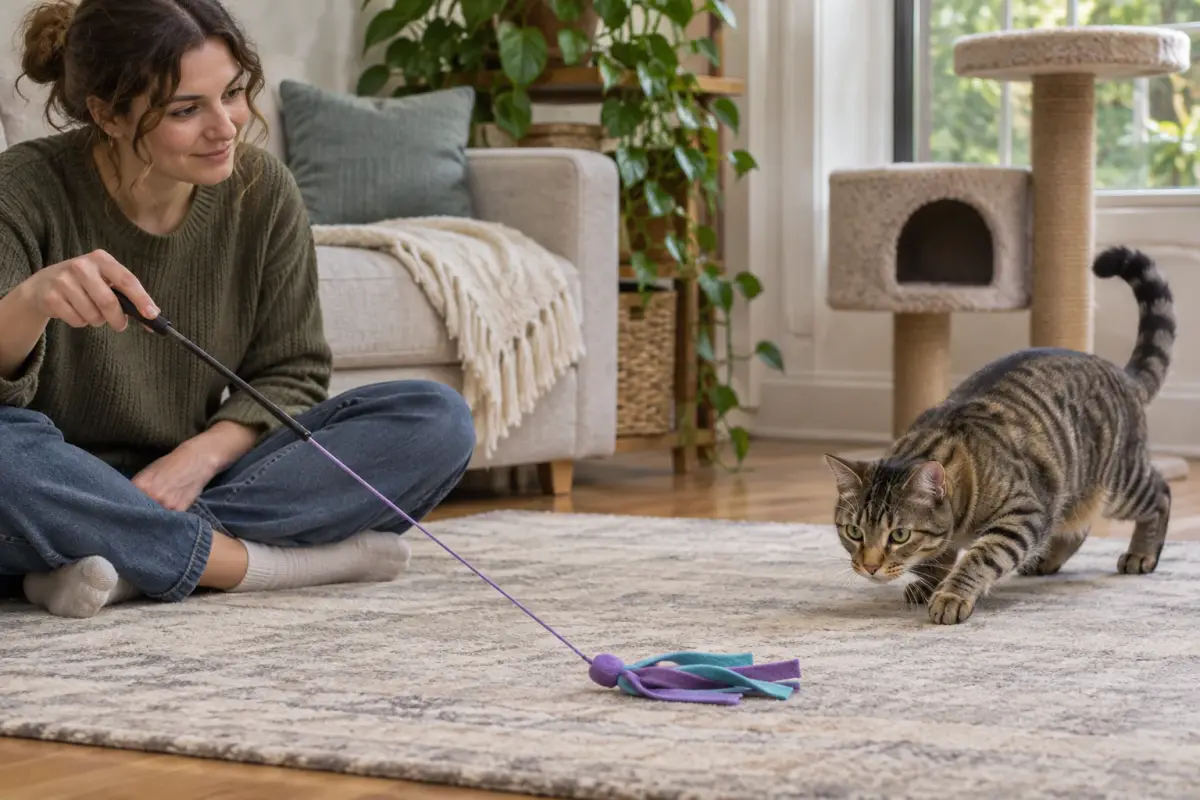
Merck recognizes that normal feline behaviors, including nighttime activity, can conflict with household expectations. Its guidance emphasizes environmental management and reinforcement of suitable alternatives rather than punishment. Plan pleasant interactions during the hours when you are available, and provide resting and activity choices that allow the cat to use its surroundings comfortably. The goal is a workable shared routine.
Discuss your actual schedule during a behavior consultation: work hours, sleeping arrangements, other animals, and which spaces the cat can access. A plan that requires constant supervision is unlikely to help a household that cannot provide it. Ask which changes to introduce first and how progress should be judged. Adjustments should meet the cat’s needs while also making the nights manageable for the people caring for it.
An evening play session with interactive cat toys followed by a meal, and an automatic cat feeder for an early breakfast, can shift some of the night-time demand.
Respond consistently after needs have been assessed
For attention-related meowing, VCA describes offering affection or play after a brief quiet moment instead of scolding. This is a different situation from a cat calling because it is uncomfortable or confused. Ask the veterinary team how to distinguish routine requests from changes that require another check, and agree on a response the whole household can follow.
Avoid shouting, spraying water, or other punishment; Merck warns that punishment can create fear and anxiety. Keep notes on whether episodes become shorter, less frequent, or different in character. Contact the clinic again if the pattern worsens or the cat develops additional changes. A useful plan combines a health assessment, a realistic environment, and a consistent response, with room to revise the plan as new information appears.
This page is general information, not veterinary advice, and it cannot replace an examination by the vet who knows your pet.
Common questions
Should I ignore all nighttime meowing?
No. First establish that your cat’s health and practical needs have been assessed. Sudden or persistent vocalization warrants veterinary advice; a response to learned attention requests is not suitable for every cause of calling.
Does nighttime calling mean my older cat has dementia?
No. Penn Vet describes nighttime vocalization among possible aging-related behavioral changes, but the sound alone cannot establish cognitive decline. Share the sleep pattern and any disorientation with your veterinarian for assessment.
What should I tell the veterinarian?
Describe when the meowing started, its timing, where your cat calls, and any household changes. Include appetite, drinking, movement, litter box use, and sleep changes, and ask whether a short recording would help.
Sources we checked
This guide is general information, not veterinary advice. If your pet is unwell or injured, contact your veterinarian.