






Breeds
Boxer vs Pit Bull: Size, Temperament and Care Compared
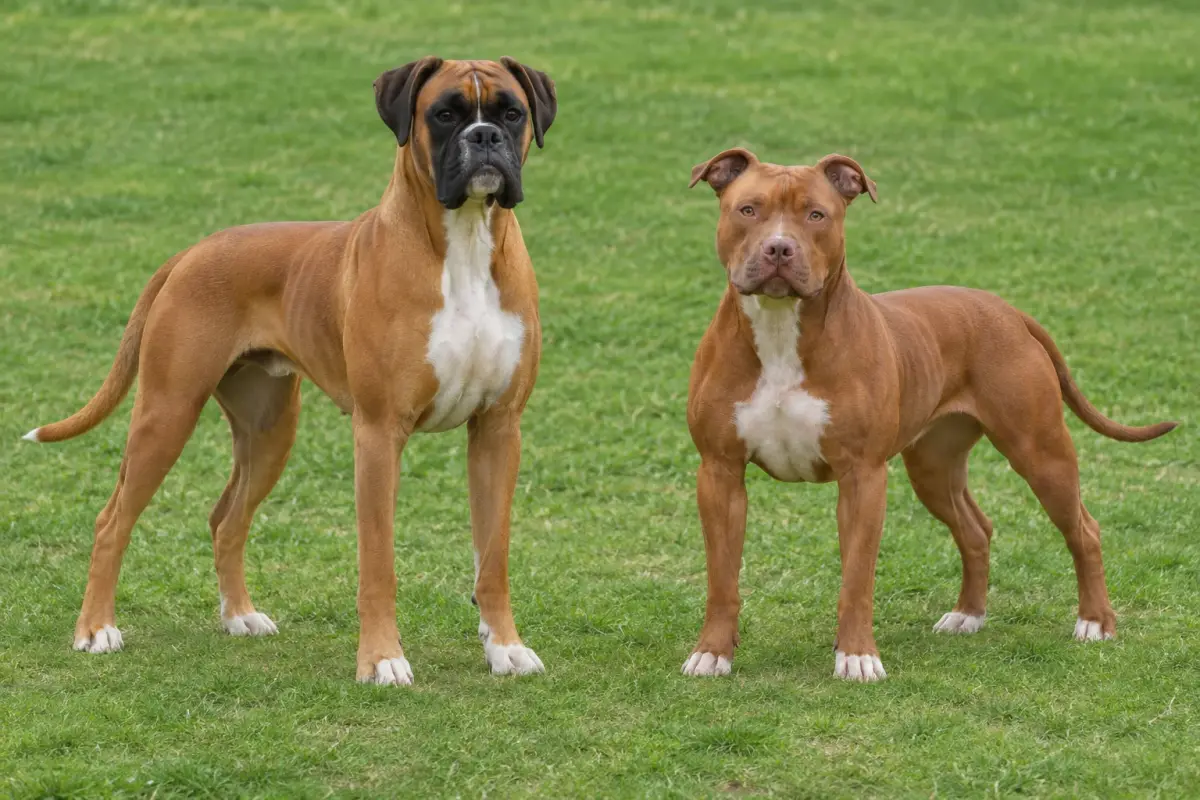
A Boxer is a taller, leggier working dog, about 21 to 25 inches and 50 to 85 pounds per VCA, while a "pit bull" is not one breed but a type, usually meaning the American Staffordshire Terrier or a mix related to it, at around 17 to 19 inches. Both need daily exercise and a strong, well-fitted Boxer harness or equivalent. The Boxer's short muzzle makes heat a bigger worry.
By Matt GarnettUpdated November 14, 20265 min read4 sources
First: "pit bull" is a type, not a breed
A Boxer is a single recognized breed with a written standard. "Pit bull" is looser. The American Kennel Club traces the American Staffordshire Terrier back to dogs known in England as Pitdogs and Pitbull Terriers, and recognized it as a breed in 1936; registries outside the AKC register the American Pit Bull Terrier and may treat AmStaffs as part of the same family. In everyday use, "pit bull" covers AmStaffs, related breeds and a great many mixes.
That matters when you compare. Size, coat and health can be described for a breed, but a shelter dog labelled "pit bull mix" may differ a lot from the AmStaff figures below. Treat those figures as the purebred reference point, and judge an individual dog, especially an adult rescue, on its own size, energy and behavior.
Size and build
VCA lists the Boxer at 21 to 25 inches tall and 50 to 85 pounds, a square, athletic dog built for speed. VCA puts the American Staffordshire Terrier at 17 to 19 inches, and the AKC gives males 18 to 19 inches and females 17 to 18 inches at the shoulder: shorter, broader and heavily muscled for its height. The related Staffordshire Bull Terrier is smaller again, 14 to 16 inches and 24 to 38 pounds, according to the AKC.
In practice a Boxer takes up more room, reaches counters and tables more easily, and needs a larger crate and bed. A pit bull type packs a lot of strength into a lower frame, which is why harness fit across a deep, broad chest matters as much as the size label.
Temperament and family life
VCA describes the Boxer as loyal and protective, and playful and gentle with children, while the AKC sums the breed up as bright, alert, sometimes silly and always courageous. Boxers stay bouncy well into adulthood, which is great fun but can knock over a toddler or a frail adult, so early manners training pays off.
VCA calls the American Staffordshire Terrier a loyal and fun-loving companion, and the AKC describes AmStaffs as intelligent and good-natured dogs that thrive on mental and physical challenges and like plenty of attention at home. VCA also notes the breed may not be friendly toward strange dogs and may not be good with small pets, so careful introductions and supervision around other animals are part of owning one.
Exercise and training
VCA gives both breeds the same baseline: daily exercise in the form of a long walk, a jog or energetic games. A bored Boxer or AmStaff finds its own entertainment, often by chewing, so plan for at least one solid outing a day plus games at home. Strong chewers in either breed do best with sturdy toys; our toys for aggressive chewers are built for that kind of jaw.
Both learn quickly and both can be stubborn. VCA says the Boxer can be sensitive as well as stubborn and does best with an owner who combines reward-based training with good control, and says the AmStaff learns quickly but can be stubborn. Short, upbeat sessions with food rewards, started in puppyhood, suit both.
Health, lifespan and grooming
The biggest difference is lifespan. VCA lists the Boxer at 8 to 10 years and the American Staffordshire Terrier at 12 to 14. VCA also warns that the Boxer's short muzzle makes it intolerant of heat and its short coat makes it intolerant of very cold weather, so summer exercise belongs in the cool of early morning or evening, and a coat may help in winter.
Grooming is easy for both. VCA says each needs only occasional brushing, about once a week, to remove dead hair, and both shed an average amount. For either breed, ask your vet about the conditions common in the breed and about a large-breed puppy diet, which VCA says may lower the incidence or severity of hip dysplasia.
Gear: harnesses, leashes and toys
Both are strong pullers when excited, so a harness that spreads pressure across the chest is kinder to the neck than a collar alone. Measure the widest part of the chest and the neck, and check the fit with two fingers under each strap. A padded training harness such as the large-dog collar harness suits a broad chest, and a reflective LED chest harness helps on early or late walks, which a heat-sensitive Boxer often needs.
Pit bull types have a shorter, deeper chest than a Boxer, so sizing by weight alone often fails. Browse harnesses cut for that shape in our pit bull harnesses, and for a leggier, deep-chested Boxer, our Boxer harnesses.
This page is general information, not veterinary advice, and it cannot replace an examination by the vet who knows your pet.
Common questions
Is a Boxer bigger than a pit bull?
Usually, yes. VCA lists the Boxer at 21 to 25 inches and 50 to 85 pounds, while the American Staffordshire Terrier stands about 17 to 19 inches. Pit bull mixes vary widely, though.
Which lives longer, a Boxer or a pit bull?
VCA lists the American Staffordshire Terrier at 12 to 14 years and the Boxer at 8 to 10 years, so the AmStaff typically lives several years longer. Individual health and care still matter most.
Are Boxers or pit bulls better with kids?
VCA describes the Boxer as playful and gentle with children and the AmStaff as a loyal, fun-loving companion. Either needs training, supervision and a calm introduction; a bouncy Boxer can knock small children over.
Is a Boxer a type of pit bull?
No. The Boxer is a separate breed. "Pit bull" usually refers to the American Staffordshire Terrier, the American Pit Bull Terrier and related mixes, which descend from different ancestors.
Which is easier to train, a Boxer or a pit bull?
VCA says both learn quickly but can be stubborn, and that the Boxer can also be sensitive. Short, reward-based sessions started early work well for both breeds.
Sources we checked
This guide is general information, not veterinary advice. If your pet is unwell or injured, contact your veterinarian.


