Buying guides
Best Toys for Chihuahuas: What Actually Matters
The best toys for a Chihuahua are soft, small enough for a tiny mouth to carry but too big to swallow whole, and built so nothing can be pulled out and eaten. Check the size first, then the stuffing, squeaker and seams, and only then match the style to how your dog plays. Hard chews and anything with loose parts are the ones to skip.
By Matt GarnettUpdated November 14, 20265 min read3 sources
What matters most in a Chihuahua toy
Size comes first, and it cuts both ways for a toy dog. Texas A&M veterinary guidance says a good fit is a toy that is not small enough to swallow or fit whole into the mouth, while a toy that is too large is uncomfortable to chew. For a Chihuahua that means a toy a little longer than the muzzle, light enough to pick up and carry. Our toys for Chihuahuas are chosen with that small-mouth range in mind.
Construction is the second test. The same Texas A&M source notes that very small amounts of stuffing may not trouble a very large dog but definitely can in a small breed, and that squeakers can be swallowed and cause an intestinal blockage. So a Chihuahua toy should have tight seams, a squeaker that is sealed in or too big to work free, and no dangling eyes, ribbons or buttons. Softness matters too, because small jaws and small teeth are easy to hurt.
The main toy types compared
Soft plush is the classic Chihuahua toy and suits dogs that carry, cuddle and gently mouth. It is also the type that most needs supervision, because stuffing is the hazard. A plush duck like this stuffed duck chew pillow toy works for a dog that snuggles it; for a dog that disembowels toys, it is a short-lived choice. Plush with a built-in squeaker deserves a closer look before every play session.
Firm-but-flexible chew shapes and small balls suit dogs that need something to work their teeth on, such as a molar stick puppy ball toy sized for a small mouth. Lick mats and treat-holding toys sit at the safe end of the range: the American Kennel Club suggests lick mats and tough treat toys as safer alternatives for dogs that swallow chunks of traditional chews. Rope toys fray, and Texas A&M notes the strands can be swallowed or lodge in the teeth, so they are best kept for short supervised tug.
Best type for each situation
For a teething puppy, choose a soft, flexible toy that gives under pressure. Texas A&M says soft rubber toys are often safer for puppies, senior dogs and pets with dental disease, and that last group matters for Chihuahuas, whose small mouths are prone to crowded teeth. A softer toy also protects fragile adult teeth, so avoid anything you cannot press a thumbnail into.
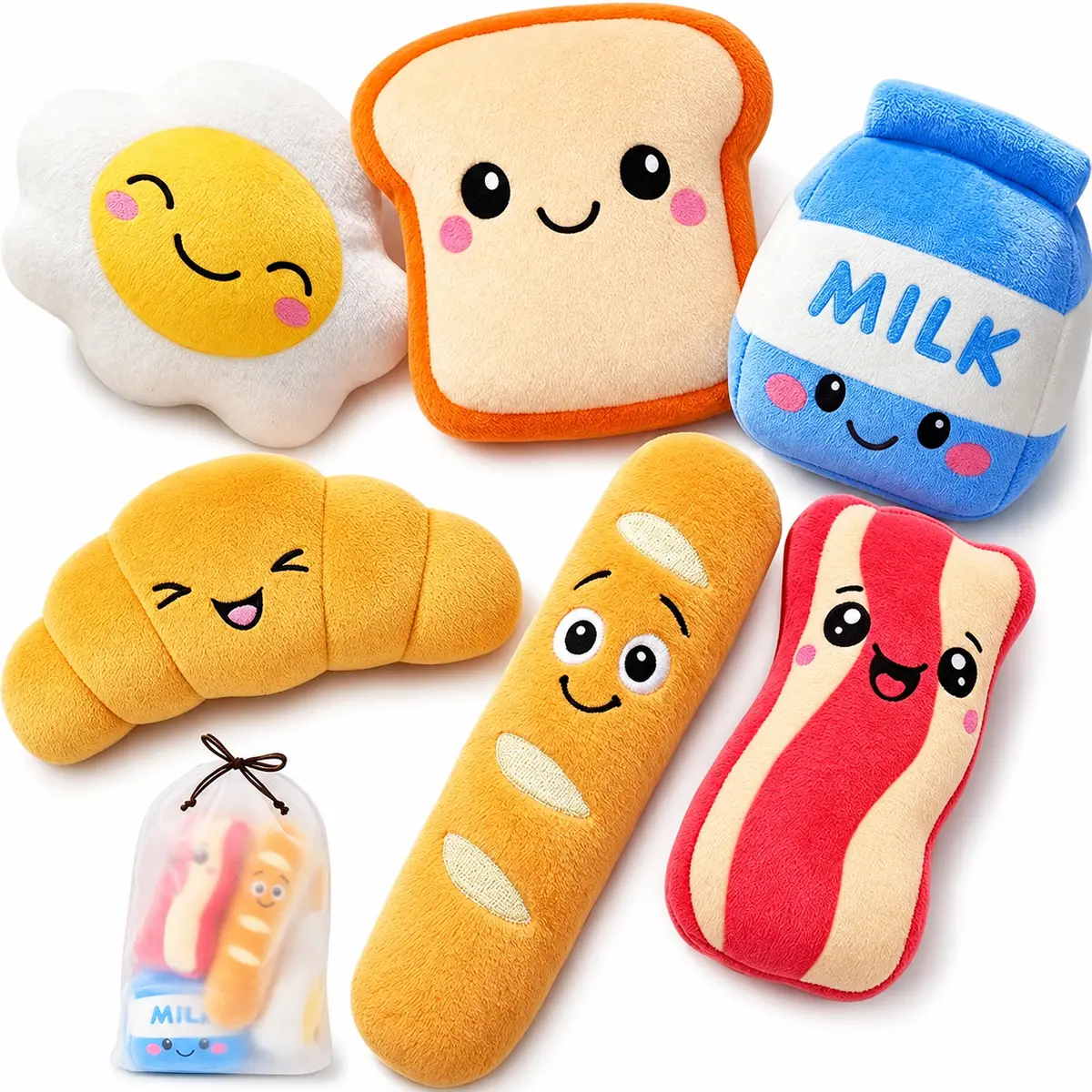
For a senior or a dog with sore teeth, keep to soft plush, lick mats and gentle fetch toys. For a heavy shredder, rotate sturdier toys and remove them the moment seams open. For an excitable dog, pick toys that burn energy in short bursts instead of long tug sessions. VCA Animal Hospitals notes that coughing in dogs prone to tracheal collapse, a condition named in Chihuahuas, can worsen with excitement, so calm the game down if you hear a honking cough. A breakfast-themed set of squeaky toys with a storage bag gives variety for the rotation, and the bag keeps the spares out of reach.
What to avoid
Skip anything with parts that come off: plastic eyes, bells, ribbons, buttons and string. Skip hard chews. Texas A&M warns that very hard toys can damage teeth, that rawhide can break teeth or cause blockages, and that cooked bones can splinter. Skip balls small enough to fit behind the teeth. The American Kennel Club advises picking balls wider than your dog's jaw, because a ball that is too small can lodge in the back of the throat.
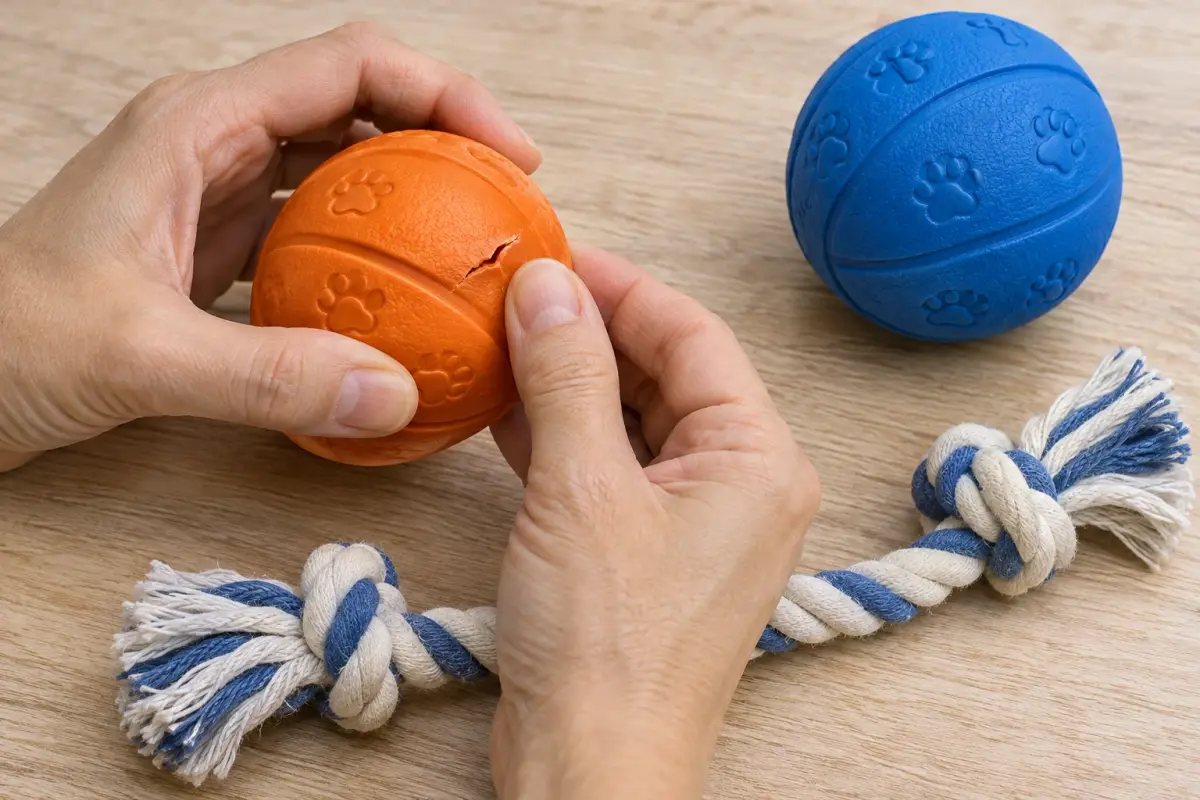
Also skip toys sized for large dogs just because they look durable. A giant toy is hard for a Chihuahua to carry and tempts rough play that strains a small neck and back. And avoid toys with strong smells, coatings or additives, which Texas A&M lists as a reason to be cautious. If a toy is damaged, gets a hole or leaks stuffing, throw it away instead of repairing it.
How to size and check a toy
Measure from the tip of your dog's nose to the back of the jaw and compare the toy to it. The toy should be wider than the jaw if it is a ball, and long enough that the dog cannot fit the whole thing in its mouth. If you are choosing between two sizes, take the larger one that your dog can still lift. Always look the toy over before play: pull gently at seams, squeak the squeaker and check for loose parts.
Check again after each rough session, not only when you buy. Texas A&M recommends inspecting toys regularly for wear and missing pieces. Offer one or a few toys at a time and keep the rest put away, which also keeps play interesting. Supervise anything that can be chewed apart. A harness fits better than a collar for pulling games on a leash; see our harnesses for Chihuahuas when it is time to take the play outside.
Care, rotation and when to call your vet
Wash fabric toys regularly on a gentle cycle and let them dry fully, and retire any toy that has begun to tear. Rotate a few toys each week so that none gets boring or chewed to pieces. Browse the full range of toys for Chihuahuas when it is time to replace a worn one.
Call your vet if you think your dog swallowed any part of a toy, such as stuffing, a squeaker or a button. The American Kennel Club adds that after any choking episode, even if your dog seems to recover, a vet should check the mouth, throat and neck. Vomiting, a swollen belly, refusing food or lethargy after play are reasons to call the same day. This page is general information, not veterinary advice, and it cannot replace an examination by the vet who knows your pet.
Toy mechanisms for individual play preferences
| Format | Physical arrangement | Check on the exact toy |
|---|---|---|
| Plush | A fabric body with stated filling | Seams,loose pieces and sound insert |
| Ball or molded shape | A rounded or shaped body | Actual diameter and material |
| Lick surface | An open textured food surface | Edges and cleaning access |
| Treat-holding toy | Food within openings or cavities | Opening size and food compatibility |
| Rope | Twisted strands or knots | Fraying and loose fibers |
Common questions
What size toy is safe for a Chihuahua?
Choose a toy that is too big to swallow or fit whole into the mouth, but small and light enough for your dog to carry comfortably. For balls, pick one wider than your dog's jaw so it cannot lodge in the throat.
Are squeaky toys safe for Chihuahuas?
They can be, with supervision. A squeaker that works loose can be swallowed and cause a blockage, and a small dog is at higher risk. Take the toy away when seams open or the squeaker shows.
What are the best chew toys for a Chihuahua puppy?
Soft, flexible toys that give under pressure are generally safer for puppies than hard ones. Avoid hard chews, bones and rawhide, which can damage teeth, and check toys daily for damage.
Can Chihuahuas play with rope toys?
Only briefly and with you watching. Rope fibers shed as the toy frays, and swallowed strands or fibers can cause problems. Throw the toy away as soon as it begins to come apart.
Sources we checked
This guide is general information, not veterinary advice. If your pet is unwell or injured, contact your veterinarian.