






Buying guides
Best Rabbit Harness: What Actually Matters
The best rabbit harness is one your rabbit cannot back out of, that sits snugly without pressing on the spine, and that goes on quickly so the rabbit is not wrestled. Even then, harness walks suit only calm, confident rabbits. Browse our rabbit harnesses with these three checks in mind, and decide first whether your rabbit will enjoy it.
By Matt GarnettUpdated November 13, 20264 min read2 sources
First, decide whether your rabbit should wear one

The House Rabbit Society says a house rabbit may enjoy walking on a harness and leash, but that even the most confident bunny may panic when suddenly aware of open space, the constraint of the harness, or an unknown animal approaching. That is the honest starting point: a harness is not a guarantee of a happy walk, and some rabbits will simply freeze or flip over.
If your rabbit is relaxed in the house, curious about new floors and easy to pick up, a harness may be worth trying. If it is skittish, newly adopted or easily startled, start with a safe, enclosed play area instead. Your vet can tell you whether your rabbit is healthy enough for outdoor time at all.
Why fit and escape-proofing come first
Merck Veterinary Manual warns that rabbits have powerful hind legs, and that when a rabbit is not restrained properly and securely, struggling can easily lead to fractures or luxations of the lumbar vertebrae. A harness that a rabbit can wriggle out of, or that startles it into thrashing, is not a small inconvenience. It is a risk to its back.
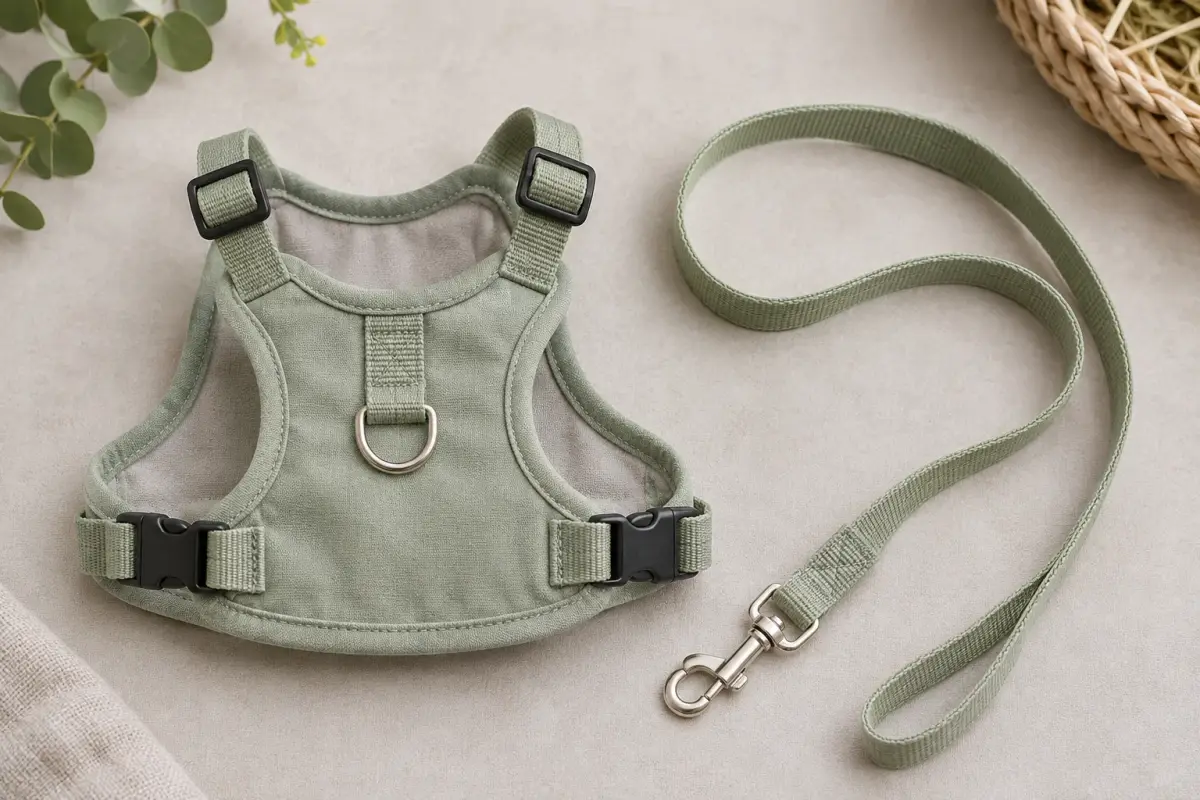
Look for a harness that wraps the body and closes with adjustable fastenings, so you can get a snug fit that cannot be backed out of, without being tight enough to restrict breathing or movement. A small pet harness and leash set or a rabbit harness with leash gives you a body wrap rather than a loose strap, but always check the fit on your own rabbit's body.
Materials and design: soft, light and simple
A rabbit is a small animal with a delicate frame, so the harness should be lightweight, soft against the skin and free of rigid parts. Avoid heavy buckles, metal fittings that can pinch fur and long dangling straps that a rabbit might chew or catch on something. Simple webbing or soft mesh with a small number of adjustment points is easier to fit correctly.
A lead should be light and short enough to manage, but with enough slack that the rabbit is not pulled backward. Pulling against a rabbit that is trying to run forward invites exactly the kind of struggle you want to avoid, so use the lead to follow the rabbit, not to steer it.
Putting it on without a struggle
Practice indoors before going outside. Let the rabbit sniff the harness, put it on for a few minutes at a time with a treat of fresh greens or a favorite vegetable, and increase the time slowly. Merck advises against lifting a rabbit by the ears and says to support the rump when lifting, so never grab and fling a rabbit into a harness.
A quick, calm fit matters more than a clever design. If you need a helper, ask them to hold the rabbit at floor level while you fasten the harness. If your rabbit panics every time, stop and consider other exercise options, such as a larger pen or time in a rabbit-proofed room.
Where and how to walk a rabbit safely
The House Rabbit Society recommends staying within familiar areas when walking a rabbit outdoors, and calls predator attacks the most immediate hazard to an outdoor rabbit. Even the presence of a predator can trigger an extreme reaction. Pick a quiet, enclosed spot away from dogs, cats and traffic, and keep sessions short.
Never leave a rabbit unattended on a lead, and never tether it to a fixed point and walk away. Watch for freezing, flattening, thrashing or rapid breathing, and end the session at the first sign of distress. Avoid hot weather too, as rabbits are vulnerable to heat.
Care, checks and when to see a vet
Check the harness before every use for fraying, loose stitching and weak fastenings, and check your rabbit's fur and skin for rubbing afterward. Replace any harness that is damaged, stretched or no longer fits. For a different type of rabbit exercise, you could browse our indoor rabbit cages for a larger home base.
Call your vet promptly if your rabbit seems unable to use its hind legs, drags its back end, cries out when touched, or stops eating or passing droppings after a fright. This page is general information, not veterinary advice, and it cannot replace an examination by the vet who knows your pet.
Common questions
Is a harness safe for a rabbit?
It can be if the fit is secure, your rabbit is calm, and you stay within a familiar, safe area. Struggling can injure a rabbit's back, so stop if your rabbit panics or tries to bolt.
What type of harness is best for a rabbit?
Choose a soft, lightweight body wrap with adjustable fastenings that cannot be backed out of, and no rigid parts. Check the fit on your own rabbit's body before every walk.
Can I leave my rabbit on a leash outside?
No. Never leave a rabbit unattended on a lead. Predators are the most immediate hazard outdoors, and a tethered rabbit cannot escape. Stay close and keep walks short.
Do all rabbits like wearing harnesses?
No. Some adapt well and others freeze or panic. Practice indoors first, and if your rabbit stays distressed, switch to a larger pen or a rabbit-proofed room for exercise.
How do I get my rabbit used to a harness?
Introduce it indoors, let your rabbit sniff it, and put it on for a few minutes with a treat. Increase the time slowly and never force it on a frightened rabbit.
Sources we checked
This guide is general information, not veterinary advice. If your pet is unwell or injured, contact your veterinarian.

