






Buying guides
Best Puppy Lick Mats: What Actually Matters
The best lick mat for a puppy is made of food-grade silicone, has a firm non-slip or suction base, has ridges shallow enough to wipe clean, and is used only while you are watching. Those four features matter more than shape or print. Below we compare the main types, match them to common puppy situations and cover cleaning. You can browse our puppy lick mats once you know what you need.
By Matt GarnettUpdated November 14, 20265 min read2 sources
What matters most in a puppy lick mat
Material comes first. The American Kennel Club points out that not every lick mat is food-grade, and a mat that is not can leach dyes and other chemicals into the food your dog is licking. Food-grade only means the material is allowed to touch food. It does not mean the mat is safe to eat, so a lick mat is a surface for licking and never a chew toy.
The base comes second. A suction cup or non-slip underside keeps the mat where you put it, which matters with a puppy who will paw and nudge it across the floor. The AKC notes that suction mats can stick to smooth surfaces such as a tub or a sink, which is handy if you want a puppy occupied while you work in a bathroom or kitchen.
Texture comes third. Shallow, rounded ridges and wide channels let a small tongue reach the food and let you scrub the mat properly afterward. Very deep, narrow grooves look clever but trap food, which makes cleaning slower and encourages you to skip it.
Main types compared
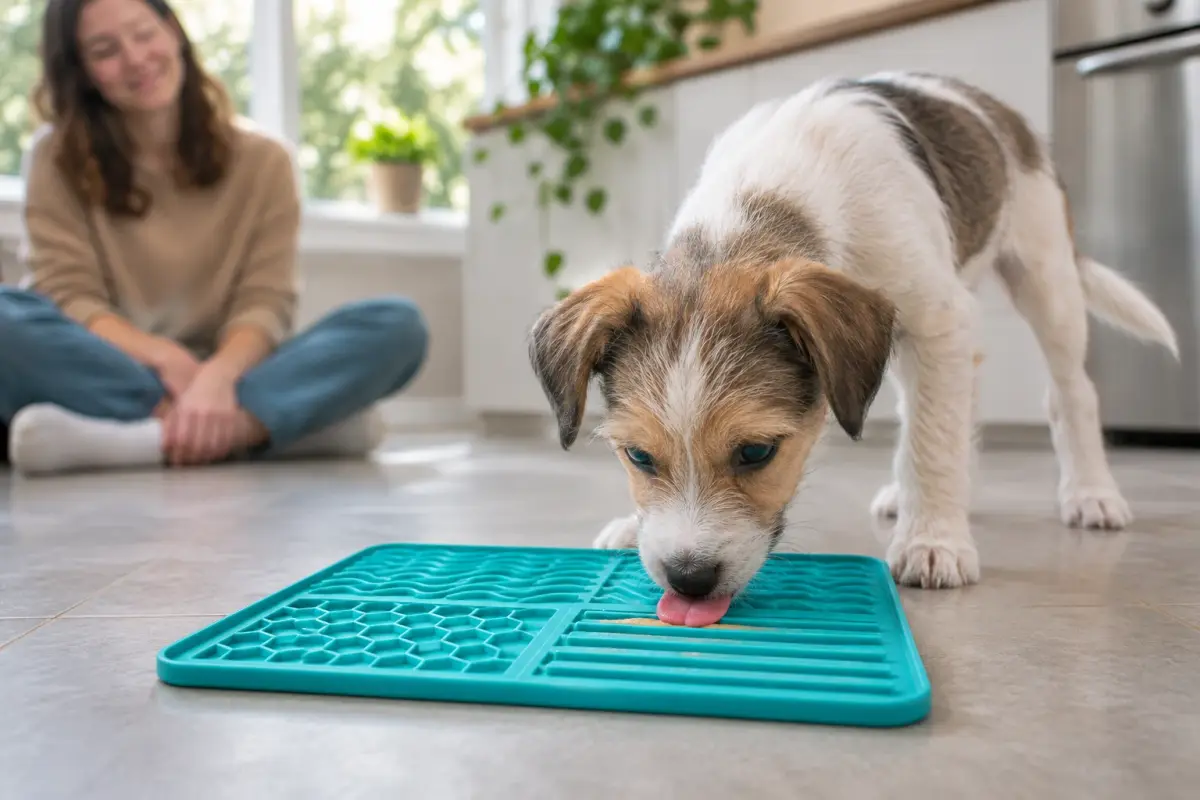
A flat square mat with a suction base is the simplest design. Many are divided into quarters, so you can put a different soft food in each section and make the session last longer. A square silicone mat with a suction base suits a puppy in a crate or on a smooth floor, because the mat stays put while your puppy licks.
A round mat with a raised rim keeps wetter food from sliding off the edge, which helps with a messy eater. A round silicone slow-feeder lick mat works well for yogurt or mashed fillings, though the rim can make the surface a little harder to wipe in one pass.
A bowl-style mat combines a licking surface with a shallow dish. A silicone lick mat with a bowl-style rim can double as a slow feeder at mealtimes, and a plain silicone lick mat slow feeder gives the same idea in a flatter format. Choose by how your puppy eats, not by how the mat looks.
Best type for each situation
For a teething puppy, pick a mat you can load and freeze. VCA Hospitals notes that freezing toys and treats can help ease the discomfort of teething, and puppies typically begin getting adult teeth from about 3 months, with premolars and molars arriving between 4 and 7 months. A flexible silicone mat stays gentler on new teeth than anything hard, but keep sessions short and supervised.
For crate training or alone-time practice, use a suction mat and give it before you leave the room, then take it away when the puppy finishes. The AKC lists crate training and keeping mouthy puppies busy among the uses of lick mats. For a toy-breed puppy, choose a smaller mat so the whole surface is within reach, and for a large-breed puppy choose a thicker, larger one that is harder to chew off the floor.
What to put on it, and what to avoid
Keep fillings simple and soft. The AKC mentions plain, unsweetened yogurt in moderation, and low-sodium broth that you freeze on the mat for a few hours. Peanut butter is popular, but the AKC warns that some brands contain xylitol, an artificial sweetener that is toxic to dogs, so read the ingredient list every time. See our lick mat recipes guide for more ideas.
Count what goes on the mat as part of your puppy's daily food, not an extra. A little goes a long way on a small mat. If your puppy has a sensitive stomach or you are unsure about a filling, ask your vet before you try it.
Supervision, cleaning and when to replace a mat
Stay with your puppy. The AKC is blunt that there is no such thing as a leave-it-and-forget-it dog toy, and VCA adds that any item a puppy chews can become dangerous if pieces are bitten off and swallowed. If your puppy starts chewing the mat instead of licking it, take it away.
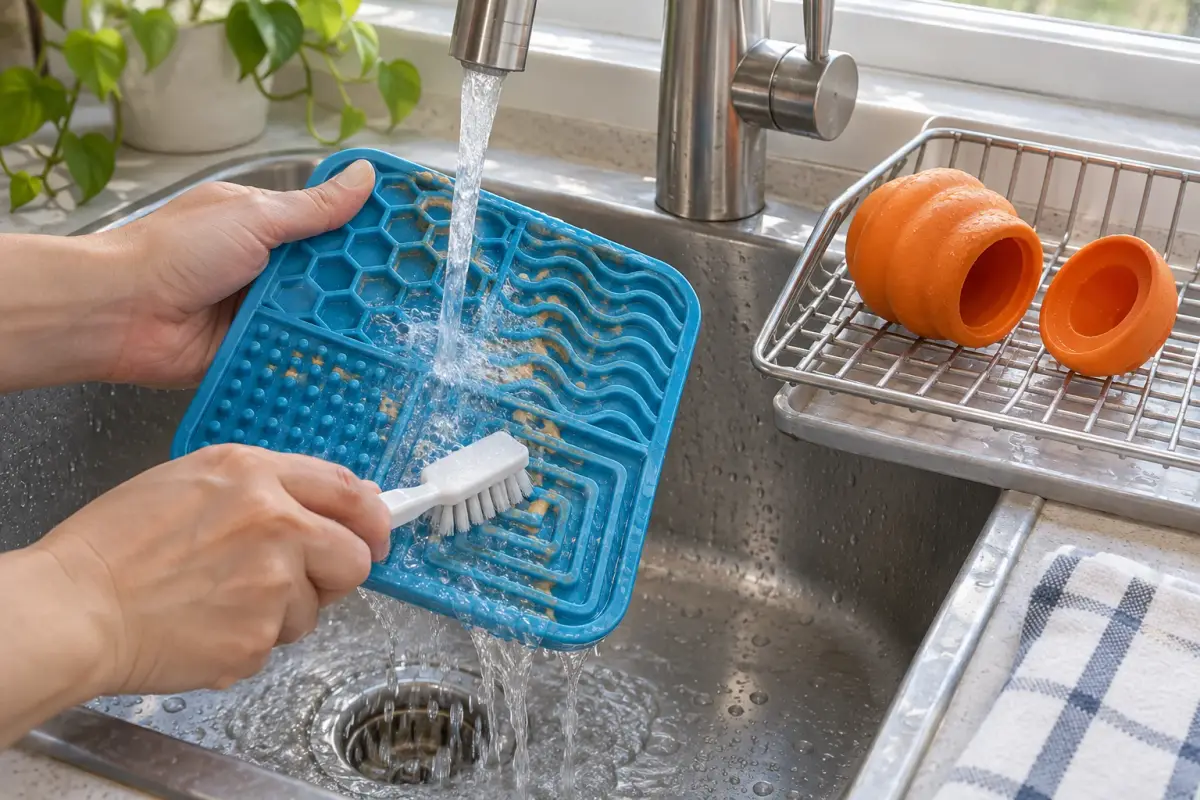
Wash the mat after every use with warm, soapy water, even if it looks clean, to prevent mold and bacteria. Some silicone mats are dishwasher-safe, while natural rubber ones are usually washed by hand. Check the maker's instructions before boiling, because heat can warp the material. Throw the mat out if it is eroding, punctured or has jagged ridges.
If you are still choosing, our wider guide to lick mats for dogs covers adult dogs too, and snuffle mats for puppies offer a different kind of food game once licking gets old.
What to avoid
Avoid any mat that does not say food-grade, any mat with small detachable parts, and anything that feels hard or brittle. VCA suggests the fingernail test for puppy toys: if you cannot dent it slightly, it may be too hard for growing teeth. Skip mats with deep grooves you cannot scrub.
Avoid using a lick mat to replace exercise, training or company. It works best as a calm-down activity or a way to make a vet-visit, grooming or crate session more pleasant. When you are ready to compare sizes and styles, return to our puppy lick mat collection.
Lick-surface rims and mounting
| Format | Physical difference | Verify on the exact item |
|---|---|---|
| Flat divided mat | Open textured zones on a flat body | Zone depth and material |
| Suction-backed | Suction fittings under a mat | Actual cups and permitted surface |
| Raised-rim mat | An edge surrounds a flatter surface | Rim height and complete cleaning access |
| Bowl-style | A textured surface within dish-like sides | Inside dimensions and food-contact surfaces |
Common questions
What age can a puppy start using a lick mat?
None of the guidance we read sets a minimum age. A puppy eating solid food and supervised the whole time can try a soft, food-grade mat. If your puppy is very young or you are unsure, ask your vet first.
What can I put on a puppy lick mat?
Plain, unsweetened yogurt, low-sodium broth and a dog-safe peanut butter without xylitol are common choices. Keep the amount small, count it toward the day's food and avoid anything sweetened artificially.
How do I clean a puppy lick mat?
Wash it with warm soapy water after every use. Some silicone mats can go in the dishwasher and natural rubber is usually hand-washed. Check the care instructions before boiling, since heat can melt or warp some materials.
Can my puppy chew a lick mat?
Lick mats are not chew toys. Food-grade only means the material may touch food, not that it is safe to swallow. Remove the mat if your puppy starts biting it, and replace it once it shows wear.
Are lick mats good for teething puppies?
They can help keep a mouthy or teething puppy occupied, and a mat loaded with soft food and frozen may soothe sore gums. Supervise closely and offer proper chew toys for the actual chewing.
Sources we checked
This guide is general information, not veterinary advice. If your pet is unwell or injured, contact your veterinarian.


