






Buying guides
Best Harness for a Pit Bull: What Actually Matters
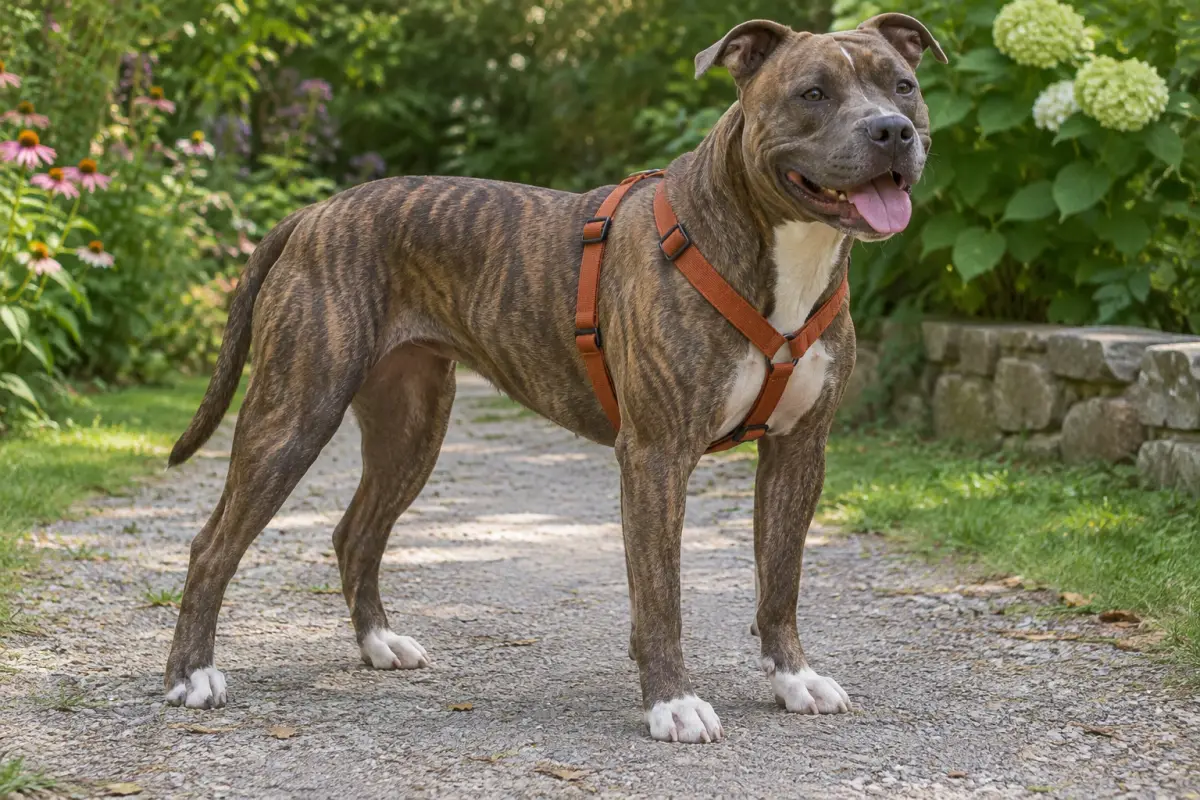
The best harness for a pit bull is one sized to a deep, muscular chest, built with strong stitching and hardware, and padded where skin is sensitive. A front clip helps a dog that pulls, a back clip suits a calm walker, and a dual-clip design gives you both. Pit bull type dogs vary a lot in size, so measure your own dog rather than relying on the breed name.
By Matt GarnettUpdated November 14, 20265 min read2 sources
Size varies, so measure the dog in front of you
If you are looking at harnesses for pit bulls, note that pit bull is a type rather than one breed, and the dogs under that name range from lean and athletic to stocky and heavy. For a reference point, VCA Hospitals lists the American Staffordshire Terrier at 17 to 19 inches tall and 40 to 70 pounds, medium-sized and muscular. Your dog may sit above or below that, so the breed label is a starting guess, not a size chart.
Measure with a soft tape around the widest part of the chest, just behind the front legs, and compare the number with the maker's chart. Pit bull types often have broad, deep chests and relatively short backs, so a harness cut for a longer, narrower dog may sit awkwardly or rub at the armpits. If your dog falls between sizes, choose the size with more adjustment range and check how the straps sit in motion.
Strength and hardware
A muscular dog that lunges at a squirrel puts real force through a harness, so the hardware matters more than the color. Look for welded or solid metal rings, thick webbing, reinforced stitching at stress points and buckles that do not flex. Thin decorative straps and lightweight plastic clips are a poor match for a strong dog, and a failure mid-walk is both a safety problem and a quick way to lose a dog.
Inspect the harness regularly. Look for frayed webbing, stretched stitching and cracked plastic, and replace it at the first sign of wear. A set such as a harness and leash set can be convenient, but check that both parts are strong enough for your dog's weight and strength, and replace the leash separately if it frays before the harness does.
Front clip, back clip or dual clip
AKC describes the front-clip harness as having the leash attach at the chest, designed to discourage pulling, while the standard style has a D-ring on the back. A back clip is comfortable for a dog that walks on a loose leash. A dual-clip harness lets you use the front ring on busy walks and the back ring on calm ones, which suits a dog that is still learning.
Whichever you choose, the harness is a management tool, not a training program. Teach loose-leash walking with rewards, short sessions and plenty of exercise before the walk, and be consistent. Pit bull type dogs are often people-focused and eager to learn, and VCA notes that the American Staffordshire Terrier responds to consistent, positive training, which makes reward-based practice the sensible partner for any harness.
Fit checks and skin comfort
AKC says you should be able to slip two fingers underneath any strap, and that the harness should not pull off over the dog's head. A pit bull's short, fine coat shows rubbing quickly, so after the first few walks, check behind the front legs and across the chest for flattened or sore patches. Padding at those points helps, but padding that traps moisture can cause its own problems.
VCA lists skin allergies among the common health concerns for the American Staffordshire Terrier, noting they may need long-term management. If your dog is prone to itchy or irritated skin, choose smooth, soft webbing, avoid rough seams against the skin, rinse and dry the harness regularly, and take it off at home. Redness, hair loss or a rash under the straps is a reason to stop using it and ask your vet. A plain pet harness or dog harness with a simple adjustable design is easy to keep clean.
Matching a harness to your dog
A puppy needs a harness with a large adjustment range and will outgrow it within months. A young adult that pulls does well with a dual-clip design. A heavily muscled adult may need a wider chest panel to spread the pressure. A senior dog or one with sore joints needs an easy, padded design that does not make it lift its legs awkwardly; VCA notes joint disease, especially in the hips and knees, is a common concern for the breed.
For a dog that wears a harness for jogging or long walks, check the fit again once the dog is warm and moving, because straps can shift. A harness with a leash attached is useful for quick outings. For the wider field, see our guide to the best dog harness, and for the next purchase browse dog leashes.
What to avoid, and when to call the vet
Avoid harnesses with thin straps, no adjustment at the neck and belly, flimsy buckles, or a design that rides up into the armpits. Do not rely on a harness alone for a dog that lunges at other dogs; work with a qualified trainer on that. When you are ready to choose, browse our harnesses for pit bulls.
If your dog limps, resists the harness going on, or develops sore or inflamed skin under the straps, see your vet before carrying on. VCA says weight control and regular exercise matter for joint health in the breed, so a good fit and sensible walks work together.
This page is general information, not veterinary advice, and it cannot replace an examination by the vet who knows your pet.
Common questions
What size harness does a pit bull need?
It depends on the dog, because pit bull types vary widely. Measure around the widest part of the chest behind the front legs and match that to the maker's chart, rather than choosing by breed name or weight alone.
Is a front-clip harness good for a pit bull that pulls?
AKC describes front-clip harnesses as designed to discourage pulling because the leash attaches at the chest. They can help, but pair them with reward-based loose-leash training for lasting results.
How tight should a pit bull harness be?
AKC says you should be able to slip two fingers under any strap and the harness should not come off over the head. Check behind the front legs for rubbing, since a short coat shows it quickly.
Are harnesses safe for dogs with skin allergies?
A well-fitted harness with smooth, soft webbing is usually fine, but rubbing can irritate sensitive skin. If you see redness or hair loss under the straps, stop using it and ask your vet.
Sources we checked
This guide is general information, not veterinary advice. If your pet is unwell or injured, contact your veterinarian.


