






Buying guides
Best Harness for a Labrador: What Actually Matters
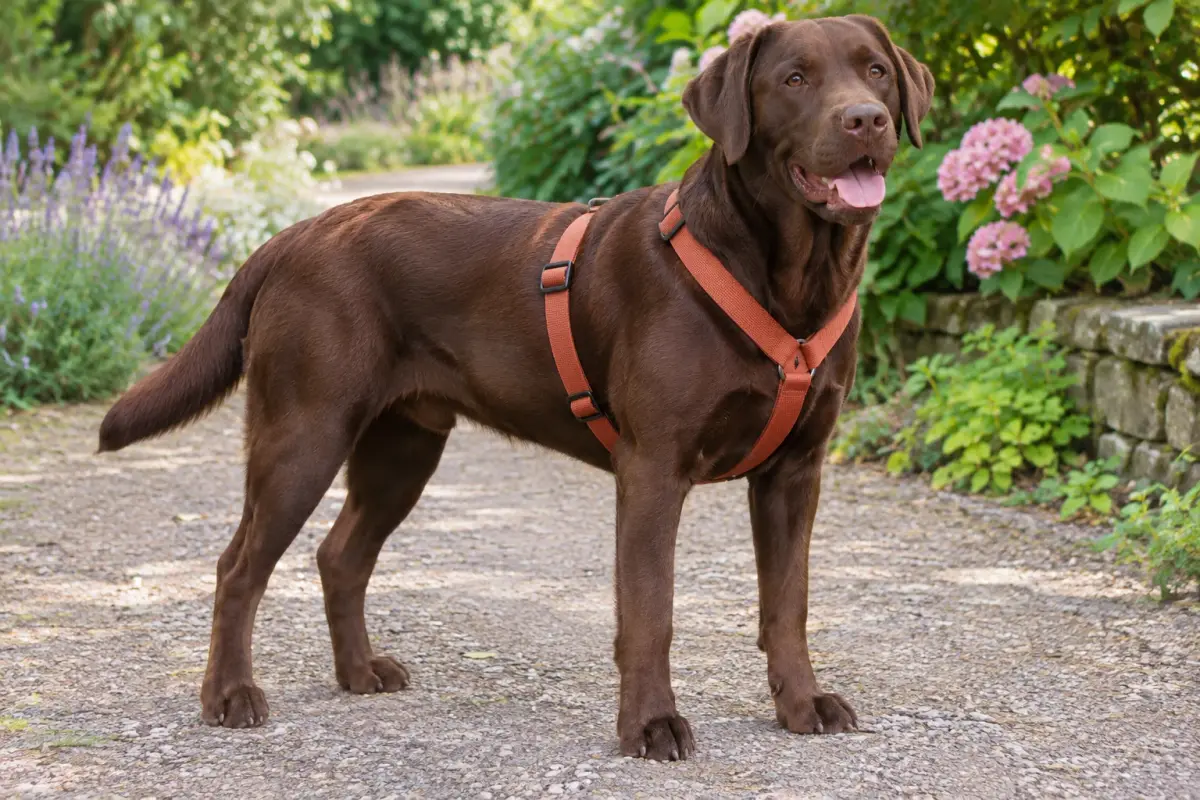
The best harness for a Labrador is one that fits a deep, broad chest, adjusts in at least three places, and has a leash clip that matches how your dog walks. Labs typically weigh 55 to 80 pounds and stand 21.5 to 24.5 inches tall, so size, strength and adjustability matter more than looks. A front clip helps a puller, a back clip suits a loose-leash walker, and fit decides everything else.
By Matt GarnettUpdated November 13, 20265 min read2 sources
What a Lab's size means for harness choice
If you are browsing harnesses for Labradors, start with size: VCA Hospitals lists Labrador Retrievers at 21.5 to 24.5 inches tall and 55 to 80 pounds, with high energy and a need for significant daily exercise. That is a strong, medium-to-large dog, so a harness for a Lab needs sturdy stitching, metal or heavy-duty hardware and webbing wide enough to spread the load. A harness sold for a 20 pound dog will not simply stretch to fit; look at the stated chest range, not just the size letter.
Because Labs vary so much, from lean working lines to heavier show lines, measure your own dog. With a soft tape, measure around the widest part of the chest just behind the front legs, and compare that number to the maker's chart. A young Lab still growing needs a harness with a wide adjustment range, and an adult that gains or loses weight will need its straps checked again.
Front clip, back clip or both
AKC describes the front-clip harness as one with the leash attaching at the chest, designed to discourage pulling. A back-clip harness, the standard style with the D-ring between the shoulder blades, is comfortable and simple for a dog that already walks on a loose leash. Many Labs surge toward smells and other dogs, so a dual-clip design that offers both attachment points lets you choose per walk and swap as training progresses.
Neither clip replaces training. A front clip changes the leverage when the dog pulls, but a Lab that learns that tension gets it forward will still try. Pair any harness with reward-based loose-leash practice, short sessions and plenty of exercise beforehand. A large-dog collar and harness set for training is the sort of design that gives you a leash point suited to a strong dog while you teach manners.
Fit: the checks that matter
AKC says you should be able to slip two fingers underneath any strap, and that the harness should not come off over the dog's head when you try to pull it. Check both with the straps adjusted and your dog standing. The harness should be snug, not tight. Watch the area behind the front legs, where rubbing most often shows up as flattened or broken coat on a short-haired dog.
Fit changes over time. Recheck the straps every few weeks on a young dog, after any change in weight, and after coat changes through the seasons. The Lab's short, dense double coat sheds moderately to heavily, according to VCA, and a thick winter coat can alter how a harness sits. If your dog backs out of a harness on walks, it is too loose or the wrong shape, so adjust or replace it rather than gripping the leash tighter.
Materials, padding and swimming
VCA recommends walking, retrieving, swimming and training games for Labs, and describes their coat as built for water and outdoor work. A harness that stays wet for hours can rub, so look for quick-drying nylon or polyester webbing with smooth edges, and rinse and dry it after swimming or mud. Padding at the chest and under the legs helps comfort on long walks, but thick padding that holds water is a poor trade for a dog that swims.
Choose hardware that a strong dog cannot bend: welded rings and sturdy buckles. Avoid thin, decorative straps that dig in. For evening walks, reflective stitching or a luminous LED chest strap adds visibility, but only as an extra to a properly fitted harness. A plain adjustable dog harness or a similar pet harness covers the basics when you want something simple.
Matching a harness to your Lab's situation
For a puppy, buy something with a large adjustment range and expect to replace it; a harness that fits at four months will not fit at ten. For an adult puller, a front-clip or dual-clip design is a sensible starting point. For a senior Lab, pick a well-padded, easy-on harness that does not need the dog to lift its legs high, because stiff joints make awkward step-in styles hard.
For a Lab that rides in the car, a walking harness is not a substitute for a crash-tested restraint, so treat the two as separate purchases. For a dog that walks calmly, a simple back-clip harness is enough. Whatever you pick, pair it with a sturdy lead; browse our dog leashes next, and see the general best dog harness guide for types beyond the Lab.
What to avoid, and when to call the vet
Avoid harnesses with thin straps that cut in, flimsy plastic buckles, and designs with no adjustment at the neck and belly. Avoid anything that restricts the front legs or shoulders, and any harness that leaves rubbed skin. When you are ready to choose, browse our full range of harnesses for Labradors.
VCA says Labs are prone to weight gain and to hip and elbow dysplasia, and that extra weight can worsen joint disease and reduce mobility. If your dog limps, pulls back from the harness going on, yelps when it is lifted, or has sore skin under the straps, stop using it and see your vet. A good harness helps you manage a strong dog, but it cannot fix pain or an orthopedic problem.
This page is general information, not veterinary advice, and it cannot replace an examination by the vet who knows your pet.
Common questions
What size harness does a Labrador need?
Labs usually weigh 55 to 80 pounds, but chest size varies, so measure around the widest part of the chest behind the front legs and match it to the maker's chart rather than relying on a size letter alone.
Is a front-clip harness good for a Labrador that pulls?
AKC describes front-clip harnesses as designed to discourage pulling because the leash attaches at the chest. They help, but reward-based loose-leash training is what teaches the dog to walk politely.
How tight should a Labrador harness be?
AKC says you should be able to slip two fingers under any strap and the harness should not pull off over the head. It should be snug without squeezing, and rechecked as your dog grows or changes weight.
Can a Labrador wear a harness all day?
It is better to take it off at home. A harness left on can rub, trap moisture after swimming and wear skin and coat, so use it for walks and activity and check the skin afterward.
Sources we checked
This guide is general information, not veterinary advice. If your pet is unwell or injured, contact your veterinarian.


