






Buying guides
Best Harness for a Golden Retriever: What Actually Matters
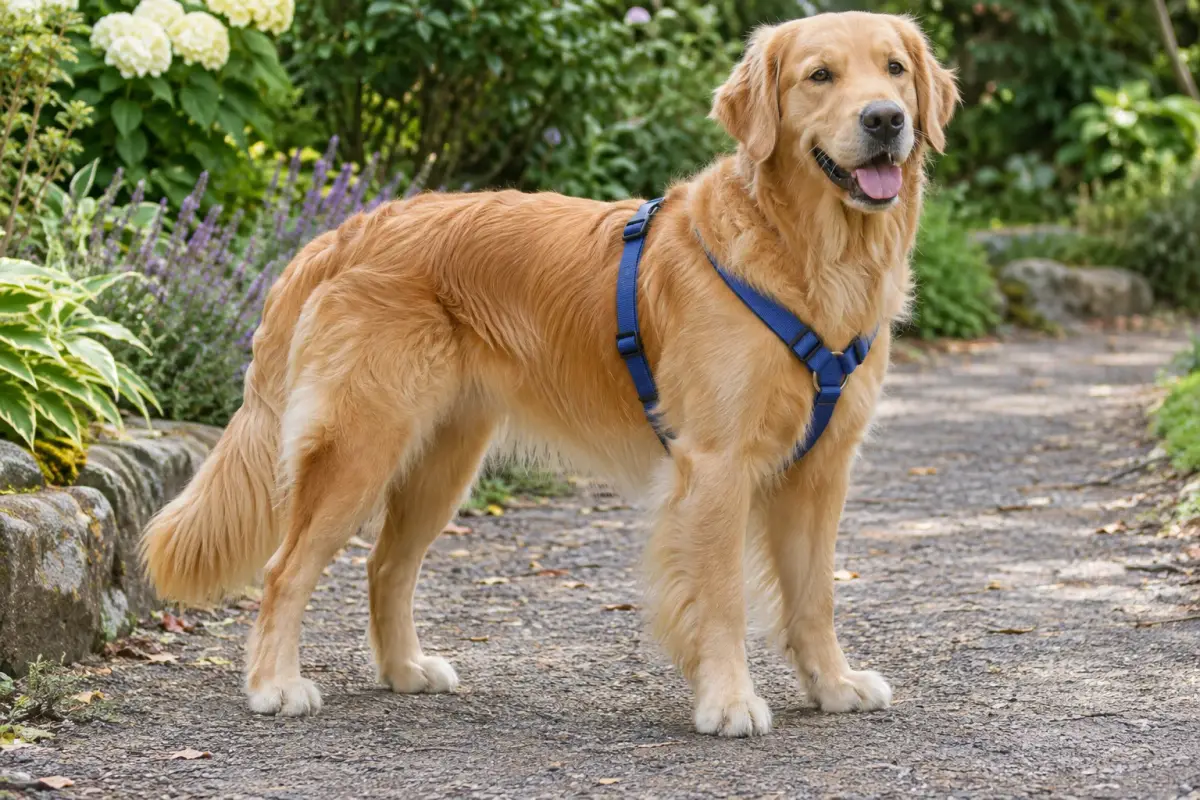
The best harness for a golden retriever is one sized to a 55 to 75 pound dog, padded where the straps cross the chest, and adjustable enough to fit over a thick coat without rubbing. Choose a front or dual clip if your dog pulls, and a back clip if the walk is calm. Browse our harnesses for golden retrievers after you measure your dog.
By Matt GarnettUpdated November 13, 20264 min read3 sources
Size: what a Golden Retriever weighs and how to measure
The American Kennel Club lists Golden Retrievers at 23 to 24 inches and 65 to 75 pounds for males, and 21.5 to 22.5 inches and 55 to 65 pounds for females. That makes a golden a large dog, so look for harnesses sold in large or extra-large sizes, and check the size chart rather than the weight range on the label. A harness that is too small will rub at the armpits, and one that is too big will slip.
The AKC's harness guide gives two measurements: the circumference at the base of the neck, where it meets the shoulders, and the widest part of the chest, typically behind the front legs. Use a cloth tape, or wrap string around the dog and measure it against a ruler. Puppies grow fast, so the AKC advises adjusting the fit or replacing the harness regularly as they grow.
Front clip, back clip or dual clip for a golden
Goldens are described by the AKC as exuberant gundogs with an endearing love of life, and a dog that greets everything with enthusiasm may pull. The AKC says front-clip harnesses often work well for dogs that pull, because the front attachment helps redirect their movement and may discourage pulling. It recommends back-clip harnesses mainly for dogs that are already well trained on a leash.
A dual-clip harness covers both stages. You can start with the front clip for added control and move to the back clip as your dog becomes more reliable. A harness reduces the strain on the neck, which the AKC notes can help dogs that pull, but it does not teach manners by itself. Pair it with reward-based loose-leash practice, and ask your vet for a behaviorist referral if lunging or reactivity is an issue.
Padding, coat and comfort
A golden's thick coat can hide rubbing. The AKC says padding provides comfort and that some padded material can be wetted to help cool a dog in hot weather, while thinner material may be less durable and offer less padding, which can increase chafing. A wide, padded chest panel suits a heavy dog that walks for miles, and a large-dog training collar harness is the sort of style to compare on adjustability.
The AKC also says dogs with thick or fluffy coats may need slightly tighter adjustments to prevent slipping, so check by feel. After the harness is on, run your fingers under every strap, watch for rubbing, pressure points or irritation, and make sure it does not interfere with shoulder or leg movement. Recheck after grooming and after weight changes. If you see sore or bald patches, see your vet.
Fit checks that prevent escapes and injuries
The AKC's two-finger rule is the easiest check: you should have to squeeze two fingers under any strap, but it should not be so tight that it is uncomfortable. Then tug the harness from different directions, and back your dog up to see whether it slides over the head. VCA warns that a dog can back up and escape from a harness that is not correctly fitted.
Start slightly loose, then tighten gradually, as the AKC's veterinarian source suggests. Walk the dog around the house or yard to see whether movement looks natural and unrestricted. A basic adjustable dog harness or pet harness is fine for calm walks if it has adjustment at the neck and chest. Always supervise your dog in a harness and remove it when you cannot watch them, as VCA recommends.
Visibility and what to avoid
Goldens are active, so many owners walk at dawn or after dark. The AKC says some harnesses have reflective stitching or material, and that reflective harnesses with LED lights are another option. A light-up LED chest strap for large dogs adds visibility, but check that the size chart matches your measurements, and treat lights as a supplement to a proper fit.
Avoid harnesses that sit across the shoulder joint and restrict movement, straps that are too thin for a 70 pound dog, and any size meant to be grown into. Also keep the harness clean, since the AKC lists regular cleaning and maintenance as part of safe use. For more reading, see our best dog harness guide, how to put on a dog harness, our no-pull dog harnesses, and our harnesses for golden retrievers.
Common questions
What size harness does a Golden Retriever need?
Males are typically 65 to 75 pounds and females 55 to 65 pounds, according to the AKC, so most need a large or extra-large size. Measure the base of the neck and the widest part of the chest, then use the size chart.
Is a front-clip harness good for a golden that pulls?
The AKC says front-clip harnesses often work well for dogs that pull because the front attachment redirects forward movement. A dual-clip model lets you start at the front and switch to the back clip as your dog improves.
Can a harness hurt a Golden Retriever's shoulders?
A poorly fitted harness can rub or restrict movement. The AKC says to make sure it does not interfere with shoulder or leg movement, and to watch for rubbing or pressure points. If you notice limping or sore spots, see your vet.
How tight should a golden retriever harness be?
Snug enough that you must squeeze two fingers under each strap, but not uncomfortable, according to the AKC. A thick coat may need slightly tighter adjustment, so check by feel and test by backing your dog up.
Sources we checked
This guide is general information, not veterinary advice. If your pet is unwell or injured, contact your veterinarian.


