






Buying guides
Best Harness for a Doberman: What Actually Matters
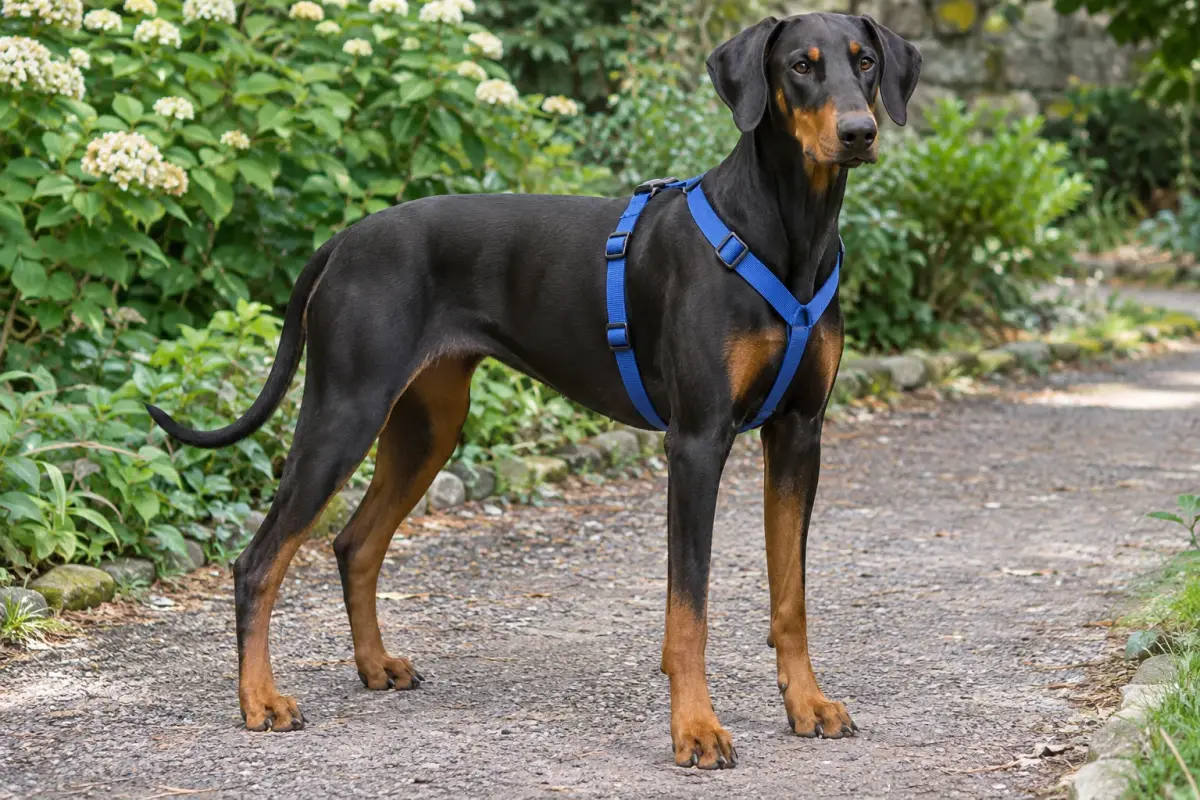
The best harness for a Doberman fits a deep chest and slim waist without sliding or rubbing, spreads pressure across the body, and has padding that suits a short, thin coat. Measure the neck and the widest part of the chest first, then choose the clip position for how well your dog walks on a leash.
By Matt GarnettUpdated November 14, 20265 min read3 sources
What matters most in a Doberman harness
Fit is the first test. VCA Animal Hospitals lists the Doberman at 24 to 28 inches tall and 60 to 100 pounds, a sleek, athletic build with a deep chest narrowing to a trim waist. That shape lets a poorly fitted harness slide back toward the elbows or rotate sideways. VCA says a well-fitted body harness is adjustable in every dimension and should not rub behind the elbow, so look for straps you can adjust at the neck, the chest and the girth. Our harnesses for Dobermans are chosen with large, deep-chested dogs in mind.
Coat is the second test. The Doberman has a short, smooth coat that offers little cushioning, and VCA advises watching the skin for irritation. The American Kennel Club notes that mesh is breathable but has less padding, which can increase rubbing or chafing. A short-coated dog usually does better with a padded chest panel and smooth edges than with thin, stiff straps. VCA also says Dobermans are sensitive to cold, which matters if you layer a coat under the harness.
Harness types compared for a Doberman
A body harness with a back clip is the standard choice for a dog that already walks nicely. The AKC says back-clip designs, with the clip between the shoulder blades, suit well-trained dogs. VCA describes the body harness as putting minimal pressure on delicate tissue, which is why it is often recommended over a collar for dogs with neck problems. An adjustable training harness for large dogs is the sort of shape that fits this category.
A front-clip or dual-clip harness suits a strong dog that pulls. The AKC explains that a front clip redirects forward motion and may discourage pulling, and a dual-clip lets you begin with the front ring and switch to the back later. Be careful, though: VCA warns that some front-clip designs rest directly over the shoulder joints, which can restrict movement and injure tissue, so check that the straps do not sit across the shoulder blades of an athletic dog.
Best type for each situation
For a young, high-energy Doberman, VCA rates the breed's energy as high and says it needs substantial daily exercise, so choose a harness you can adjust as a puppy fills out. Re-check the fit after growth spurts, grooming or weight changes, which the AKC recommends. A simple adjustable everyday pet harness is enough for relaxed walks once the straps are set correctly.
For walks at dusk, when your dog is most likely to be out in poor light, a light-up chest strap is useful, such as an LED light-up chest harness for large dogs. For convenience, a harness and leash set saves matching pieces. Because Dobermans are strong and can be reactive without socialization according to VCA, pair any harness with positive-reinforcement training, not with extra equipment.
What to avoid
Avoid prong, choke and electronic shock collars. VCA says these are designed to cause discomfort and advises against them, and nothing about a Doberman's trainability needs them. VCA also describes the breed as learning well from consistent positive-reinforcement training. Avoid thin, stiff straps across the chest of a short-coated dog, which can rub, and avoid any harness you cannot adjust in more than one place.
Also avoid a loose fit. VCA warns that a dog can back out of an improperly fitted harness, and that entanglement can cause injury, so it advises removing the harness when your dog is not directly supervised. Do not leave a harness on in the crate or while the dog is alone. And do not rely on a harness to control a dog that is reactive: it changes how the leash pulls but does not teach behavior.
How to measure and fit
Use a soft cloth tape and take two measurements: the circumference of the neck where it meets the shoulders, and the widest part of the chest, usually just behind the front legs. The AKC recommends these two measurements. If you only have a string, measure it against a ruler. Compare both numbers to the maker's size chart, and if your dog falls between sizes, choose the one with more adjustment range.
Start loose and tighten in steps. The AKC says it should fit snugly but not too tight and suggests checking that about two fingers fit underneath without discomfort. Then back your dog up to confirm the harness cannot slide over the head, and look for rubbing behind the elbows. Introduce it gradually in a quiet space, as VCA advises, and give treats while it is going on.
Care, checking and when to call your vet
Check the stitching, buckles and clips before each walk and wash the harness when it is dirty so grit does not rub the skin. Look at the skin under the straps after walks for redness, hair loss or sores. When it is time to replace or add a harness, browse our harnesses for Dobermans, and the matching dog leashes are one click away.
Call your vet if you see raw skin, persistent redness, or limping, coughing or discomfort when a harness goes on. VCA also notes that Dobermans have a significant risk of heart disease with few early signs, so tell your vet if your dog tires unusually fast on walks. This page is general information, not veterinary advice, and it cannot replace an examination by the vet who knows your pet.
Leash attachment positions
| Layout | Physical ring arrangement | Inspect before choosing |
|---|---|---|
| Back clip | Ring on the upper back | Stitching,placement and fit |
| Front clip | Ring at the chest | Chest-ring position and shoulder clearance |
| Dual clip | Front and back rings | Both attachments and permitted leash use |
Common questions
What size harness does a Doberman need?
Measure the neck at the shoulders and the widest part of the chest behind the front legs, then match both to the maker's size chart. Dobermans are deep-chested, so choose a harness with adjustment at the girth.
Is a harness better than a collar for a Doberman?
For walking, a harness spreads pressure across the body instead of the neck, which many vets prefer for strong dogs and those with neck problems. Keep a collar for identification tags.
What harness stops a Doberman from pulling?
A front-clip or dual-clip harness can redirect forward motion and make pulling less rewarding, but training matters more. Reward your dog for walking beside you, and check the straps do not sit across the shoulder joints.
Can a Doberman wear a harness all day?
No. A harness can rub, and VCA advises removing it when your dog is not supervised, because a dog can get tangled or back out of it. Use it for walks and training only.
Sources we checked
This guide is general information, not veterinary advice. If your pet is unwell or injured, contact your veterinarian.


