Buying guides
Best Dog Wheelchair: What Actually Matters
The best dog wheelchair is the one that matches your dog's condition and fits its body, and that decision starts with your veterinarian. Rear-support carts suit weak back legs, front and quad designs cover other needs, and a poor fit can hurt. Browse our dog wheelchairs once you know what support your dog needs and how to measure.
By Matt GarnettUpdated November 13, 20264 min read2 sources
Start with your vet, not the product page

The American Kennel Club says a veterinarian or certified veterinary physical therapist can best advise on the right wheelchair for an individual dog, and it recommends asking for a referral to a veterinary rehabilitation specialist. These specialists are trained in canine orthopedics and proper fitting. If none is nearby, work with your regular vet on the device and sizing.
AKC lists common reasons for a wheelchair, including severe osteoarthritis, neuromuscular disorders, spinal problems that cause paralysis, surgical recovery or amputation, and mobility loss after accidents. Dog wheelchairs are mostly used for permanent conditions but can serve temporary ones too. Only a vet can tell you which applies to your dog, and a cart is never a substitute for a diagnosis.
Rear, front and quad support
AKC describes three main designs. Rear-support carts hold up the back end for dogs with weak hind legs. Front-support carts are triangular, with one front wheel and two rear wheels, for weak front legs. Quad-support designs are for dogs with limited mobility in all four legs. The right type depends on where the weakness is, so match it to your vet's assessment.
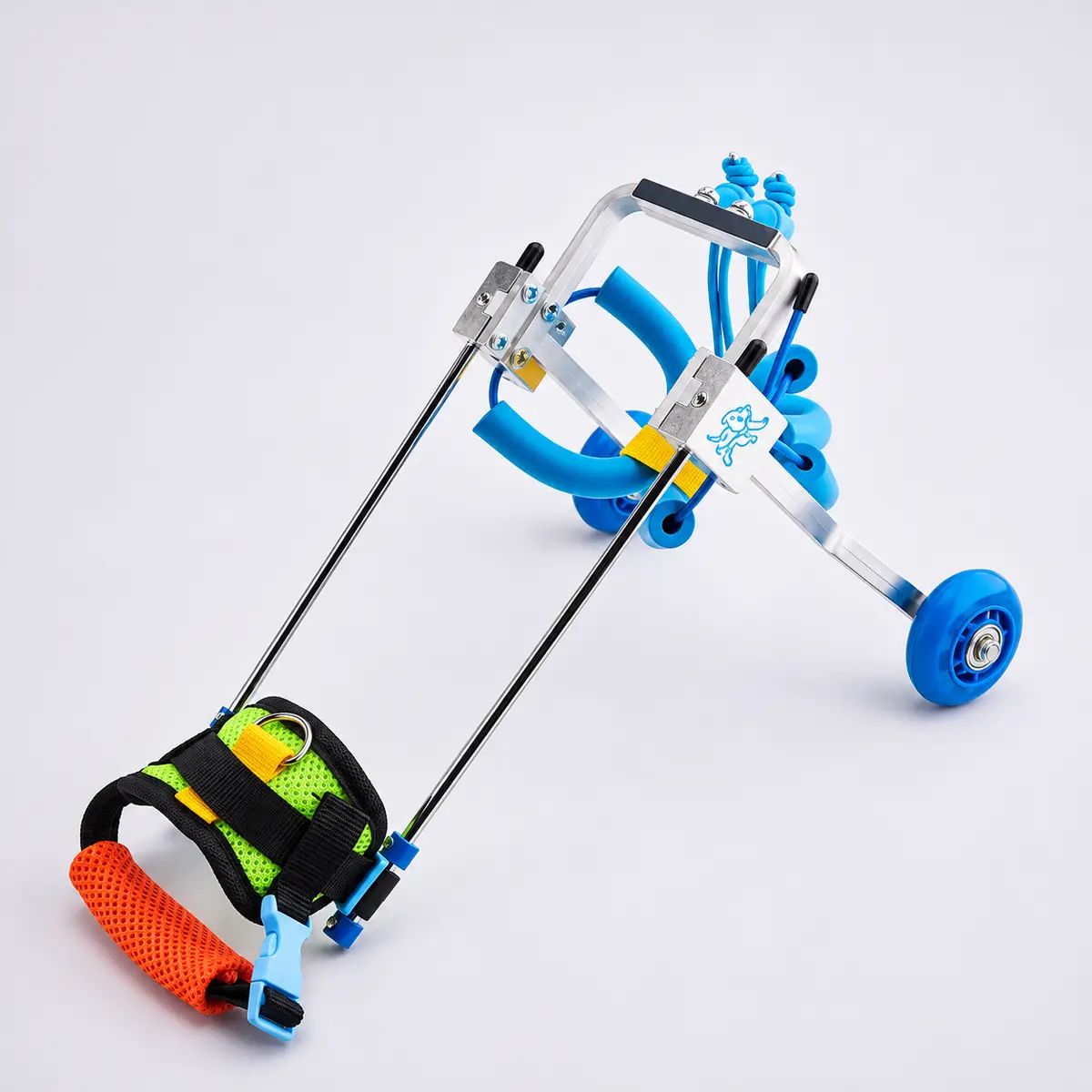
AKC also says swinging-saddle and fixed-saddle designs exist, and the dog's condition determines which suits. Most adjustable listings, such as this fully adjustable dog wheelchair, are rear-support designs. Ask your vet whether a rear-support design fits the problem before you buy.
How to measure your dog
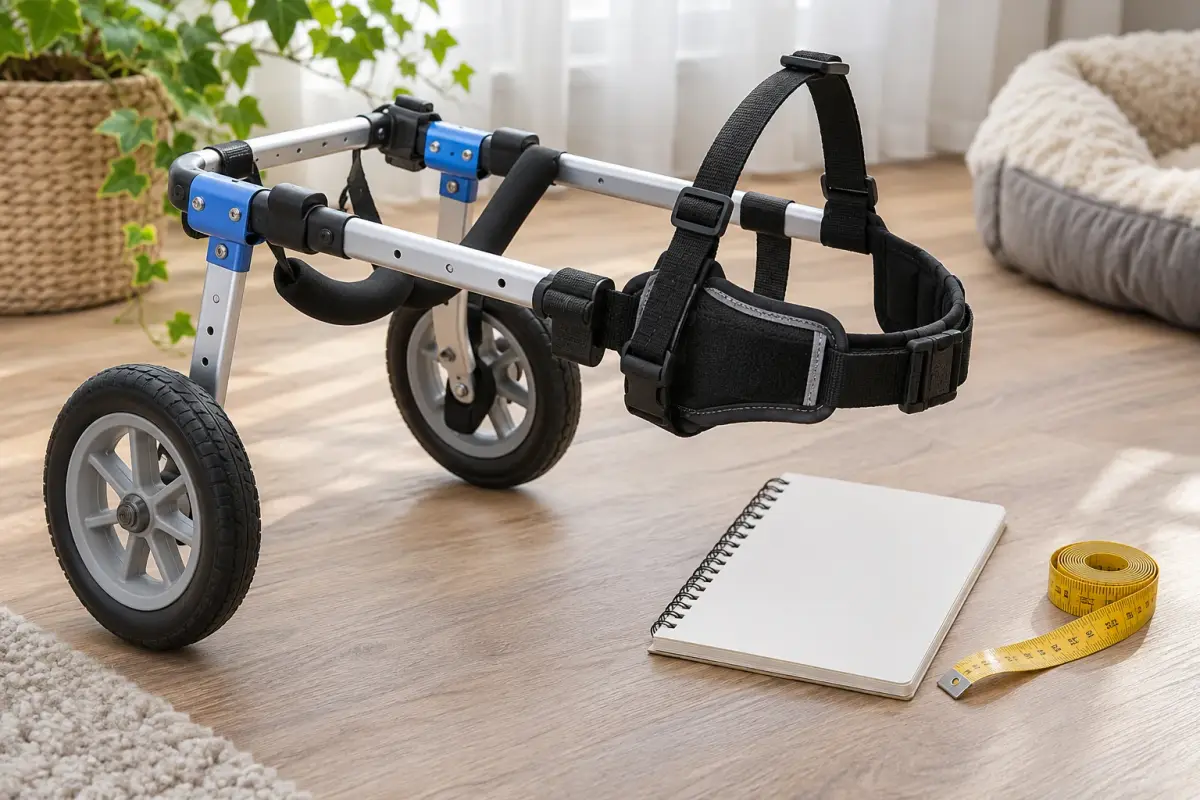
AKC says to use a soft measuring tape and record three things: the width between the hips, the body length and the height at the withers, which is the top of the shoulders. Many adjustable carts also ask for weight. If you do not have a dog scale, weigh yourself, then weigh yourself holding your dog, and subtract.
Measure on a flat floor with the dog standing as naturally as possible, or ask a helper, and write the numbers down. Then compare them to the maker's sizing chart rather than guessing from the dog's breed. If your dog falls between sizes, check how much adjustment the frame allows. Several of our wheelchair options, including this pet walking wheelchair scooter and a disabled dog scooter, list adjustable frames, but always compare against your own measurements.
Strap fit and skin protection
Fit is the criterion that matters most. AKC says a poorly fitting device can cause discomfort or injury. For straps, try to slide two fingers under each one: if you cannot, it is too tight; if more fit, it is too loose, and either can cause skin irritation or pressure sores. Look for padded straps and soft contact points around the hips and chest.
Check your dog's skin after every use, especially at strap edges and where the frame touches. Redness, hair loss or sores mean stop and call your vet. Some veterinary offices let owners try different wheelchairs, which is a good way to compare fit before buying a pet disabled dog wheelchair scooter.
Wheels, terrain and the home
AKC says thin, smooth wheels suit carpet, tile and concrete, while larger wheels with deep tread suit grass and outdoor activity. Swivel casters that rotate 360 degrees give better maneuverability in tight spaces. Decide where your dog will use the cart most, then choose wheels for that surface.
At home, clear paths between furniture, add dog ramps, and use non-slip flooring for traction. AKC's mobility guide also mentions yoga mats or carpet runners on slippery floors, and toe grips for extra traction. These small changes help whether or not your dog uses a cart.
Adjusting, timing and when to call the vet
AKC notes that it is usually better to introduce a device while a dog still has some mobility, so the body stays positioned to use the muscles that keep it walking. Shy or cautious dogs often take longer to adapt, while confident dogs adapt more easily. Go slowly, with treats and short sessions.
Call your vet if your dog seems uncomfortable, resists the cart, develops skin irritation or loses more mobility. Ask your vet or rehabilitation specialist for a plan about how long and how often the cart should be used.
This page is general information, not veterinary advice, and it cannot replace an examination by the vet who knows your pet.
Common questions
When does a dog need a wheelchair?
Only a vet can say. AKC lists severe arthritis, nerve and spinal conditions, surgery recovery and injuries as common reasons. Talk to your vet or a rehabilitation specialist before buying.
How do I measure a dog for a wheelchair?
Measure the width between the hips, the body length and the height at the withers with a soft tape, and weigh your dog if the maker asks. Compare these numbers with the sizing chart.
How tight should dog wheelchair straps be?
AKC says you should be able to slide two fingers under each strap. Tighter can irritate, and looser can cause rubbing or pressure sores. Check your dog's skin after each use.
Can a dog use a wheelchair indoors?
Yes, especially smaller dogs, using thin smooth wheels on hard floors. AKC notes larger dogs often benefit most outdoors, where larger wheels with deeper tread work better.
Sources we checked
This guide is general information, not veterinary advice. If your pet is unwell or injured, contact your veterinarian.