






Buying guides
Best Dog Paw Cleaner: Cups, Wipes and Rinses Compared
The best dog paw cleaner for muddy walks is a cup-style washer with soft silicone bristles, sized so your dog's paw fits without squeezing, followed by a good towel. Pet wipes suit light dirt; foam or no-rinse cleaners suit quick touch-ups. In winter, the AKC advises washing paws thoroughly after salted sidewalks, including between the toes and pads, where salt and grit collect.
By Matt GarnettUpdated November 10, 20263 min read2 sources
What matters most: getting between the toes
Dirt, salt and grit do not stay on the bottom of a paw; they work between the toes and pads and under the nails. The AKC's paw care guidance is to rinse feet in warm water when your dog comes inside, reaching between the toes and pads, and notes that salt and dirt building up there cause irritation. A paw cleaner is only as good as its reach into those spaces.
Speed and comfort come next, because you need your dog to cooperate at the door every day. A cleaner that works in a few seconds per paw, with soft bristles and lukewarm water, is one your dog will tolerate. Drying matters too: damp between the toes encourages irritation and odor.
Paw cups, wipes and foam cleaners compared
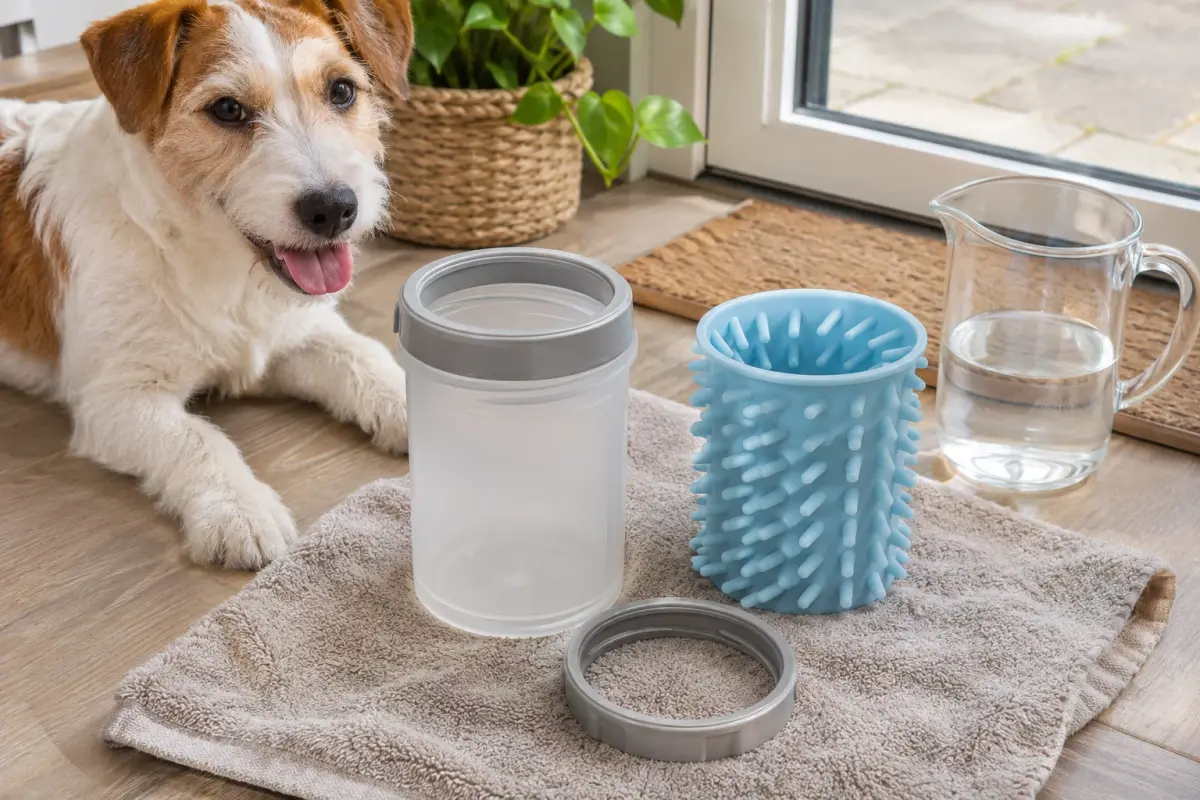
Paw washer cups have a cylinder lined with soft silicone bristles. Add a little lukewarm water, insert the paw, twist gently and lift; the bristles scrub between the toes. They are the most effective for mud and salt. Pet wipes, the AKC notes, can handle light mud or salt and are handy for small dogs and quick trips.
Foam and no-rinse paw cleaners are rubbed in and toweled off, useful for touch-ups when water is not handy. Paw rinse buckets and mats with absorbent fibers dry paws at the door. Absorbent microfiber towels or paw mitts finish any method quickly.
Best option for each dog
For large dogs and muddy trails, a large paw washer cup and a microfiber towel by the door. For small dogs, a small cup or pet wipes, since tiny paws are easy to wipe. For winter cities with road salt, a cup washer or a bowl of warm water every time, plus boots if your dog tolerates them, as the AKC suggests.
For dogs that hate having paws handled, start with a soft towel and treats and introduce the cup slowly. For long-haired paws that trap mud, trim the hair between the pads to make cleaning easier. For dogs with sensitive skin, plain water is often all you need.
What to avoid
Avoid harsh soaps, alcohol-based wipes and human disinfectants, since dogs lick their paws. Avoid leaving paws wet. Avoid ignoring licking: the AKC warns that regularly licking rock salt from the paws could lead to mild sodium poisoning and dehydration, so clean paws after salted walks.
Red, swollen or cracked pads, limping, a cut, a smell, or constant licking or chewing of a paw are reasons to see your vet. Foreign bodies such as grass seeds and infections between the toes need proper treatment.
How to size and use a paw cleaner
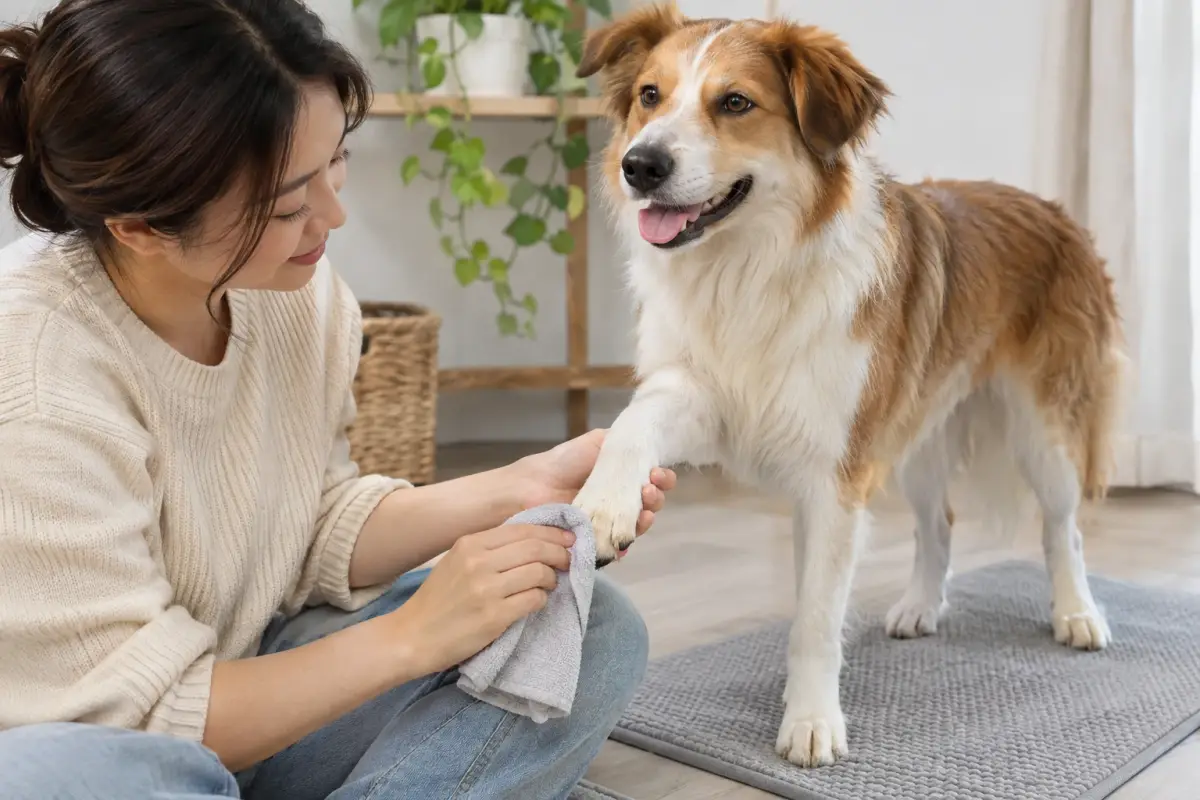
Choose a cup that fits your dog's paw with a little room; the paw should slide in and out without squeezing. Small, medium and large cups usually correspond to toy, medium and large breeds. Fill it a third full with lukewarm water so it does not overflow.
Insert one paw, twist the cup gently back and forth a few times, lift the paw out and towel dry, separating the toes as you go. Reward your dog after each foot. Empty and rinse the cup between muddy feet if needed.
Care and lifespan
Rinse and wash the cup after use and let it dry upside down so it does not grow mold. Most silicone inserts come out and can go in the dishwasher. Wash towels frequently. Our guide to how to clean dog paws walks through the routine step by step.
A paw washer cup lasts years; replace the silicone insert if it tears. Keep wipes sealed so they do not dry out. A small paw-care kit by the door, cup, towel and wipes, makes the habit easy.
Paw-cleaning tool formats and parts
| Format | Physical form | What to inspect |
|---|---|---|
| Washer cup | A cup with a bristled liner | Opening,liner removal and cleaning access |
| Wipe | A disposable or reusable sheet | Exact formulation and label directions |
| Foam or no-rinse cleaner | A dispensed cleaning formulation | Finished product directions and warnings |
| Absorbent mat | A fabric surface at the doorway | Fiber condition and laundering instructions |
| Towel or paw mitt | A hand-held fabric drying tool | Drying area and access to clean it |
Common questions
Do paw washer cups really work?
For mud, salt and grit, yes. The silicone bristles reach between the toes and pads, which wipes often miss. Dry the paws well afterward. Use lukewarm water and a towel by the door.
Can I use baby wipes on my dog's paws?
It is better to use alcohol-free, unscented wipes made for pets, since dogs lick their paws. Plain water and a towel work too. Avoid anything with alcohol or strong fragrance.
How do I clean salt off my dog's paws?
Wash the paws in lukewarm water after every salted walk, reaching between the toes and pads, then dry them. Boots help prevent salt contact. Check the pads for cracks while you clean.
What size paw cleaner does my dog need?
One the paw slides into with a little room to spare. Small cups suit toy breeds, medium most mid-sized dogs, and large cups big breeds.
Sources we checked
This guide is general information, not veterinary advice. If your pet is unwell or injured, contact your veterinarian.


