






Care & how-to
How to Clean Dog Paws After Walks (Step by Step)
To clean your dog's paws, wipe light dirt away with an unscented pet wipe or damp cloth, or for mud and road salt, dip or rinse each paw in lukewarm water with a little mild dog shampoo. Gently spread the toes to clean between them, then dry thoroughly, including between the pads. Check for cuts, cracks and objects as you go.
By Matt GarnettUpdated November 9, 20264 min read2 sources
Why paw cleaning matters
Your dog's paws pick up mud, sand, pollen, lawn chemicals, road salt and de-icers, then carry them into the house and, often, into its mouth when it licks them. The AKC notes that salt and dirt can build up between the toes, around and between the pads and under the nails, leading to irritation, and that snowballs between the toes can trap de-icer your dog may lick off.
Cleaning also gives you a regular chance to spot small injuries, splinters, burrs or a cracked pad before they become sore or infected. For dogs with paw allergies, rinsing off pollen after walks can reduce itching. A dog paw cleaner can make that after-walk rinse quicker when feet are muddy or covered in pollen.
Step-by-step: a quick wipe after everyday walks
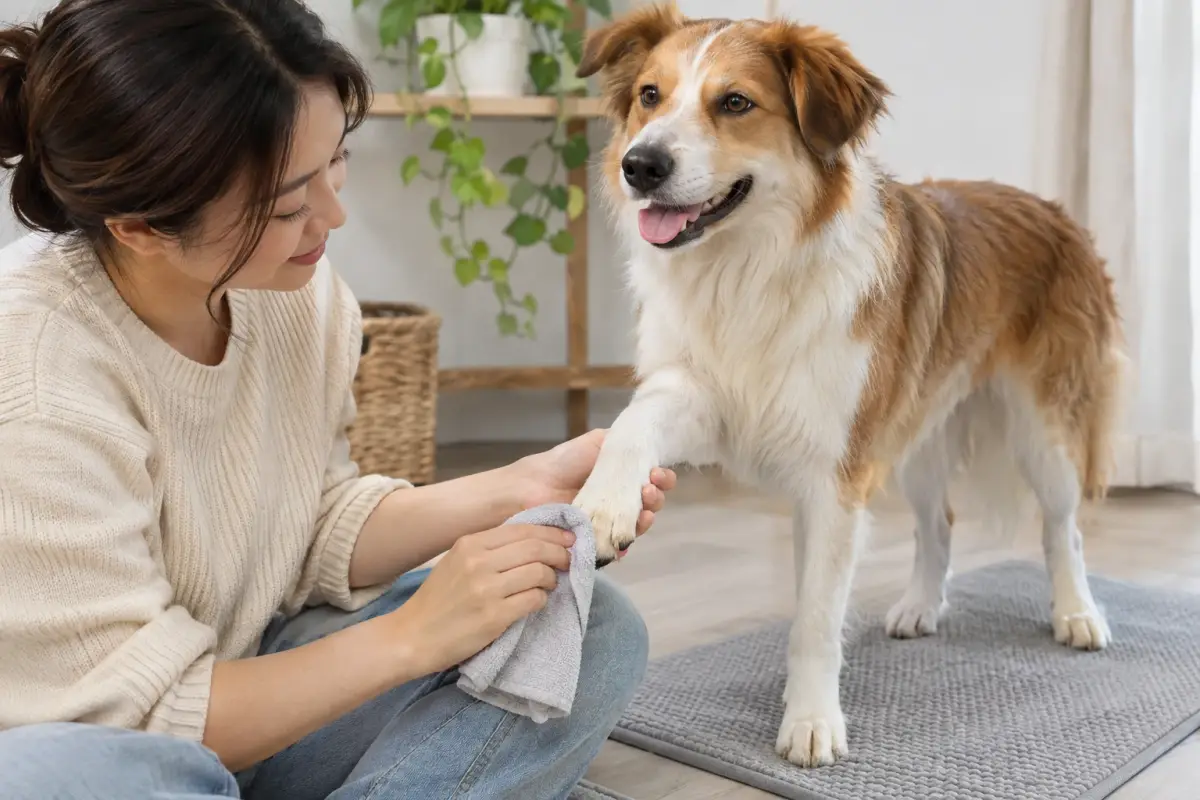
Step 1: Keep a towel and a pack of unscented, pet-safe wipes by the door. Step 2: Lift one paw at a time and wipe the pads and the top of the foot. Step 3: Gently part the toes and wipe between them, where dirt and debris collect. Step 4: Dry each paw with a towel, including between the toes, before moving on.
Make it a routine with a treat at the end, and handle paws often between walks so your dog is relaxed about it. For very small dogs, doing this on your lap is easiest; larger dogs can stand on a mat.
Step-by-step: a deeper clean for mud and salt
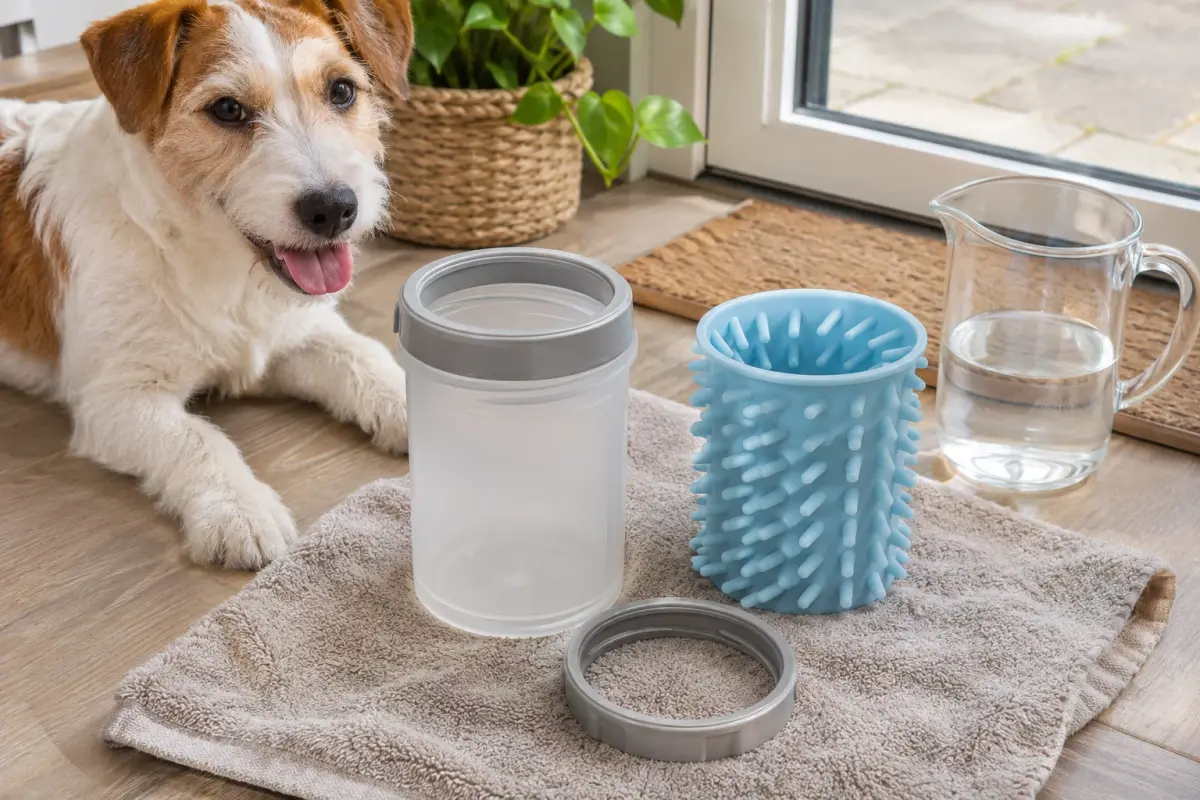
Step 1: Fill a shallow tub, a large cup or a paw-washing container (a silicone paw-wash cup is one example) with lukewarm water and, if needed, a few drops of mild dog shampoo. Step 2: Dip each paw and gently swish or massage it, working between the toes and around the pads. The AKC suggests small dogs can be washed over a sink and larger dogs in a tub or with a hand-held shower head. Step 3: Rinse with clean water so no soap is left behind.
Step 4: Dry thoroughly with an absorbent towel, paying attention to the gaps between the pads. Damp fur between the toes can lead to irritation and yeast. If your dog has icy snowballs stuck between its toes, the AKC advises soaking a towel in warm water and gently holding it to the pad until the ice loosens, rather than pulling it out.
Seasonal paw care
In winter, wash or wipe paws after every walk on salted sidewalks to remove de-icers, which can irritate pads and are harmful if licked off. Consider dog booties, use a pet-safe ice melt at home, and ask your vet about a paw balm to protect against cracking. For long-haired dogs, the AKC suggests having a groomer trim the fur between the pads so snowballs and ice do not form.
In summer, pavement and sand can get hot enough to burn pads. Test the ground with the back of your hand; if you cannot hold it there for several seconds, it is too hot for paws. Walk early or late, stick to grass, and rinse paws after beach trips to remove sand and salt. Keep a pet paw washer by the door or in the car to make that rinse simpler, or browse our paw cleaners for other styles.
Check the pads, and when to call the vet
As you clean, look at each pad and between the toes for cuts, cracks, blisters, swelling, redness, splinters, foxtails or other grass awns, and check the nails for splits. The ASPCA advises checking pads regularly for cuts, infections and objects, and gently removing small splinters with tweezers. Do not use human hand lotion on cracked pads; ask your vet what to use.
Call your vet if your dog is limping, licking or chewing one paw constantly, has a cut that is deep or keeps bleeding, has a swollen toe, a torn nail, or signs of infection such as redness, swelling, pus or a bad smell. Foxtails can work their way under the skin and need prompt removal by a vet.
This page is general information, not veterinary advice, and it cannot replace an examination by the vet who knows your pet.
Common questions
Can I use baby wipes on my dog's paws?
Unscented, alcohol-free wipes are generally fine for a quick clean, but wipes made for pets are a safer choice. Avoid scented or antibacterial wipes, which can irritate pads and are licked off.
Should I wash my dog's paws every day?
A quick wipe after walks is fine daily. A full wash with soap is only needed for mud, salt or chemicals, because frequent soaping can dry the pads. Always dry paws thoroughly.
Why do my dog's paws smell like corn chips?
That mild, corn chip smell comes from normal bacteria and yeast on the feet and is usually harmless. A strong, unpleasant smell with redness, licking or discharge can mean an infection, so see your vet.
Sources we checked
This guide is general information, not veterinary advice. If your pet is unwell or injured, contact your veterinarian.


