Buying guides
Best Dog Nail Clippers: Choosing the Right Type for Your Dog
The best dog nail clippers are sharp, sized to your dog's nails and comfortable in your hand. Scissor-style clippers suit most dogs and are the only sensible choice for thick, large-breed nails. Guillotine clippers suit small and medium dogs with thinner nails. A grinder suits dark nails and nervous owners because it removes nail gradually. A safety stop and a styptic powder on hand matter more than any quick sensor.
By Matt GarnettUpdated November 10, 20264 min read2 sources
What matters most: blade type, size and sharpness
The AKC lists three tools for trimming dog nails: scissor clippers, guillotine clippers and grinders, and says to use whichever you are most comfortable with and suits your dog. The real decision is how thick the nails are. A clipper that is too small crushes a thick nail instead of cutting it, which hurts and splinters the nail. A clipper that is too large is clumsy on a toy breed.
Sharpness matters more than features. A dull blade squeezes the nail, and dogs quickly learn to dislike the feeling. Look for stainless steel blades, ideally replaceable or at least well reviewed for staying sharp, and grips that do not slip when your hands are wet. A spring that opens the jaws again on its own makes a long session easier.
Scissor, guillotine and grinder compared
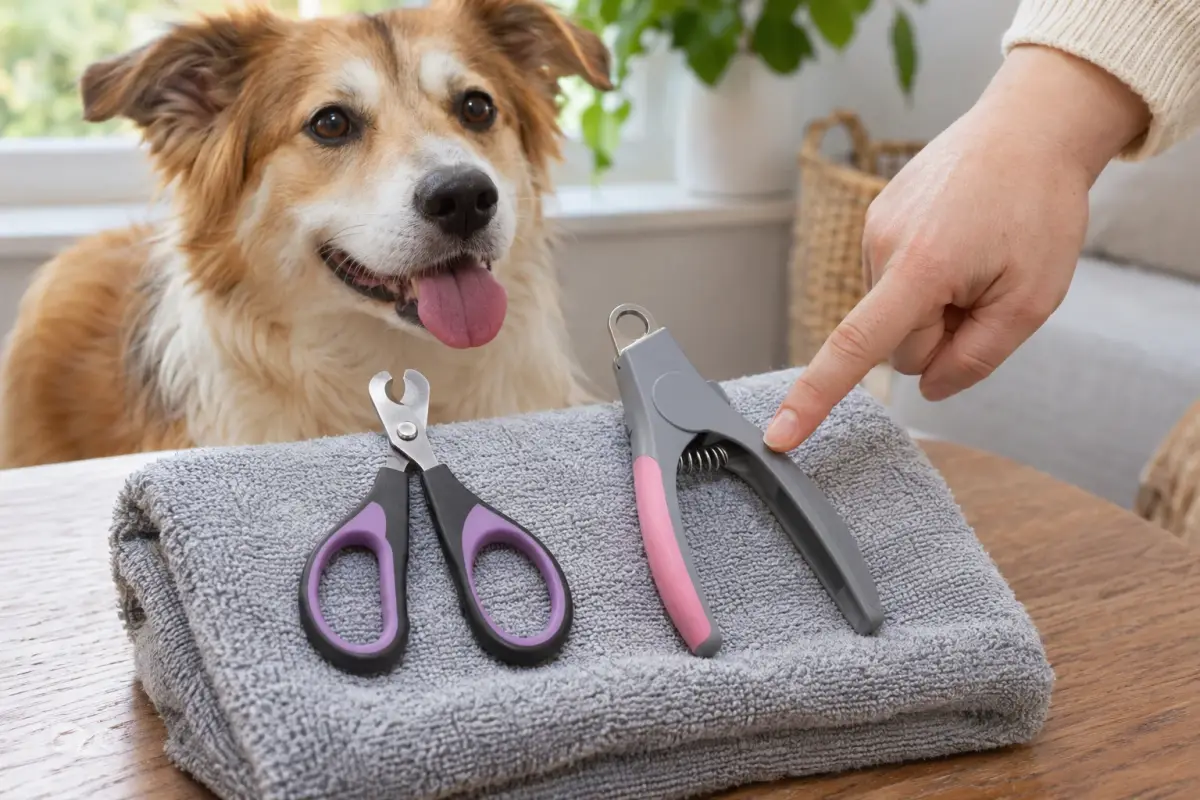
Scissor or plier-style clippers have two curved blades that close like pliers. They give the most force and control, handle thick nails and are what most groomers reach for on medium and large dogs. Guillotine clippers have a hole the nail sits in and a single blade that slides across. They are precise on small, thin nails but struggle with thick ones and need regular blade replacement.
Grinders use a rotating sanding band or stone to file the nail down. They take longer and some dogs dislike the noise and vibration at first, but they make it much harder to cut into the quick and leave a smooth edge. A low-noise grinder with two speed settings and a guard that keeps fur out of the drum is the type to look for.
Best type for each dog
For large dogs with thick nails, choose a heavy-duty scissor clipper with long handles for leverage, or a grinder with a coarse band. For small dogs and toy breeds, a small scissor clipper or a guillotine clipper gives the most control. For puppies, small scissor clippers and very short, frequent trims help them accept handling early.
For dogs with black nails, where you cannot see the quick, a grinder is the safest choice because you can take off thin layers and stop as soon as you see the chalky white ring the AKC describes as the sign you are near the quick. For an anxious dog, a quiet grinder used for one or two nails a day, with treats, often works better than one long session with clippers.
Quick sensors, guards and other features
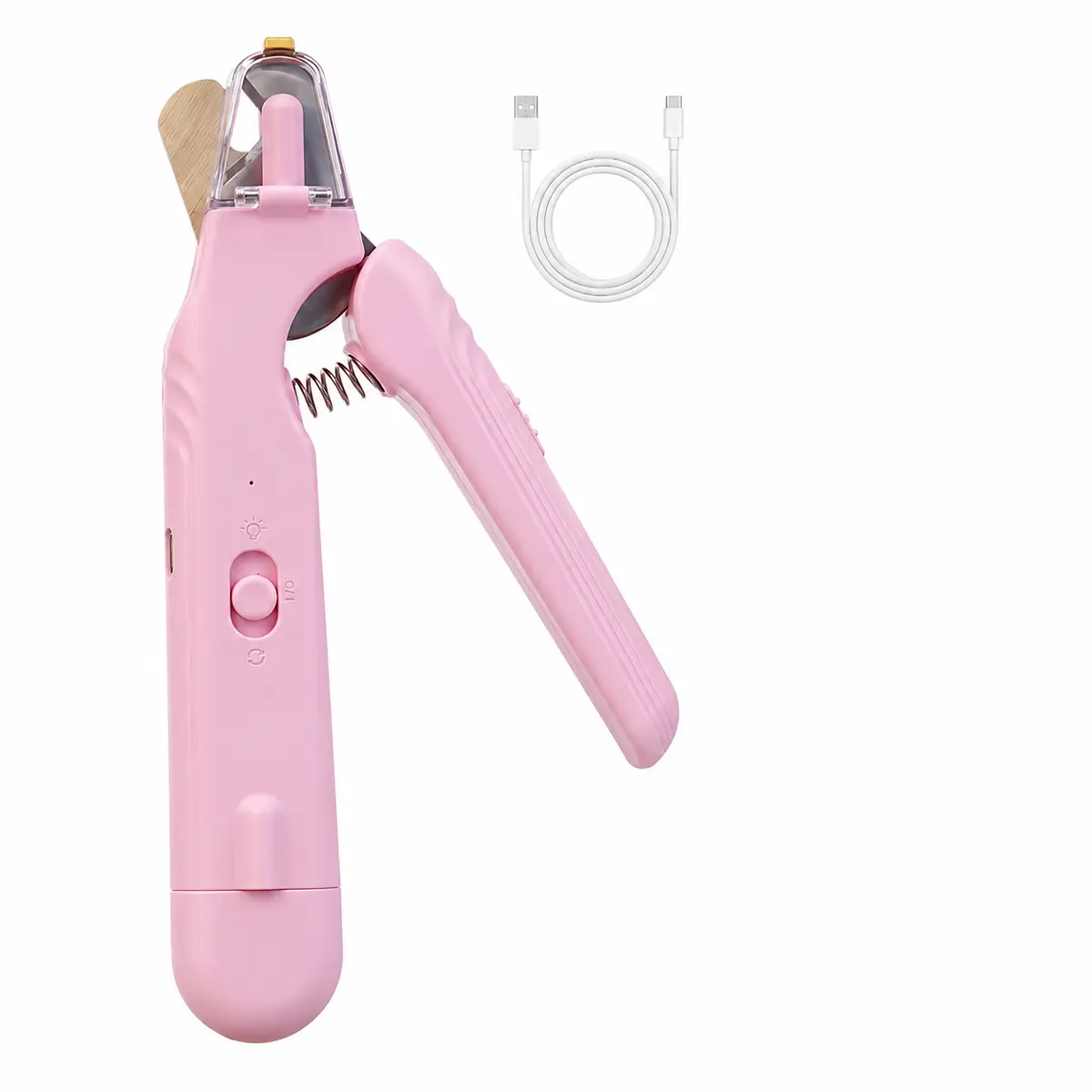
Some clippers have a safety guard or stop that limits how much nail can pass the blade. It is useful for beginners, as long as you set it carefully. Clippers with a quick sensor or a light aim to show where the quick is, but they are not a substitute for taking small cuts and watching the cut surface, especially on dark nails.
Useful extras include a built-in file, a lock that keeps the blades closed for storage and non-slip handles. Lighted clippers help on light-colored nails but add little on black ones. Whatever you choose, keep a styptic or clotting powder nearby; the AKC advises having one ready and contacting your vet if bleeding does not stop.
What to avoid
Avoid human nail clippers on anything but the tiniest puppy nails; they crush rather than cut. Avoid dull or loose clippers, which twist the nail. Avoid trimming a struggling dog alone, because a sudden jerk is how most quick injuries happen. And avoid cutting past the curve of the nail, which the AKC warns against.
If a nail is split, cracked to the base, swollen or bleeding without a trim, leave the clippers in the drawer and have your vet look at it. Overgrown nails that curl back toward the pad also need a vet or groomer first, because the quick grows longer with the nail and has to be shortened gradually.
How often to trim, and how long clippers last
The AKC says most dogs need a trim every three to four weeks, depending on activity and how fast the nails grow. A good check is the sound: if you hear clicking on a hard floor, the nails are long enough to trim. Trim straight across, take only the tip, and include the dewclaws. Frequent small trims encourage the quick to recede.
Clean the blades after each session and keep them dry to prevent rust. Guillotine blades usually need replacing every few months with regular use. Scissor clippers last years if kept sharp and dry. Grinder bands wear down and should be replaced when they stop removing nail quickly, and batteries in cordless grinders lose capacity over time.
Nail-tool mechanisms compared
| Tool | Working mechanism | Parts to inspect |
|---|---|---|
| Scissor or plier-style | Two curved blades close together | Blade alignment and handle action |
| Guillotine | One blade moves across a nail opening | Opening,blade and replacement method |
| Grinder | A rotating sanding band or stone | Head,guard,power model and instructions |
Common questions
What are the best nail clippers for large dogs?
Heavy-duty scissor or plier-style clippers with long handles give the leverage thick nails need. A grinder with a coarse band is a good alternative, especially if your dog has black nails.
What are the best dog nail clippers for black nails?
A grinder is safest, because you can remove thin layers and stop when you see a chalky white ring or a dark dot in the center of the cut surface. With clippers, take tiny slices at a time.
Do dog nail clippers with a quick sensor work?
They can help, but none can see the quick reliably on every nail. Take small cuts, watch the cut surface and keep styptic powder ready, whichever clipper you use.
Are guillotine clippers bad for dogs?
Not if the blade is sharp and the nails are small or medium. They struggle with thick nails and can crush them, so large dogs are better served by scissor clippers or a grinder.
Sources we checked
This guide is general information, not veterinary advice. If your pet is unwell or injured, contact your veterinarian.