






Buying guides
Best Dog Muzzle: How to Choose a Safe, Comfortable Fit
The best dog muzzle for most situations is a well-fitted basket muzzle, because it lets a dog pant, drink and take treats while still preventing a bite. Soft sleeve muzzles hold the mouth shut, so they suit only very brief jobs such as a nail trim, and never hot weather. Fit and a slow, treat-based introduction matter more than any feature list.
By Matt GarnettUpdated November 14, 20265 min read3 sources
What matters most in a dog muzzle
A muzzle has one job: to prevent a bite while keeping the dog as comfortable as possible. Three things decide whether it does that well. It must be sturdy enough to stop a bite, it must let the dog breathe and pant freely, and it must fit so that the dog cannot paw or rub it off. A muzzle that fails on any of these is either unsafe for people or unsafe for the dog.
Panting matters more than most owners expect. Dogs cool themselves mainly by panting, so a design that holds the jaws closed removes their main way of shedding heat. Veterinary schools and the AKC both point to the same conclusion: choose a style that leaves room to open the mouth, and check how the muzzle sits on the soft part of the nose and around the eyes before you ever put it on a real patient or an anxious dog.
Basket, soft and emergency muzzles compared
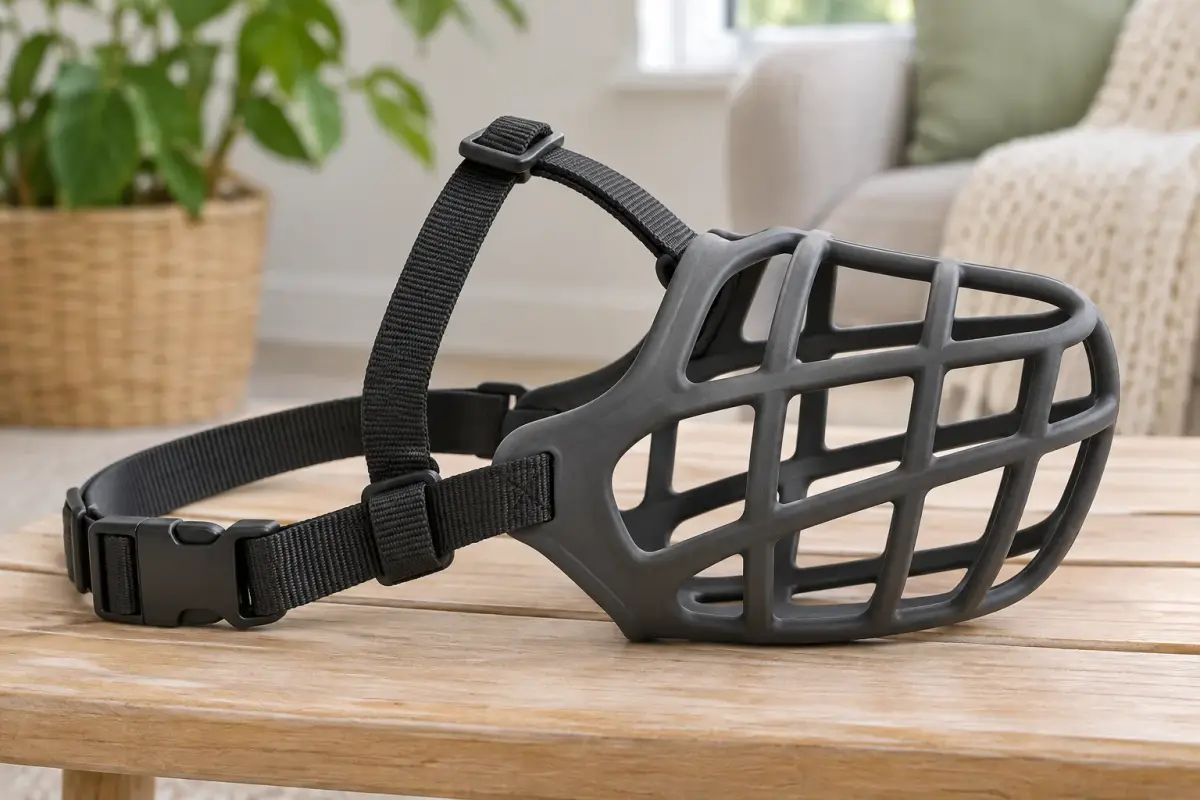
Basket muzzles are built from rubber, plastic, wire or leather in a cage shape. Cornell's Riney Canine Health Center describes them as the best choice for longer wear and the most protective option, because a dog can pant, drink and take treats while wearing one. Some have slots for passing treats through, which makes training easier. A style such as the breathable TPR basket muzzle or a soft rubber basket muzzle falls in this group, and you can compare more in our basket dog muzzles.
Soft or sleeve muzzles are nylon, mesh or leather and fit snugly around the snout. They hold the mouth closed, which prevents panting, drinking and eating, and a dog may still be able to nip. For that reason they are reserved for very short jobs, and the AKC says never in hot weather. Gauze or improvised muzzles made from a roll of gauze, ribbon or a spare leash are emergency restraint only, and a basic proper muzzle kept in a first aid kit is the better plan.
Which type suits which situation
For dogs that need a muzzle for ordinary life, such as nervous dogs at the vet, dogs with a bite history or a dog with a legal requirement to wear one in public, a basket muzzle is the usual choice because it can be worn for longer and the dog can still drink and pant. Browse our dog muzzles with that in mind.
For a quick procedure such as a nail trim, a soft muzzle may be used for a minute or two, with the dog watched the whole time. Dogs that ingest dangerous objects on walks may wear a basket muzzle as one temporary part of a wider plan. Flat-faced breeds such as Pugs can wear muzzles, but the AKC notes a custom fit often works best, so a standard shape may need extra care or professional help.
How to measure and fit a muzzle
Measure before you buy, especially for online orders. Most makers ask for the length of the snout and its circumference, and it helps to try several sizes. The AKC suggests you should be able to just fit one finger between the strap and your dog's head. A strap that is too loose lets the dog remove the muzzle, while one that is too tight can restrict breathing, panting and drinking and can cause painful chafing.
Check the front of the muzzle too. It should not press on the soft nose or nostrils, and it should not touch the eyes. There should be enough space for the mouth to open for panting and for a treat to pass through. If your dog is hard to fit, a veterinary professional, an experienced trainer or a behavior consultant can help, and custom-fit basket muzzles exist for unusual head shapes.
Introducing a muzzle without fear
Start well before any emergency. A dog muzzled for the first time while hurt or frightened will resist it. VCA and the AKC describe the same gradual path: let the dog sniff the muzzle and give a treat, then reward the nose going in to reach a treat, then fasten the straps for a second or two and remove them straight away. Keep sessions short, about one to two minutes, and use small, tasty treats such as lickable ones. A few small training treats work well for this.
Build up the time in small steps, from a count of five to ten seconds and then longer, always with treats arriving while the muzzle is on. Do not coax or lure a hesitant dog, and stop if it backs away. A dog that already shows fear of the muzzle should work with a behavior professional. Once it wears the muzzle happily, practice in different places, and keep water available for longer sessions.
What to avoid
A muzzle is not a cure for barking, chewing or other ongoing behavior. Muzzles are meant for short periods under supervision, and those problems need an identified cause and consistent training. Never leave a dog alone in a muzzle, never use one as punishment, and do not use one to make a stressful place such as a busy dog park easier to tolerate, because the dog may learn to link the muzzle with fear.
Avoid homemade muzzles except as a brief emergency measure; a properly fitted basket style from our dog muzzles is the better thing to keep in a first aid kit. If your dog is aggressive, a muzzle is only a safety layer while you work on the cause with your vet and a qualified behavior professional.
This page is general information, not veterinary advice, and it cannot replace an examination by the vet who knows your pet.
Common questions
What is the best type of muzzle for a dog?
For most dogs a well-fitted basket muzzle is the safest everyday choice, because it allows panting, drinking and treats while still preventing a bite. Soft muzzles are for very short, supervised jobs only.
Can a dog wear a muzzle all day?
No. A muzzle is a temporary safety tool used for short, supervised periods. A basket style can be worn longer than a soft one, but a dog should never be left alone in any muzzle, and long wear should be built up gradually.
Will a muzzle stop my dog barking?
No. Veterinary and AKC guidance say muzzles should not be used for barking or chewing. They are meant to prevent bites, and barking needs training and a look at what is causing it.
How tight should a dog muzzle be?
Snug enough that you can just fit one finger between the strap and your dog's head, so the dog cannot pull it off, but loose enough that it can still breathe, pant and drink without chafing.
Is a soft muzzle safe for hot weather?
No. A soft muzzle holds the mouth shut and prevents panting, which is how dogs cool down. The AKC advises using them only briefly and never in hot weather. Choose a basket style if the dog must wear one outdoors.
Sources we checked
This guide is general information, not veterinary advice. If your pet is unwell or injured, contact your veterinarian.


