Buying guides
Best Dental Chews for Dogs: What Actually Helps Teeth
The best dental chew for your dog carries evidence that it reduces plaque or tartar, is sized so your dog cannot swallow it whole, and is soft enough to dent with a fingernail. The Veterinary Oral Health Council seal is the quickest check for evidence. No chew replaces brushing, and a chew that is too hard can break the very teeth it is meant to protect.
By Matt GarnettUpdated November 14, 20264 min read3 sources
What matters most: evidence, size and hardness
Evidence first. The Veterinary Oral Health Council does not test products itself; it reviews submitted trial data and awards its seal to products shown to control plaque, tartar, or both, when used as directed. A chew without the seal may still help, but the seal is the only independent signal that it has been shown to work. Our dental chews for dogs are worth comparing against these points.
Size and hardness next. The AKC advises choosing a chew large enough that your dog cannot fit the whole thing in its mouth. VCA's fingernail rule is the practical hardness test: if you cannot dent it with a fingernail, it is too hard for teeth. Bones, hooves, antlers and hard nylon all fail that test.
The main types compared
Daily dental chews are shaped, chewy treats designed to scrape the tooth surface as the dog bites through them. They are the type most often found with a VOHC seal. Dental sticks and twists are similar but thinner; they suit small dogs but disappear in seconds in a big mouth. Enzymatic or coated chews add ingredients meant to work on plaque chemically.
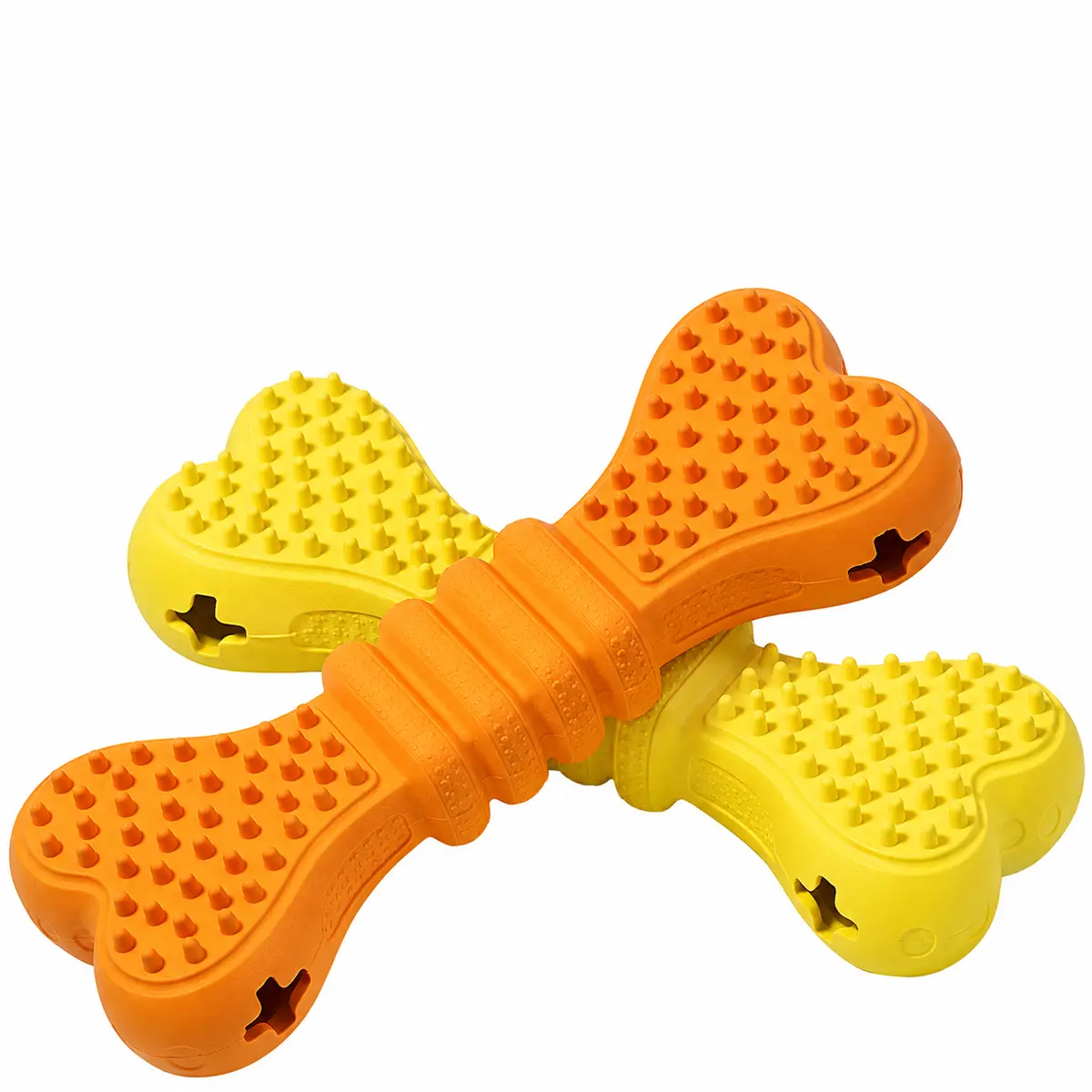
Long-lasting natural chews, such as bully sticks, give a lot of chewing time but have less evidence for cleaning teeth and are high in calories. Rubber dental toys with ridges or bristles are calorie-free and reusable, which suits dogs on a diet, but only work if your dog actually chews them rather than carrying them around. A double-ring dental chew toy is one example of a reusable dental toy.
Best type for each dog
For small dogs, pick a chew labeled for their weight band; small breeds are prone to crowded teeth and tartar, and a large chew can break into chunks they gulp. For large dogs and heavy chewers, choose the biggest size rated for their weight and supervise, removing the last piece before it can be swallowed.
For puppies, wait until adult teeth are in, then pick a soft, puppy-specific chew; puppy teeth and gums are more delicate. For overweight dogs, choose a low-calorie chew or a rubber dental toy, and count the chew in the daily food allowance. For dogs with bad breath, see your vet first, as persistent odor often means dental disease a chew will not fix.
What to avoid
Avoid anything that does not bend or dent, including cooked bones, antlers and very hard nylon. VCA lists bones, cow hooves, pig ears, hard rawhides and large ice cubes as items that can chip or fracture teeth. A fractured tooth is painful and often needs extraction or root treatment.
Avoid chews small enough to swallow whole and chews your dog gulps without chewing. Avoid giving several chews a day: treats should be a small share of daily calories, and dental chews are often surprisingly calorie dense. Stop and call your vet if your dog gags, vomits or seems uncomfortable after a chew.
How to size and introduce a chew
Weigh your dog and use the weight band on the pack, rounding up rather than down if your dog is between bands or a fast eater. Give the first few chews under supervision and watch how your dog eats: slow gnawing is what cleans teeth; swallowing big pieces means the size or type is wrong.
Give one a day at most, at a set time, and adjust meals if your dog is gaining weight. If your dog has missing, loose or broken teeth, red gums, or drops food, have teeth checked by your vet before giving any chew.
Where chews fit in dental care
Chews are the second line of defense. VCA calls daily brushing the best way to protect a dog's teeth and three times a week the minimum for controlling plaque. Chews help between brushing sessions and on days you miss, but they do not clean below the gumline, where gum disease starts. A dog toothbrush, such as a double-head soft finger toothbrush set or, for a small dog, a finger toothbrush, is one way to start a brushing routine.
Plan on regular dental checks too. Your vet can spot tartar, gum recession and fractured teeth that a chew cannot fix, and recommend whether a professional cleaning under anesthesia is needed. Between checks, browse dental chews for dogs once you know your dog's weight band.
This page is general information, not veterinary advice, and it cannot replace an examination by the vet who knows your pet.
Common questions
Do dental chews actually work for dogs?
Some do. Chews that carry the VOHC seal have submitted data showing they reduce plaque or tartar when used as directed. They work best alongside brushing, and none of them clean below the gumline or reverse existing dental disease.
What are the healthiest dental chews for dogs?
Look for a chew with the VOHC seal, a modest calorie count, the right size for your dog's weight, and enough give to dent with a fingernail. Avoid hard bones, antlers and hooves, which can fracture teeth.
What are the best dental chews for small dogs?
Choose a soft chew labeled for small dogs' weight, ideally with the VOHC seal, and supervise. Small breeds often build tartar quickly, so pair chews with brushing and regular dental checks at your vet.
How many dental chews can a dog have a day?
Usually one, following the pack's weight guidance. More adds calories without extra benefit. Count the chew as part of your dog's food for the day so it does not lead to weight gain.
What helps a dog's bad breath?
Persistent bad breath is most often a sign of dental disease, which needs a vet check. Brushing and dental chews help keep breath fresher once teeth are healthy, but they do not cure infected gums or rotten teeth.
Sources we checked
This guide is general information, not veterinary advice. If your pet is unwell or injured, contact your veterinarian.