






Buying guides
Best Dog Crates for Medium Dogs: How to Choose the Right One
Most medium dogs, roughly 25 to 50 lb, fit a crate between 30 and 42 inches long, but shape matters more than weight: a long-legged border collie and a stocky bulldog of the same weight need different crates. The AKC's rule is just large enough to stand up, turn around and lie down comfortably. Measure, choose a type that suits your dog's habits, and add a divider for a growing puppy.
By Matt GarnettUpdated November 10, 20263 min read3 sources
What matters most: measuring
Measure your dog standing from the nose to the base of the tail, and sitting from the floor to the top of the head or upright ears. Add 2 to 4 inches to each and compare with the interior size of any crate for a medium dog you are considering. Beagles and cocker spaniels often fit 30 to 36 inches; border collies, Australian shepherds and larger mixes may need 36 to 42.
The AKC cautions that a crate that is too big lets a puppy use one end as a bathroom. For a puppy, buy for adult size and use a divider, as the AKC suggests, moving it back as your puppy grows.
Crate types compared
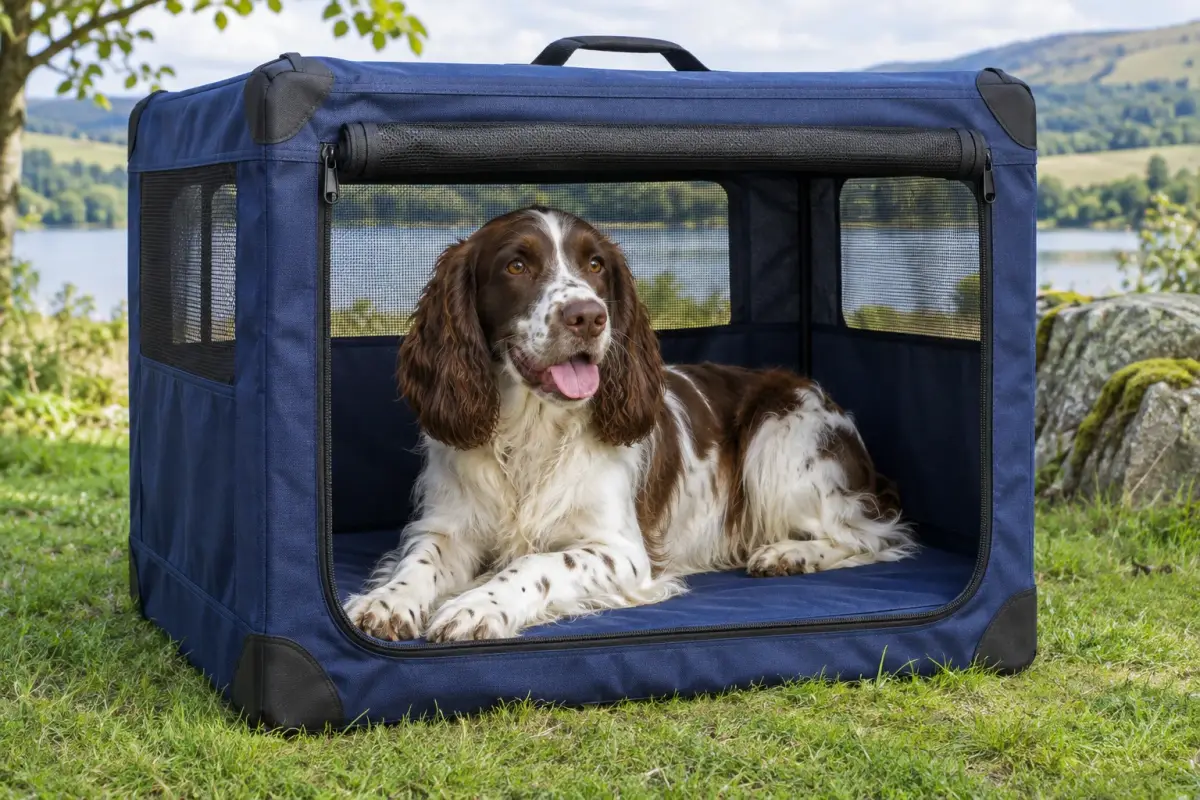
Wire crates fold flat, give airflow and visibility, and usually come with a divider and two doors, which helps fit them into a room. Plastic crates are enclosed and den-like, suit dogs that like privacy, and work for car travel. Soft crates are light for travel but only for calm, trained dogs.
Heavy-duty crates in thick steel suit escape artists and strong chewers. Furniture crates double as side tables and suit calm adult dogs. Double-door wire crates make placement easier in small spaces.
Best type for each dog
For a medium puppy, a wire crate sized for adulthood with a divider. For a dog that likes to den, a plastic crate or a wire crate with a breathable cover over part of it. For high-energy herding breeds that may test the latch, a crate with two secure latches per door.
For car travel, the AKC advises dogs ride in a crate or crash-tested seat belt; a plastic or heavy-duty crate strapped down with strong anchor straps is the common choice. Measure your cargo area first.
What to avoid
Avoid buying by weight alone and avoid crates that are far too big. Avoid single-latch doors on dogs that push, and wire crates with sharp edges or gaps at the corners.
Avoid using a crate for punishment or very long periods. A dog that panics, injures itself trying to get out, or barks nonstop when crated may be anxious, and a vet or qualified trainer can help.
Avoid placing the crate in direct sun, beside a heater or in a drafty spot.
Introducing the crate
Put the crate in a room where the family spends time, with a comfortable, washable pad. The AKC suggests feeding meals and giving special chew toys in the crate so it becomes a good place, and keeping early sessions short.
Close the door only once your dog walks in happily, and build up time gradually while you are home before leaving the house. Provide water for longer stays and potty breaks before and after crating.
Care and lifespan
Wipe the tray and bars of a medium-dog crate weekly and wash the pad. Check latches, welds and the tray for cracks.
A good wire or plastic crate lasts many years. Replace it if bars bend, latches loosen or plastic cracks, because a weakened crate is an escape and injury risk.
Wash the crate pad more often for puppies, as accidents are common during house training.
This page is general information, not veterinary advice, and it cannot replace an examination by the vet who knows your pet.
Crate body and door arrangements
| Construction | Physical layout | What to inspect |
|---|---|---|
| Wire | Open metal panels | Folding locks,doors and any divider |
| Plastic | Enclosed shell | Doorway and vent locations |
| Soft | Fabric over a frame | Zippers and frame joints |
| Heavy metal | A rigid thicker-metal body | Exact locks,floor and material |
| Furniture-style | Crate space inside a furniture outline | Usable interior and door clearance |
| Double-door | Two access openings | Clearance at each door in the planned room |
Common questions
What size crate does a medium dog need?
Usually 30 to 42 inches long. Measure your dog standing and sitting, add 2 to 4 inches to length and height, and compare with the crate's inside dimensions.
Is a 36 inch crate good for a medium dog?
Often, yes, for dogs around 30 to 45 lb such as many spaniels and herding mixes. Check by measuring, since build varies a lot within the medium range.
Should I get a wire or plastic crate for my dog?
Wire crates suit most dogs at home and include dividers; plastic crates suit dogs that like a den and work well for travel. Some owners have one of each.
Can I use a crate divider for a medium puppy?
Yes. The AKC suggests buying a crate for adult size and using a divider so the puppy has just enough space, which supports house training.
Sources we checked
This guide is general information, not veterinary advice. If your pet is unwell or injured, contact your veterinarian.


