






Buying guides
Best Dog Combs: What Actually Matters
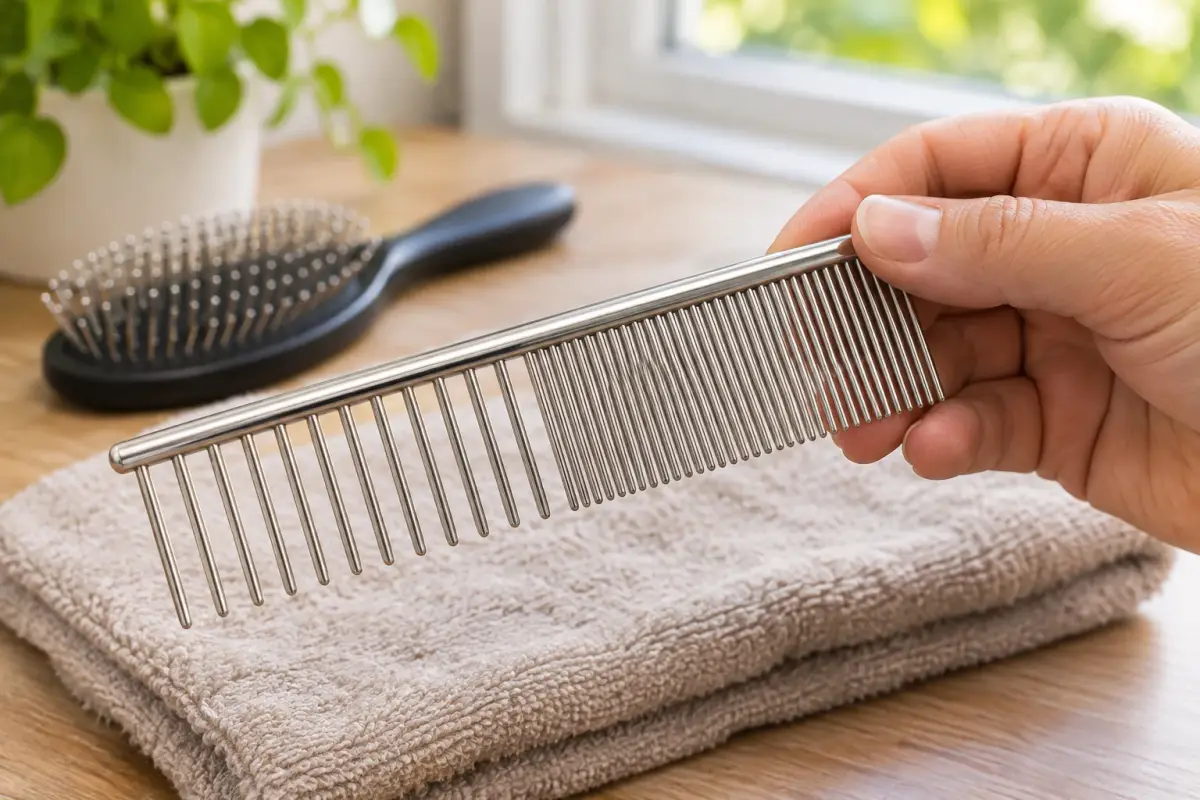
The best dog comb is the one whose tooth length and spacing match your dog's coat. Wide-toothed combs work through tangles and mats, long-toothed combs suit long coats and loose undercoat, and a smooth, rounded tooth protects the skin. A comb finds what a brush misses, so most dogs with longer or thicker coats need both.
By Matt GarnettUpdated November 13, 20264 min read2 sources
What a comb does that a brush does not
A brush smooths and removes loose hair from the surface; a comb reaches down to the skin and shows you whether a tangle is hiding underneath. VCA Animal Hospitals recommends a comb for medium-length shedding coats such as retrievers and a long-toothed comb with offset tines for long coats such as collies, noting that it also helps pull out clumps of undercoat during a shed. The AKC says wide-toothed combs can help remove mats and tangles.
That makes a comb a finishing and checking tool more than an everyday brush. Run it through after brushing, and if it snags, the coat still has a tangle. You can browse our dog combs with that in mind, and pair them with a brush from our dog brushes range when your dog needs both.
Tooth spacing and length: the features that decide it
Tooth spacing is the main choice. Wide teeth glide through thick or tangled coat without pulling, and they are where you start on a matted or long-haired dog. Finer teeth suit short or fine coats and finish the job, but forcing a fine comb through a thick coat or a tangle pulls hair and hurts. Many dogs do best with a comb that has wide teeth at one end and finer teeth at the other, which lets you work from coarse to fine in one tool.
Tooth length matters for double coats and long coats. The tines need to be long enough to reach through to the skin, or the comb only skims the top layer. The AKC makes the same point about undercoat rakes: match the pin length to the coat length. Smooth, rounded tooth tips and a comfortable handle matter more than anything printed on the packaging, because a comb is used in small, careful strokes.
Which coat types need a comb
Long, silky or curly coats need daily attention, according to VCA, especially behind the ears, in the armpits and along the back of the legs, and a comb is how you check those spots. Continuous-growth coats such as those of Yorkies, Lhasa Apsos and shih tzus need regular brushing and planning for haircuts. Long, thick double coats shed heavily in late spring and late fall, when a comb helps pull out loose undercoat.
Short, smooth coats usually need a flexible glove or short-bristle brush more than a comb, though a comb is still useful for checking behind the ears and under the collar. For a basic option, a pet grooming comb or a general-purpose comb for dogs covers everyday checking on most coats.
How to work through tangles and mats
VCA says small tangles and single burrs can usually be brushed or combed out. Brush out all burrs and tangles before a bath, because they can become impossible to remove once the coat is wet. Hold the hair near the skin with one hand so the comb does not pull, start at the outer edge of the tangle and work toward the body, and use short strokes rather than yanking.
For a large mat, VCA warns to use clippers and never scissors, because the skin can be cut easily, and to see a groomer or vet for severe or extensive tangles. If a mat has irritated the skin, your vet should look at it. Never pull a comb hard through a mat; stop and get help instead.
What to avoid
Avoid combs with sharp or rough tooth tips, flimsy teeth that bend under a thick coat, and sizes that do not match your dog: a tiny comb on a large long-haired dog takes forever, and a wide comb on a toy breed is awkward. Avoid fine-toothed combs on thick, tangled coats, and avoid pulling a comb through a dry, matted coat.
Avoid skipping the comb on dogs that mat. A brush alone can glide over a tangle near the skin, and the tangle then tightens into a mat. Skip shaving a double-coated dog unless a groomer or vet advises it, as VCA notes that post-clipping hair loss can delay regrowth for a long time in plush-coated breeds.
Care, storage and when to replace a comb
Pull loose hair from the teeth after each use and wash the comb in warm, soapy water now and then. Dry it, store it where the teeth will not bend, and replace it if a tooth is bent, cracked or sharp.
Brush gently and keep sessions calm, with treats for a dog that dislikes grooming. Start brushing puppies early with a soft brush, as the AKC advises. For general-purpose options, browse our dog combs collection or a basic pet comb.
Common questions
What is the difference between a dog comb and a dog brush?
A brush smooths the coat and removes loose hair from the surface, while a comb reaches the skin to find and work out tangles. Dogs with longer or thicker coats usually benefit from both.
What comb is best for a long-haired dog?
VCA suggests a long-toothed comb with offset tines for long coats such as collies, because it reaches through to the skin and helps remove loose undercoat clumps while you work.
Can I comb out a mat at home?
Small tangles and single burrs can usually be combed out gently. For large mats use clippers and never scissors, and see a groomer or your vet for severe or skin-irritating mats.
How often should I comb my dog?
It depends on the coat. Long, silky or curly coats need daily attention, double coats need extra during heavy sheds, and short coats need far less. Ask your groomer or vet if you are unsure.
Sources we checked
This guide is general information, not veterinary advice. If your pet is unwell or injured, contact your veterinarian.


