Buying guides
Best Custom Dog Sweaters: What to Check Before You Personalize
A custom dog sweater is only as good as the sweater under the name. Choose the fit and fabric first, using your dog's back length, chest girth and neck size, then add the personalization where it will not rub or snag. Small, short-coated, hairless, senior and puppy dogs benefit most. You can browse our personalized dog sweaters once you know what to look for.
By Matt GarnettUpdated November 13, 20265 min read2 sources
Does your dog need a sweater at all?
The American Kennel Club says the dogs that struggle most in the cold are small dogs, especially toy breeds, and dogs without thick fur. Lean, short-haired breeds such as Whippets and Greyhounds may benefit, as can hairless breeds, dogs with shaved coats, young puppies and seniors. Healthy large dogs with thick coats generally do not need a sweater and could even overheat in one.
That matters before you pay extra for a name. If your dog is a Husky or a Newfoundland, a monogrammed sweater is a photo prop at best. If your dog is a Chihuahua, an Italian Greyhound or a senior who shivers on winter walks, a well-fitted sweater is a practical item, and personalizing it is a bonus on top.
Fit comes before the name
Use a soft measuring tape and take three numbers: the length of the back, the girth around the chest at its widest point, and the neck. The AKC points out that sizes vary by brand, so a dog can be a small in one and a medium or extra-small in another. Always compare your numbers with the maker's own chart, and read our guide to the dog sweater size chart if you are between sizes.
A sweater that is too big can catch on things or tangle around a leg, and one that is too tight restricts movement and causes discomfort. A well-fitted one lets your dog walk, run and play normally. This matters more with a custom order, because a made-to-order item is often harder to return. Check the return policy for personalized items before you order, and measure twice.
Fabrics and construction that survive washing
Sweaters collect skin oil, dirt and mud, so the AKC advises washing them regularly, and owning two lets you rotate. Most are machine washable but some need hand washing and air drying, so follow the care label to avoid shrinking. For a personalized piece, ask how the name is applied and whether it is meant to go through the wash, because an iron-on or printed name can crack where stitched lettering would hold.
Thicker knits suit extra-cold weather and lighter ones suit cool days that are not cold. Fleece is a practical everyday fabric because it is soft, light and easy to wash. Sweaters are usually less warm than jackets, so for rain, snow or wind a water-resistant coat is the better layer; see our dog winter coats for that job.
Where a name or monogram should go
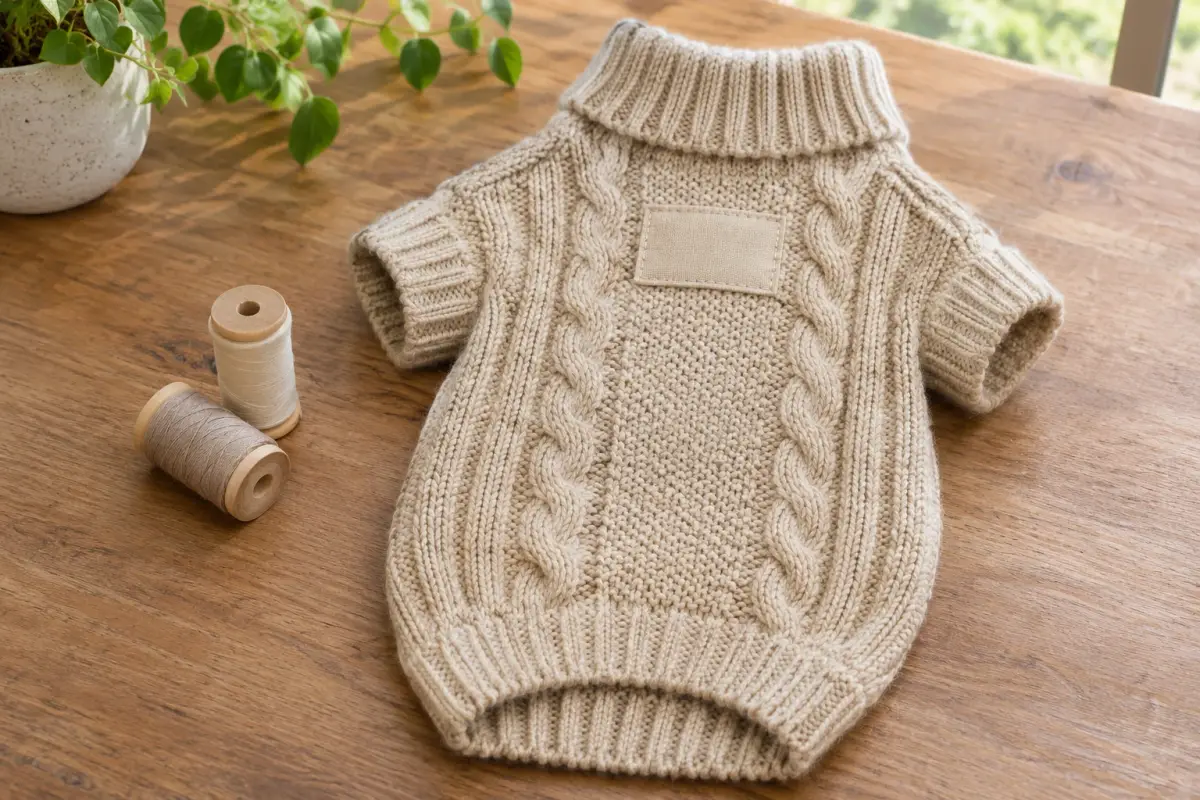
The safest spot for lettering is the back panel or the side of the body, away from the neck opening, the leg holes and the belly edge, where fabric rubs most. Embroidery leaves stitching on the inside, so run a finger over the back of it: a stiff patch or a rough backing against the skin can chafe on a short-coated dog. Raised or hard decorations such as buttons, beads or rhinestones can be chewed off, so avoid them for a dog that mouths clothing.
A single name or monogram on a plain fleece is the simplest design to get right. For example, a monogram fleece dog jumper shows the idea of a soft, washable base carrying one personalized mark. Keep the wording short, because long names or phone numbers shrink into small, stiff stitching.
Pullover, legs or wrap: which style suits your dog
Full-body sweaters that cover the body and legs insulate more and can help with shedding or itchy skin. Plain pullovers are easier to pull on and wash. The AKC notes that some sweaters have a built-in hole for a leash or harness, so the sweater can go on over a harness. A dog that dislikes things pulled over the head will usually accept a wrap or step-in style more easily.
Match the cut to the build. Deep-chested, long-bodied breeds such as Dachshunds and sighthounds often need a longer body length, while small dogs do well with a short, snug design. Our sweaters for small dogs range and the wider dog sweaters collection cover most body shapes, and our dog sweater buying guide compares materials in more depth.
Safety, supervision and when to call your vet
Do not leave a dog unattended in a sweater, including in a crate, because even a comfortable dog can become tangled. The AKC says clothing should never replace proper care in the cold. If your dog is shivering, curling up, sluggish or has pale gums, warm the dog up and contact your vet immediately, because these can be signs of hypothermia.
Take the sweater off if your dog pants, seems warm or keeps trying to chew it, and check the skin under it for rubbing or dampness after each wear. Wash it regularly and replace it once it stretches or starts to unravel. Before you order your next custom piece, browse our personalized dog sweaters with your measurements to hand. This page is general information, not veterinary advice, and it cannot replace an examination by the vet who knows your pet.
Common questions
Do custom dog sweaters fit differently from regular ones?
Not usually, but they are often made to order, so returns can be harder. Measure back length, chest girth and neck, compare with the maker's size chart, and check the return policy for personalized items before ordering.
Is it safe to leave a personalized sweater on my dog all day?
Not unattended. The AKC advises removing a sweater before leaving a dog alone, including in a crate, because it can tangle. Take it off indoors if your dog pants or seems warm.
What should I put on a custom dog sweater?
Keep it short: a name or a monogram on the back or side panel. Avoid long phone numbers and hard add-ons such as buttons or beads that a dog could chew off or that could rub the skin.
Do large dogs with thick coats need a sweater?
Generally no. The AKC says healthy large dogs with thick coats usually do not need one and could overheat. A sweater suits small, short-coated, hairless, senior and puppy dogs far more.
How do I wash a personalized dog sweater?
Follow the care label. Most are machine washable and some need hand washing and air drying. Ask the maker how the name is applied, as printed or iron-on lettering can crack with repeated washing.
Sources we checked
This guide is general information, not veterinary advice. If your pet is unwell or injured, contact your veterinarian.