






Buying guides
Best Cat Window Perch: How to Choose One That Holds
The best cat window perch holds well above your cat's weight, matches your window type, and gives a bed wide enough for your cat to stretch out in the sun. Suction-cup hammocks suit smooth glass and light cats; sill-supported shelves with brackets are steadier; screw-mounted shelves are the strongest. Check every fixing before your cat's first jump.
By Matt GarnettUpdated November 14, 20263 min read2 sources
Why window perches matter for indoor cats
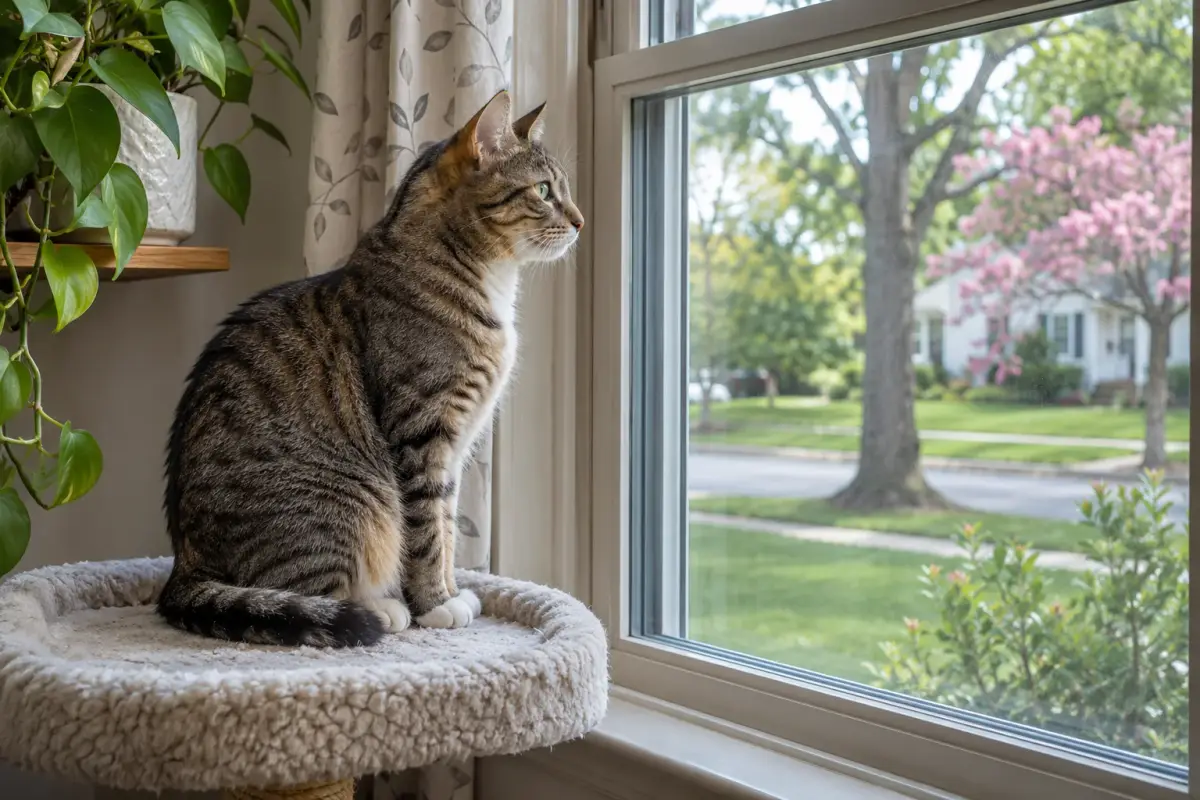
VCA Animal Hospitals recommends giving indoor cats safe resting spots with interesting views, and many cats prefer a window perch. Elevated perches let cats relax while watching for movement, and a window adds birds, squirrels and passing people, which VCA treats as part of a cat's daily enrichment.
A perch also creates vertical space without the floor footprint of a cat tree. For small apartments, a perch at one window and a scratching post nearby can do much of the work of a large tree.
What matters most: the fixing and the weight rating
Suction-cup perches, like the Suction Cup Window Cat Hammock, stick directly to glass. They work on clean, smooth, flat windows and lighter cats, but suction can release with temperature changes, dirty glass or a cat that launches off hard. Look for large cups with locking levers and a rating well above your cat's weight, and press each cup again every week or two.
Sill-supported perches, such as the Window sill cat hammock, rest on the windowsill with brackets or legs against the wall below, which spreads the load and is much steadier for heavy cats. Screw-mounted shelves fixed into the wall or frame are strongest of all and suit large or multiple cats.
Perch types compared
Hammock perches have a fabric sling on a frame and suit cats that like to sink in; the Cat window chuck hammock is one example. Flat padded shelves suit cats that sprawl. Enclosed or bubble perches let a cat sit partly outside the window line in a clear dome, and need careful installation. Double-decker perches serve two cats.
Bed size matters: a cat that cannot fully lie down will use the perch briefly and leave. Measure your cat lying stretched out and compare with the bed. Removable, washable covers make cleaning easier, and a raised lip helps a sleepy cat feel secure. Weigh your cat before you shop, and add a margin for the force of a jump, which is far more than its resting weight on the bed.
Window safety and placement
Never rely on a window screen to hold a cat, and do not fit a perch where the cat could push through an open window. Keep cords from blinds and curtains tied up and out of reach; the Cornell Feline Health Center warns against cords and string that cats can chew or tangle in, and against high places where a distracted cat could fall.
Pick a window with sun for part of the day and something to watch, but avoid placing a perch where a cat can see outdoor cats that make it anxious, which can lead to spraying or redirected aggression. In very hot weather, a south-facing perch can get too warm; offer shade.
Installation and care
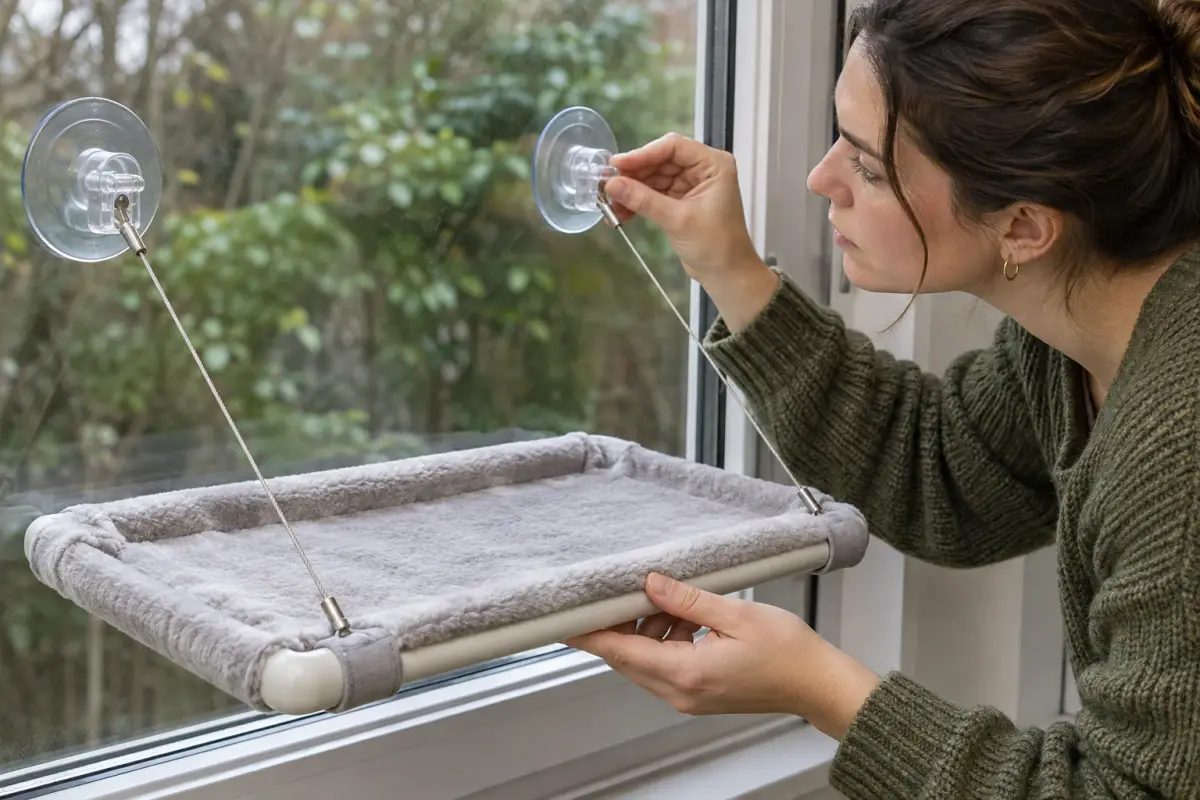
For suction perches, clean the glass and cups with warm water, press firmly, lock the levers and test with a heavy bag before your cat uses it. For sill and screw-in perches, follow the weight rating and use wall anchors or studs.
Check fixings weekly, wash the cover regularly and replace cracked cups or frayed hammocks, and browse our cat window perches when a perch needs replacing. If your cat suddenly stops jumping up to a favorite perch, consider whether it may be stiff or sore and mention it to your vet, because cats hide joint pain well.
Window resting surfaces and frames
| Layout | Resting arrangement | What to measure |
|---|---|---|
| Fabric sling | Fabric suspended on a frame | Usable resting space and frame attachments |
| Flat padded shelf | A flatter supported surface | Length,width and fixing points |
| Enclosed or bubble perch | A partly enclosed clear space | Opening,usable interior and installation |
| Double-decker | Two resting levels | Each platform and the connections between them |
Common questions
Are suction cup cat window perches safe?
They can be for lighter cats on clean, smooth glass if rated well above the cat's weight. Re-press cups regularly. Sill-supported or screw-mounted perches are steadier for heavy cats.
What is the best window perch for a large cat?
A sill-supported shelf with wall brackets or a screw-mounted perch, rated well above your cat's weight, with a bed wide enough to stretch out on.
Where should I put a cat window perch?
At a window with sun and something to watch, away from views of outdoor cats that upset yours, and with blind cords tied out of reach.
Do cats like window perches?
Many do. VCA notes many cats prefer a window perch as a safe resting spot with an interesting view, which is valuable enrichment for indoor cats.
Sources we checked
This guide is general information, not veterinary advice. If your pet is unwell or injured, contact your veterinarian.


